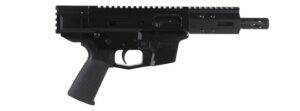
When Palmetto State Armory announced they were building their own long-stroke piston AR from scratch, I rolled my eyes. PSA makes solid budget ARs. Great value. But designing an entirely new operating system? In-house? That felt like a reach. Then I actually shot one.
The PSA JAKL isn't just another piston AR bolted onto a standard upper. It's a ground-up design that borrows the long-stroke reliability of the AK platform, wraps it in AR ergonomics, and ditches the buffer tube entirely. After running the 13.7" model in 5.56 for over a thousand rounds, I can tell you: this thing is the real deal, with a few caveats worth knowing before you buy.
Affiliate Disclosure: Powder & Lead is reader-supported. When you buy through links on this page, we may earn a commission at no additional cost to you. This doesn't influence our recommendations — we only link products we'd actually run.
Why the JAKL Exists
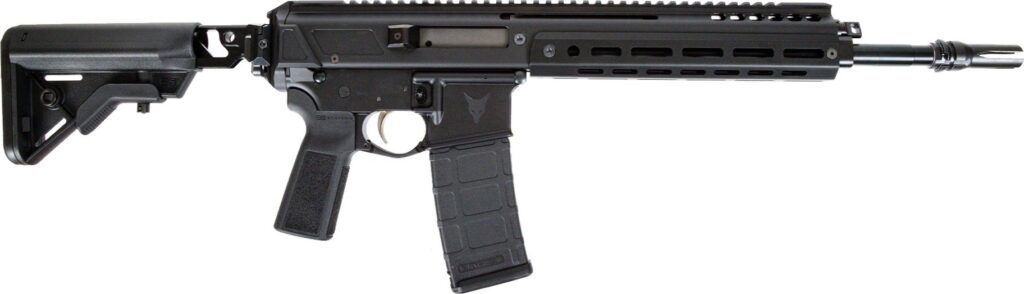
Palmetto State Armory has spent years as the value king of the AR world. Their mil-spec builds put more first rifles in more hands than probably any other manufacturer. But the JAKL represents something different — PSA's first fully in-house design, and a statement that they can innovate, not just assemble.
The idea: take the legendary reliability of the AK's long-stroke piston and married it to AR-15 controls, ergonomics, and magazine compatibility? The result is a rifle that looks like an AR, handles like an AR, takes standard AR lowers and STANAG magazines, but runs on an operating system closer to a Kalashnikov under the hood.
And it shows. It fundamentally changes how the gun runs, how clean it stays, and how well it handles a suppressor. This thing rocks!
The Piston System: Not Your Daddy's AR
If you've been running direct impingement ARs your whole life, here's the short version: in a standard AR, hot combustion gas travels through a tube directly back into the receiver, where it pushes the bolt carrier rearward. It works. It also dumps carbon, heat, and fouling straight into your action.
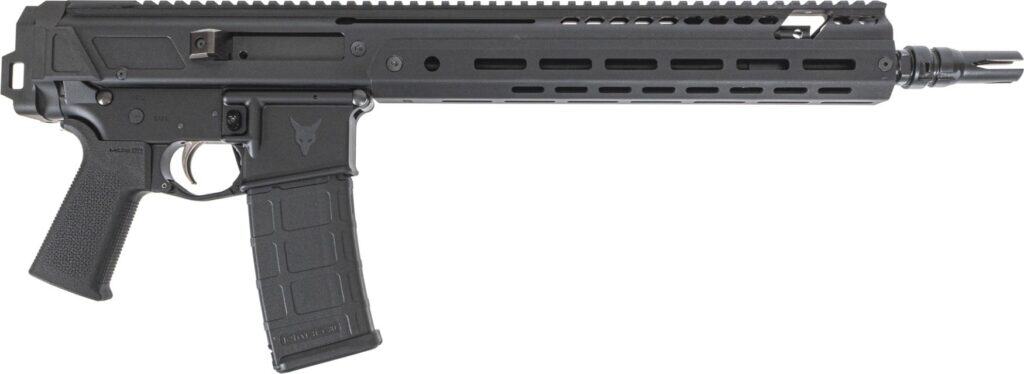
The JAKL uses a long-stroke gas piston system where the piston is fixed to the bolt carrier group and travels through the entire operating cycle. Gas taps off the barrel, pushes the piston, and the piston drives the bolt. The hot gas never enters the receiver. It's the same fundamental principle that makes AK-47s run in conditions that would choke a standard AR.
This isn't theoretical. After 500 rounds through the JAKL, the bolt carrier group looked like it had maybe 100 rounds on it. The receiver stayed remarkably clean. That matters for reliability over long strings of fire, and it matters a lot when you add a suppressor — but more on that later.
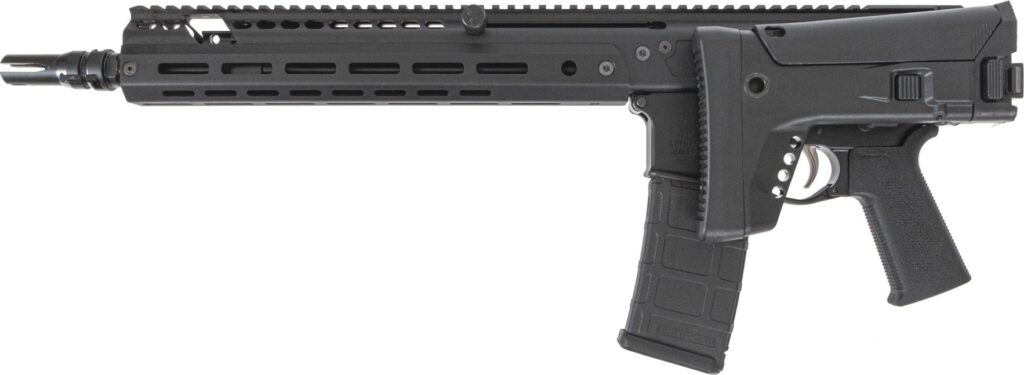
There's another major design element: the buffer system is fully captured in the upper receiver. No buffer tube. The stock/brace attachment point is a standard 1913 Picatinny rail, so you can run whatever you want back there — folding stocks, braces, fixed stocks, no adapters, no hacks, no compromises. Fold the stock, chamber a round, and fire. Try that with your standard AR.
What You Get: Specs and Configurations
The JAKL-15 lineup covers most bases. Here's what PSA offers:
- Calibers: 5.56 NATO, .300 Blackout, and .308 Winchester (JAKL-308)
- Barrel lengths: 10.5", 13.7" (pin & weld), 14.5", and 16" depending on caliber. The .300 BLK runs an 8.5" barrel for the pistol configuration.
- Twist rate: 1:7 (5.56), 1:10 (.308)
- Upper receiver: Monolithic 6105 aluminum with rifle-length M-LOK handguard
- Bolt: 7-lug, shot-peened Carpenter 158 steel
- Carrier: 4340 steel with 8620 front trunnion
- Barrel steel: 4150V chrome moly, nitride finished
- Trigger: PSA Enhanced Polished Trigger (EPT), roughly 4.5 lb pull
- Gas system: Adjustable — toolless 4- or 8-position gas block depending on model
- Thread pitch: 1/2x28
- Lower compatibility: Any mil-spec AR-15 lower receiver
- Colors: Black, FDE, M81 Woodland, Multi-Cam Arid — PSA keeps expanding the options
Complete rifles run from about $1,150 to $1,500 depending on configuration, with the 13.7" models landing around $1,200-$1,300. Pistol variants start around $1,000. For a long-stroke piston gun with this feature set, that's aggressive pricing — the Sig MCX Spear LT starts north of $2,000, and LWRC rifles will set you back $2,500+.
Browse all PSA JAKL configurations at Palmetto State Armory
First Impressions: Fit, Finish, and Build Quality
I grabbed the 13.7" pin-and-weld model in 5.56 with the F5 Manufacturing folding stock. First thing you notice picking this up: it feels serious. And heavy. Cool, clean lines, ergonomic — but surprisingly heavy. The monolithic upper is a single piece — handguard and receiver machined together — and there's zero wobble or flex anywhere. It feels more like a $2,000 rifle than something from PSA's catalog.
The finish is nitride throughout, and it's well done. No tool marks, no rough edges. The M-LOK slots are clean. Controls are where you'd expect them if you've ever run an AR. One thing that immediately stands out: the non-reciprocating side charging handle on the left side of the receiver. It sits in a channel and doesn't move when you fire. Coming from the standard AR rear charging handle, this felt more intuitive after about ten minutes of handling — especially for malfunction drills.
The gun is front-heavy (seriously!). But worth it! That's the trade-off with any piston system — the operating hardware sits above the barrel instead of in the buffer tube behind your shoulder. At 8.1 pounds (measured, not advertised), the 13.7" model is noticeably heavier than a comparable DI AR. On a sling, it's manageable. Shooting offhand for extended strings, you feel it. This isn't a featherweight carbine and it doesn't pretend to be.
Range Report: Putting Rounds Downrange
Reliability
This is where the JAKL earned my respect. After dialing in the adjustable gas block — which took about 20 rounds of testing — the gun ran everything I fed it without a single malfunction. PMC Bronze, Federal XM193, Wolf steel case, Hornady 75-grain BTHP. All of it. Brass, steel, light loads, heavy loads. Over 1,200 rounds at this point with zero stoppages once the gas was tuned.
A note on that gas block: you need to tune it. The JAKL ships overgassed from the factory (cough, cough — smart move for break-in reliability), but you'll want to dial it back for your preferred ammo. The process is straightforward — start restricted, open it up until the bolt locks back consistently on an empty magazine, then go one more click open for a reliability margin. Plan to retune if you change ammo weight significantly or add a suppressor.
Accuracy
Let's set expectations: this is a fighting rifle, not a precision rig. From a bench at 100 yards with quality brass ammo, I consistently produced 1.5-2 MOA groups. Federal Gold Medal 77-grain got me under 1.5 MOA on a good day (the sun was shining!). Hornady Frontier 55-grain opened that up to around 2.5 MOA. Steel-case Tula was predictably the worst at roughly 2.7 MOA. I apologized to the rifle after feeding it that.
That's not match-grade, and nobody should expect it from a piston gun with a 13.7" barrel. But for a rifle that'll live in your truck, sit by the bed, or run hard in a carbine class? Minute-of-bad-guy accuracy all day long out to 300 yards, which is more than most defensive scenarios will ever demand. You won't be disappointed.
Recoil Character
The long-stroke piston gives the JAKL a different recoil impulse than a DI gun. It's a smoother, more deliberate push rather than the sharper snap you get from a direct impingement action. Some shooters describe it as "rolling" recoil. I found it easier to track my sights through rapid strings. The extra weight up front helps with this too — the gun just doesn't move much.
Split times were fast. Subjectively, I felt like I was getting back on target quicker than with my standard 16" DI carbine, though that's hard to separate from the weight difference.
Running It Suppressed
If you're in the market for a suppressor host, the JAKL deserves a hard look. This is where piston guns generally shine, and the JAKL is no exception.
With a can mounted (1/2x28 threads, so your standard 5.56 suppressors thread right on), the piston system keeps the increased backpressure out of the receiver. On a DI gun, running suppressed means dramatically more gas, carbon, and heat blowing back into the action and into your face. The JAKL mostly eliminates that. After a suppressed range session, my bolt carrier still had the original lube on it — not baked into carbon cement like every suppressed DI gun I've ever cleaned.
You will need to retune the gas block when you add or remove a suppressor. That adjustable gas system earns its keep here — dial it down for suppressed use, open it back up for unsuppressed. Takes about 30 seconds once you know your settings. Some owners mark their positions with a paint pen, which is a smart move.
The .300 Blackout JAKL pistol variant with an 8.5" barrel is arguably the best suppressor host in the lineup if subsonic .300 BLK is your thing. That's a purpose-built quiet gun waiting to happen.
What's Good and What's Not
The Good
- Reliability. Once tuned, this gun just runs. Every time. The long-stroke system isn't new technology — it's proven over 75 years in AK-pattern rifles. PSA adapted it well.
- Runs clean. The difference between cleaning this gun and cleaning a DI AR after the same round count is night and day.
- No buffer tube. Folding stocks with no adapters, shorter overall package, and the ability to fire folded if your life depends on it.
- Suppressor performance. Minimal gas blowback, easy tuning. A genuinely excellent suppressor host.
- AR-15 lower compatibility. Use any mil-spec lower, your existing triggers, your existing magazines. You're not locked into a proprietary ecosystem.
- Price. A complete long-stroke piston rifle for $1,200? That undercuts every comparable piston platform by hundreds, sometimes over a thousand dollars.
- Adjustable gas block. Toolless adjustment lets you tune for ammo, suppress/unsuppress, and optimize reliability on the fly.
- Side charging handle. Non-reciprocating, left-side, out of the way. Better than a standard AR charging handle for most manipulations.
The Not-So-Good
- Weight. 8.1 pounds for a 13.7" carbine is heavy. The front-heavy balance takes getting used to. If weight is your primary concern, a DI gun will always win.
- Gas tuning required. This is not a "grab and go" gun out of the box. You need to spend time at the range finding your gas setting. PSA's instructions on this could be better — many owners have complained about lack of clear documentation for the gas block adjustment.
- Early QC concerns. The first-generation guns had cycling issues, and some owners reported problems with .300 BLK models specifically. PSA has addressed most of these with updated gas pistons and improved QC, but the reputation lingers. Buy current production.
- Charging handle wear. The side charging handle can cause minor cosmetic marring where it contacts the channel during cycling. Purely cosmetic, but it bugs some owners.
- Accuracy ceiling. If you need sub-MOA precision, look elsewhere. The JAKL is a 1.5-2.5 MOA gun with good ammo. That's fine for its intended role, but precision shooters will be disappointed.
- Heat. The handguard gets warm fast during sustained fire. Gloves or a rail panel setup are worth considering if you plan to run it hard.
- PSA Enhanced Polished Trigger. It's adequate. A 4.5-pound single-stage mil-spec trigger. It does the job, but dropping in a quality aftermarket trigger is one of the first upgrades I'd recommend.
How It Stacks Up Against the Competition
The piston AR market has gotten crowded. Here's where the JAKL sits:
Sig MCX Spear LT (~$2,200+): The MCX is arguably the gold standard for modern piston ARs. Better fit and finish, lighter, proven military pedigree. But you're paying almost double. The JAKL gives you 85% of the MCX experience at 55% of the price.
LWRC IC-DI/IC-A5 (~$2,500+): LWRC makes bomb-proof rifles with outstanding quality control. If budget isn't a constraint and you want the best piston AR money can buy, LWRC is the answer. But you're spending twice what the JAKL costs, and you're still getting a short-stroke system, not long-stroke.
POF Revolution/Renegade (~$1,800-$2,200): POF has been in the piston game for years and makes excellent rifles. Better triggers out of the box, refined gas systems. More expensive, smaller company, fewer configuration options.
Standard DI AR-15 (~$500-$1,500): If you don't need piston benefits (clean running, suppressor performance, no buffer tube), a quality DI gun will be lighter, cheaper, and just as reliable for most use cases. The JAKL only makes sense if you value what the piston system brings to the table.
Bottom line: it's the cheapest way into a serious long-stroke piston rifle that uses your existing AR-15 lowers and magazines. Nobody else is doing that at this price point.
Who Should Buy the PSA JAKL
The JAKL makes the most sense for a specific kind of shooter:
- Suppressor owners who want a dedicated host that runs clean and doesn't gas them out. The JAKL is one of the best suppressor platforms under $1,500.
- Truck gun / home defense builders who want the folding stock capability and compact overall length. Fold the stock, stow it, and it's ready when you need it.
- AK fans who want AR ergonomics. The long-stroke system will feel familiar, and you get the modularity and aftermarket support of the AR platform.
- Budget-conscious shooters who've been eyeing piston guns but couldn't justify MCX or LWRC pricing. The JAKL democratizes the piston AR.
- High-volume shooters who don't want to scrub carbon out of their receiver after every range trip.
Who should skip it? Precision shooters chasing sub-MOA groups. Weight-conscious builders who want the lightest possible carbine. Anyone who doesn't want to spend time tuning a gas system. And if you're happy with your DI gun and don't run suppressed, the JAKL probably doesn't offer enough upside to justify switching platforms.
Final Verdict
The PSA JAKL is the most interesting thing Palmetto State Armory has ever built. It's not perfect — the weight, the gas tuning learning curve, and some lingering early-production reputation issues are real. But the core design is sound, the reliability (once tuned) is outstanding, and the value proposition is unmatched in the piston AR market.
If PSA had slapped a $2,000 price tag on this gun, it would still be a competitive product. At $1,200, it's a no-brainer for anyone who wants a piston gun without taking out a second mortgage.
It's a no-brainer for suppressor owners, truck gun builders, and anyone who's wanted a piston AR without the premium price tag. PSA is up to some amazing good, and I'm looking forward to what's next.
Check current PSA JAKL pricing and availability at Palmetto State Armory
Quick Specs: PSA JAKL 13.7" 5.56 Rifle
| Specification | Detail |
|---|---|
| Caliber | 5.56 NATO / .223 Rem |
| Barrel Length | 13.7" (pin & weld to 16") |
| Barrel Steel | 4150V Chrome Moly, Nitride |
| Twist Rate | 1:7 |
| Operating System | Long-Stroke Gas Piston |
| Receiver | Monolithic 6105 Aluminum |
| Bolt | Carpenter 158, 7-Lug, Shot Peened |
| Trigger | PSA EPT (~4.5 lb) |
| Gas Block | Adjustable (toolless) |
| Thread Pitch | 1/2x28 |
| Weight | ~8.1 lbs |
| Lower Compatibility | Mil-Spec AR-15 |
| Magazine | Standard STANAG / AR-15 |
| MSRP | ~$1,200-$1,300 |
Looking to upgrade your AR platform? Check out our guide to the best AR-15 upgrades that actually make a difference at the range.
If you know of any forums or sites that should be referenced on this listing, please let us know here.