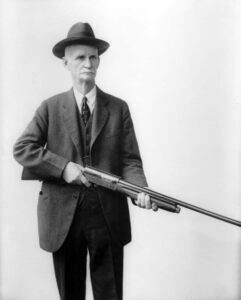
John Moses Browning designed more successful firearms than any other person in history. The M1911, the Browning Automatic Rifle, the Browning machine guns, the Auto-5 shotgun, the Winchester lever-actions -- his catalog reads like a history of 20th-century small arms. But the last handgun design he worked on may be the most consequential of all: the Browning Hi-Power, a 13-round 9mm semi-automatic that armed more than 50 nations, served on every continent, and holds the unusual distinction of being the only production firearm to see general issue on both sides of World War II.
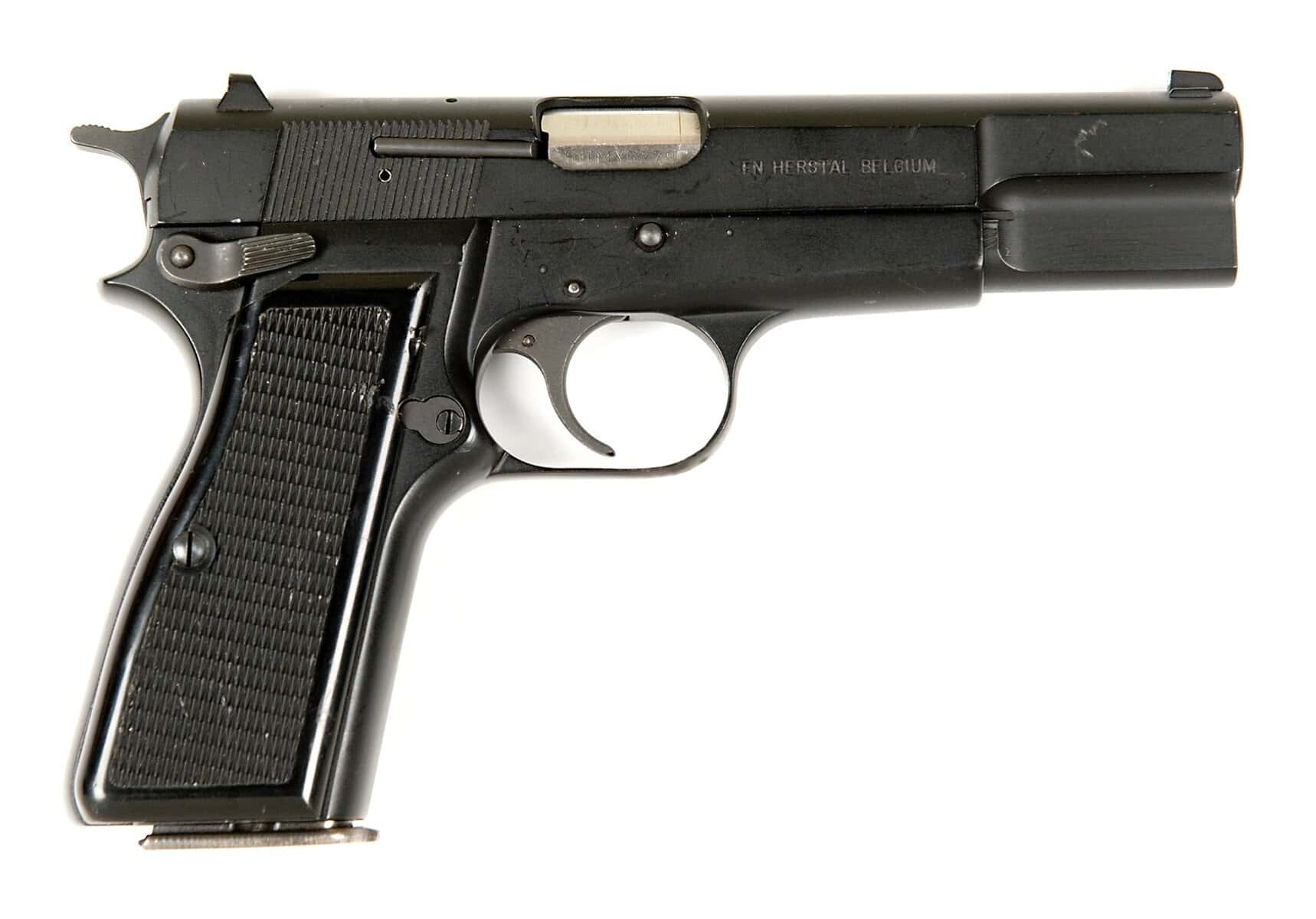
The French Connection: How a Military Contract Started Everything
The Browning Hi-Power's story begins not in Belgium but in France. In the early 1920s, the French military issued a requirement for a new service pistol. The specifications called for a semi-automatic pistol with a detachable magazine holding at least 10 rounds, an effective range of 50 meters, a weight under 1 kilogram, and the ability to be used with an attached shoulder stock. The caliber was to be 9x19mm Parabellum.
Fabrique Nationale d'Armes de Guerre (FN) in Herstal, Belgium, wanted that contract. FN had a long and profitable relationship with John Browning, who had been designing firearms for the company since 1897. They asked Browning to develop a pistol that would meet the French requirements.
Browning began work around 1914 on concepts that would eventually lead to the Hi-Power, but the project accelerated after the French specification was published. He filed a patent in the United States on June 28, 1923, which was granted on February 22, 1927. The patent described a short-recoil, locked-breech pistol with a 16-round staggered-column magazine -- a significant departure from the single-stack magazine of the 1911.
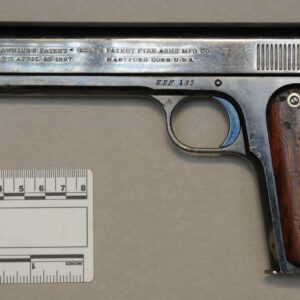
There was a complication. Browning was still under contract with Colt for pistol designs in the United States, and some of his earlier patents -- particularly those covering the swinging-link barrel locking system used in the 1911 -- were assigned to Colt. The Browning Hi-Power design had to work around those patents. This constraint actually produced a better mechanism: instead of the 1911's swinging link, the Hi-Power used a fixed cam slot machined into the barrel lug. This cam-operated unlocking system was simpler, more robust, and would be adopted by nearly every successful military pistol designed after it, including the SIG P226, the CZ 75, and the Glock.
Browning Dies, Saive Finishes
John Browning died on November 26, 1926, at FN's factory in Herstal, Belgium, while working at his bench. He was 71 years old. The Browning Hi-Power design was advanced but not complete. FN's chief designer, Dieudonne Saive, took over the project.
Saive was a talented Belgian engineer who had worked with Browning and understood his design philosophy. He made several important modifications to Browning's prototype. The most significant was the double-column, single-feed magazine that became the Hi-Power's defining feature. Browning's patent showed a staggered-column magazine, but it was Saive who refined the design into the reliable 13-round magazine that would become the production standard. Saive also simplified the trigger mechanism, though the resulting design -- which routed the trigger bar around the outside of the magazine well -- introduced the heavy, creepy trigger pull that has been the Hi-Power's only consistent criticism for nine decades.
The Great Depression delayed the project further. FN wasn't going to invest in expensive new tooling during an economic collapse. The pistol was finally ready for production in 1935, and it was designated the "Grande Puissance" (High Power) Model 1935, or GP35. The English name "Hi-Power" came later.
The "Hi-Power" name, by the way, didn't refer to the cartridge. The 9mm Parabellum wasn't considered a high-power round compared to the .45 ACP. The name referred to the magazine capacity -- 13 rounds was nearly double what any other service pistol offered at the time. The Luger held 8. The 1911 held 7. The Walther P38, which wouldn't appear until 1938, held 8. Thirteen rounds in a flush-fitting magazine was a genuine advantage, and FN was smart enough to name the gun after it.
The Browning Hi-Power: Prewar Adoption and Early Service
FN didn't win the French contract. France ultimately adopted nothing from the competition and continued muddling along with a variety of pistols. But the Browning Hi-Power found eager buyers elsewhere. Belgium adopted it immediately for its armed forces. Before the outbreak of World War II, the pistol was also adopted by or sold to Lithuania, Denmark, Romania, Estonia, Peru, and China, among others. (For a detailed look at FN's full history, see the Browning Hi-Power entry on Wikipedia.)
The Hi-Power's appeal was obvious. It was slim for its capacity, pointed naturally, had a crisp single-action trigger (heavy by target standards, but clean by military standards), and was chambered in 9mm Parabellum -- the most common military pistol cartridge in Europe. It was well-made, with the kind of fit and finish that Belgian gunmaking was known for. And 13 rounds of 9mm in a magazine that could be swapped in seconds gave it a practical advantage that no competitor could match.
The Browning Hi-Power in WWII: Both Sides of the Same War
On May 10, 1940, Germany invaded Belgium. The FN factory in Herstal fell into German hands. This created the strangest chapter in the Browning Hi-Power's history: for the remainder of the war, FN produced Hi-Power pistols for Germany under the Wehrmacht designation "Pistole 640(b)."
More than 300,000 Hi-Powers were manufactured at the FN factory during the German occupation. They were issued primarily to Waffen-SS and Fallschirmjager (paratroop) units, though they turned up throughout the German military. German-produced Hi-Powers can be identified by their Waffenamt inspection marks -- WaA613 and others -- stamped on the frame and slide. As the war dragged on and materials became scarce, the quality of occupation-produced Hi-Powers declined noticeably. Late-war examples have rougher machining, simplified grip panels, and reduced finish quality compared to prewar Belgian production.
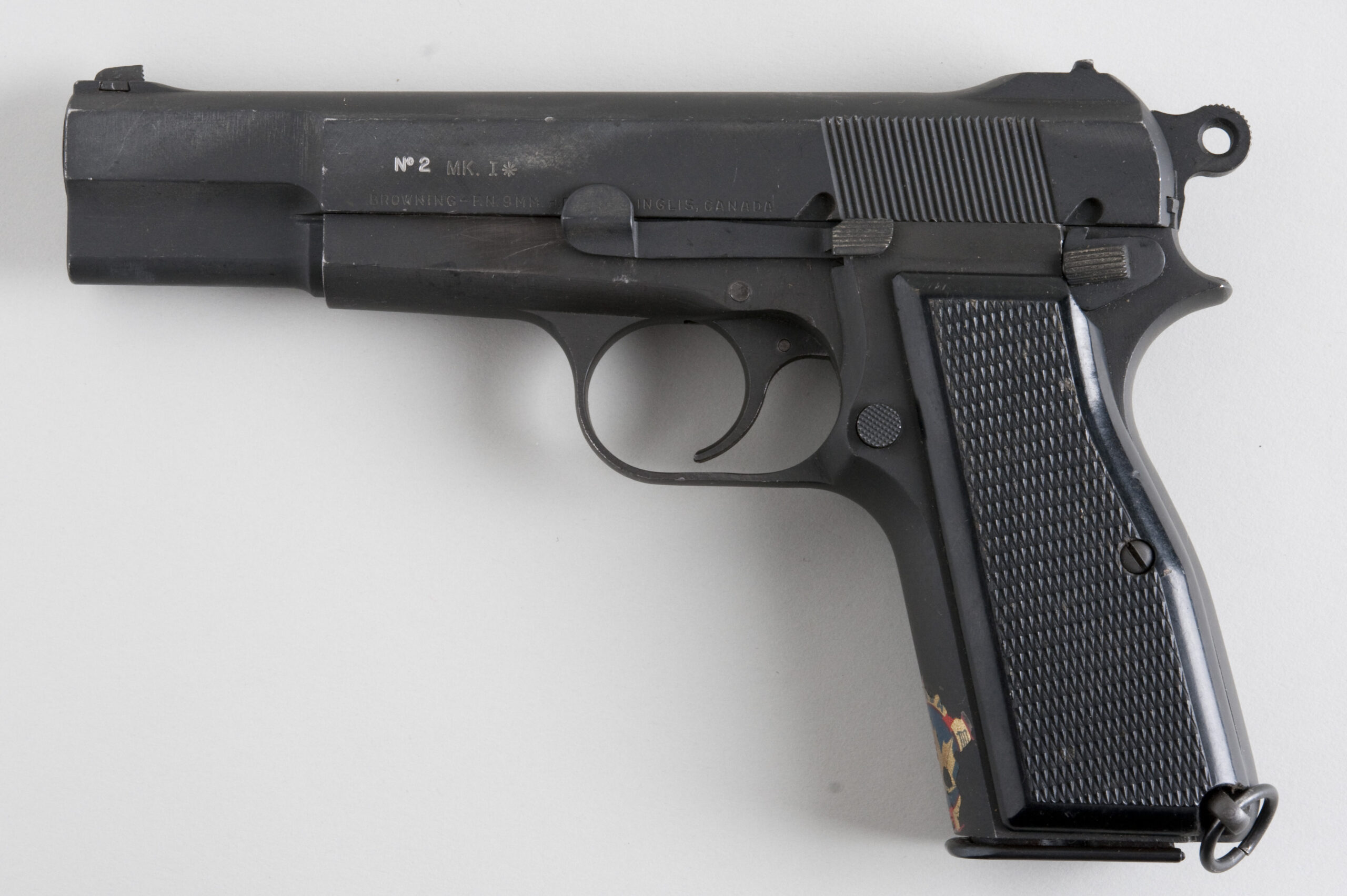
Meanwhile, FN had a backup plan. Before the factory fell, FN engineers managed to smuggle technical drawings and specifications out of Belgium and send them to Britain. The plans eventually made their way to the John Inglis and Company plant in Toronto, Canada. Inglis tooled up and began producing Hi-Powers for Allied forces. Approximately 152,000 Inglis Hi-Powers were produced during the war. Though the Chinese Nationalist contract was the original impetus for production, the majority -- roughly 94,000 units -- went to British, Canadian, and other Commonwealth forces, with approximately 66,000 going to Chinese Nationalist forces.
The result was the only case in modern warfare where the exact same pistol design was being manufactured simultaneously for both sides of a global conflict. A German paratrooper at Arnhem might have carried a Herstal-made Hi-Power. A British or Canadian soldier across the line might have carried a Toronto-made one. Same gun. Same design. Different finish.
Most Inglis guns were Parkerized (a matte phosphate finish), while most FN occupation guns were blued. That was about the only way to tell them apart on a battlefield.
Browning Hi-Power Postwar Dominance: The World's Military Pistol
After the war, FN resumed production in Herstal, and the Browning Hi-Power became one of the most commercially successful military handguns in history. Over the following decades, it was adopted by more than 50 countries -- more than any other pistol design before or since. The list reads like a roll call of NATO and Commonwealth nations: the United Kingdom, Canada, Australia, India, Israel, Argentina, and dozens more.
Israel adopted the Browning Hi-Power early and used it extensively in its wars of 1948, 1956, 1967, and 1973. The British SAS carried Hi-Powers during the Iranian Embassy siege in 1980 and during the Falklands War in 1982. Canadian forces used the Inglis Hi-Power as their standard sidearm from World War II all the way until 2023 -- an 80-year service life that must be close to a record for a semi-automatic pistol.
Eighty years. Think about that.
FN also licensed production to other countries. Argentina manufactured Hi-Powers at the Fabricaciones Militares arsenal under license. Indonesia, India, and several other nations produced their own versions. The design was so widely distributed that it became, for the second half of the 20th century, what the Colt Single Action Army had been for the second half of the 19th: the default military sidearm for a significant portion of the world.
Browning Hi-Power Design: Strengths and the Trigger Problem
The Browning Hi-Power got a lot of things right. The grip angle and ergonomics are outstanding -- hold one sometime, and you'll understand why shooters who've handled hundreds of pistols keep coming back to this one. It balances well. It is slim enough for comfortable holster carry despite the double-column magazine. The single-action trigger, when tuned, can be excellent. The fixed-barrel accuracy is good. The reliability, with proper maintenance and quality ammunition, is outstanding. The 9mm Parabellum cartridge, combined with 13 rounds of capacity, gives the shooter a genuine advantage over 7- or 8-round single-stack pistols.
The gun has one persistent weakness: the trigger. Saive's trigger mechanism routes the trigger bar around the outside of the magazine well, through a channel in the frame, to the sear. This creates a leverage disadvantage and introduces friction. The result is a trigger pull that is typically 7-8 pounds with a long, somewhat mushy takeup before a clean break. By 1911 standards, it is poor. By military pistol standards, it is acceptable. Generations of armorers and aftermarket gunsmiths have made careers improving Hi-Power triggers, which tells you everything you need to know.
The other common criticism is the magazine disconnect safety -- a spring-loaded plunger that prevents the gun from firing when the magazine is removed. The magazine disconnect adds another layer of friction to the trigger pull and is, in the opinion of most serious shooters, an unnecessary complication. Many owners remove it, which typically improves the trigger feel by 1-2 pounds. Whether that's advisable depends on your view of safety features versus shooting performance.
The Competition Catches Up
The Browning Hi-Power dominated the military pistol market for roughly 50 years. Its decline began in the 1980s when a new generation of double-action/single-action pistols -- and later, striker-fired polymer pistols -- began to eat into its market share.
The Beretta 92 (adopted by the U.S. military as the M9 in 1985) offered a 15-round magazine, a double-action first shot, and a more modern manufacturing process. The SIG P226 offered similar capacity with a reputation for superior reliability in adverse conditions. The Glock 17, introduced in 1982, offered 17 rounds, a polymer frame, a simple striker-fired mechanism, and a price point that made the Hi-Power look expensive.
The Browning Hi-Power's single-action-only mechanism, which had been an advantage in the 1930s when most military pistols were also single-action, became a perceived liability in an era when militaries wanted the "safety" of a heavy double-action first pull. The Browning Hi-Power's all-steel construction, which contributed to its excellent balance and recoil characteristics, made it heavier than polymer-framed alternatives. And FN's own product line was evolving -- the company introduced the FN FNP and later the FN 509 to compete in the modern military and law enforcement markets.
Browning Arms discontinued the Browning Hi-Power in 2017 after more than 80 years of production. End of an era.
The Return: FN High Power (2022)
But not quite the end. In 2022, FN reintroduced the Browning Hi-Power as the "FN High Power." The new version isn't a clone of the old one -- it has been redesigned with modern manufacturing techniques, a new extractor, an improved trigger, and subtle ergonomic refinements. But it retains the essential character of the original: single-action operation, a slim profile, the distinctive Hi-Power grip angle, and a 17-round magazine (up from the original 13, made possible by modern magazine technology).
The market response was enthusiastic. The Hi-Power had been gone just long enough for people to realize how much they missed it. The new FN High Power isn't cheap -- street prices run well over $1,000 -- but it offers something that few modern pistols do: a direct connection to a design lineage stretching back to John Browning himself.
The Hi-Power's Place in History
The Browning Hi-Power is a bridge. It connects the early semi-automatic pistol era -- the Luger, the C96, the 1911 -- to the modern combat pistol. Its cam-operated barrel unlocking system replaced the 1911's swinging link and became the standard mechanism for nearly every successful military pistol that followed. Its double-column magazine established that high capacity and a slim grip were not mutually exclusive. Its 9mm chambering, once considered underpowered by .45 ACP advocates, proved to be the ideal military pistol cartridge -- a judgment that modern ammunition technology has only reinforced.
Dieudonne Saive, who finished the design after Browning's death, doesn't get enough credit. He took an incomplete concept and turned it into a production-ready military pistol that served for 80 years across more than 50 countries. Saive went on to design the FN FAL battle rifle -- arguably the Western world's answer to the AK-47 -- making him one of the most influential firearms designers of the 20th century, even if his name is far less famous than Browning's.
As for Browning, the Hi-Power was his last handgun. He didn't live to see it produced. But the fact that a pistol designed in the 1920s is still being manufactured, still being carried, and still being praised almost a century later says everything about the man's genius. He didn't just design guns that worked. He designed guns that lasted. The Browning Hi-Power is the proof.
Want One?
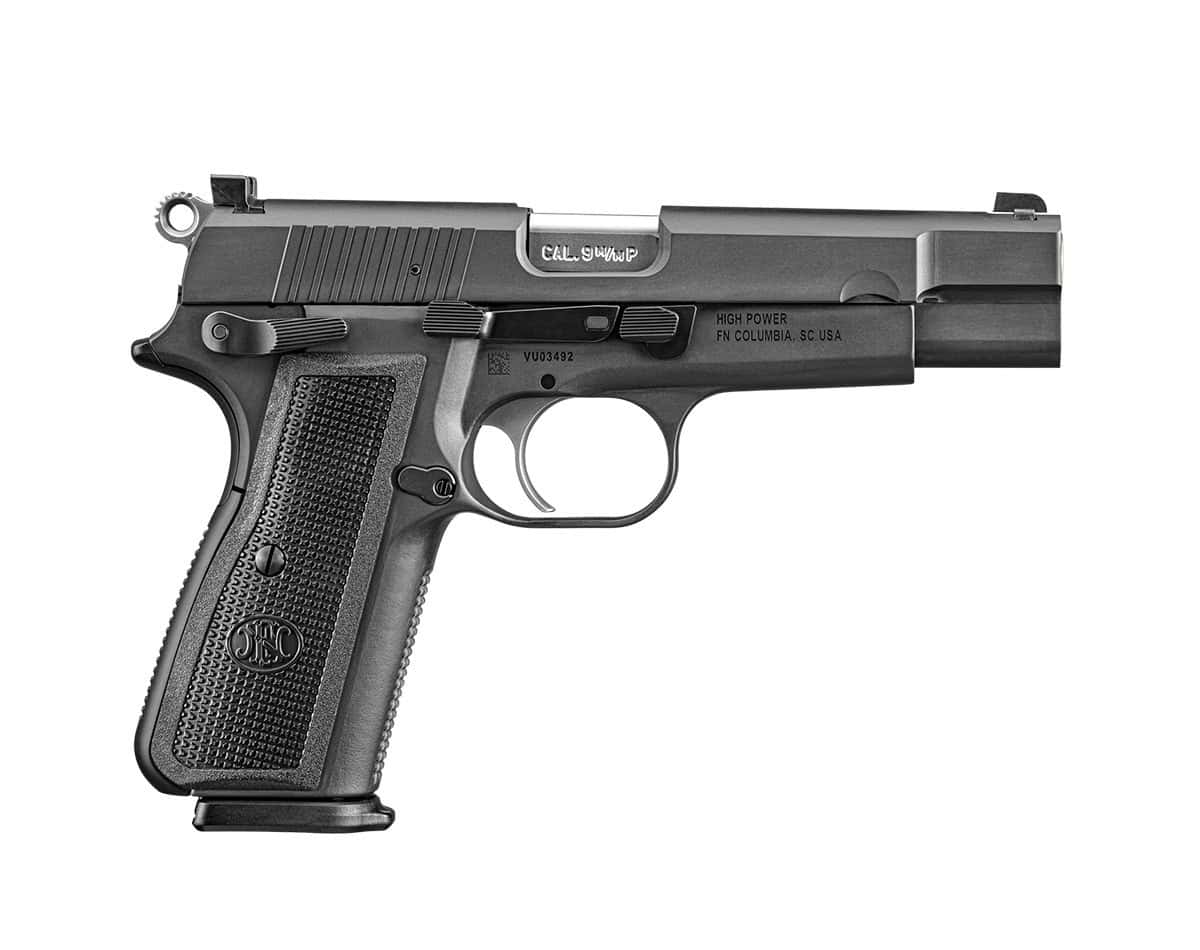
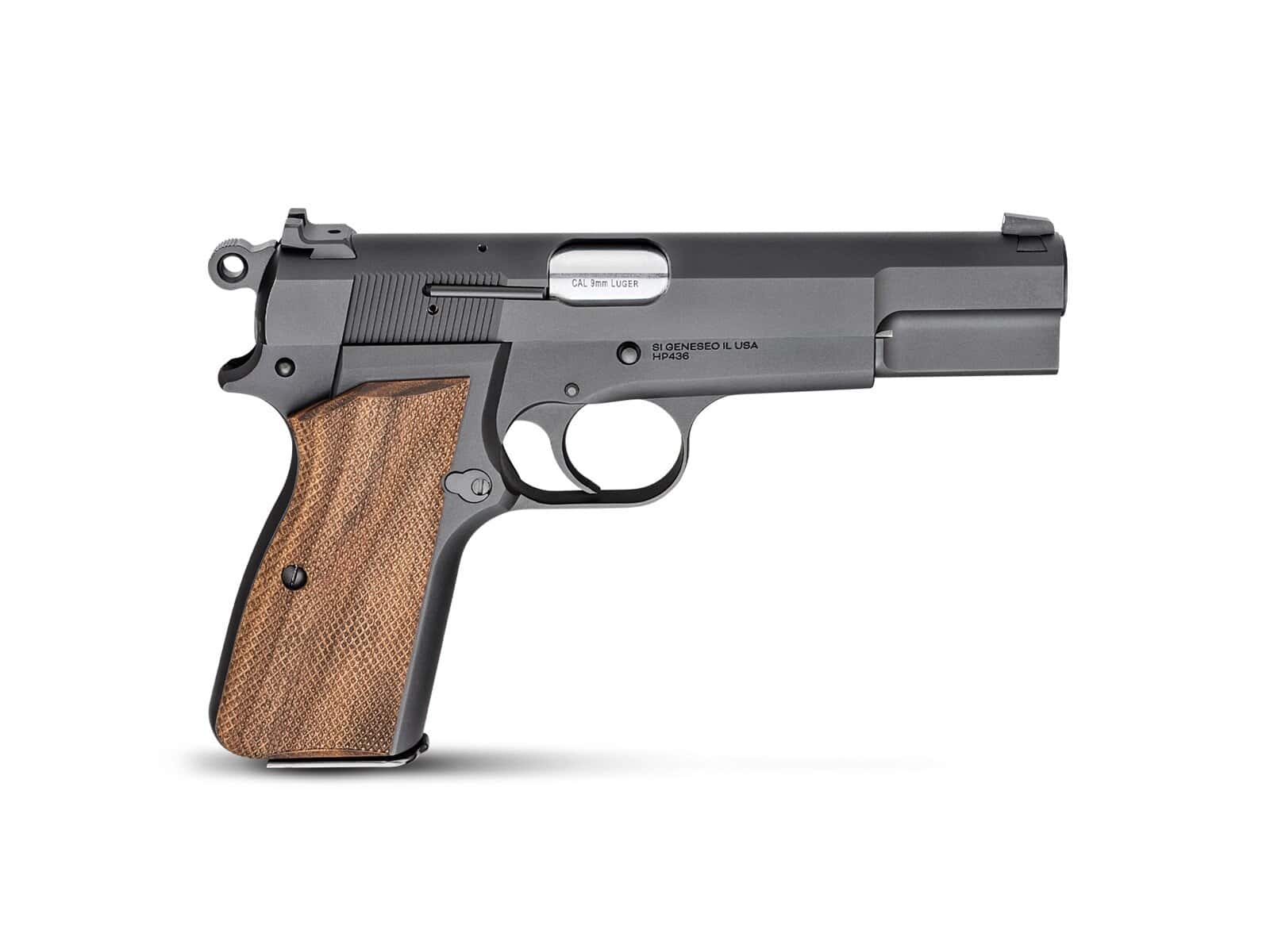
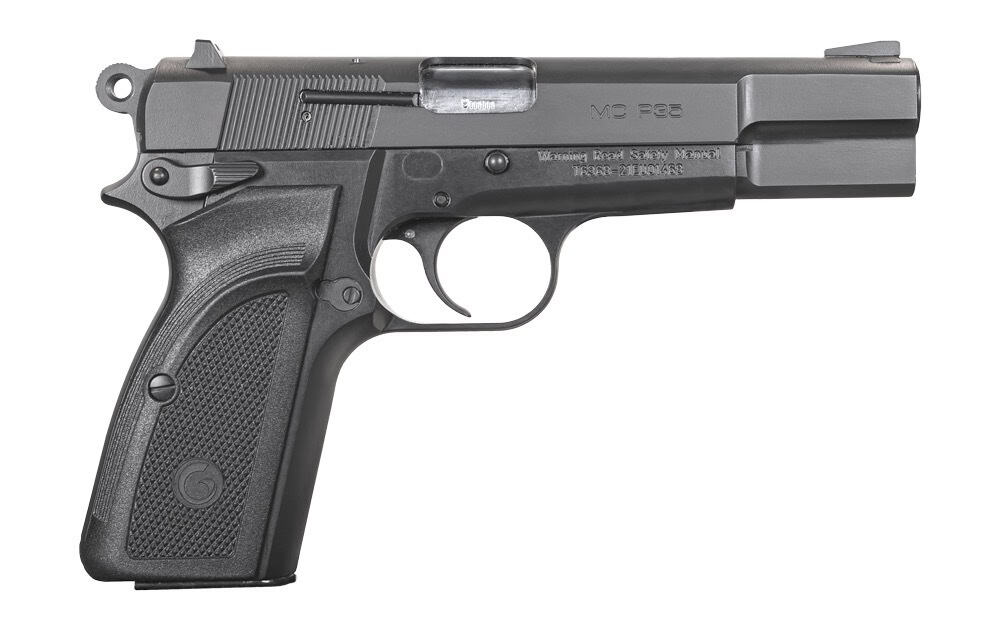
The Browning Hi-Power is back in production, and you have options at every price point. The FN High Power (~$1,300 street) is FN's official reintroduction -- redesigned internals, improved trigger, 17-round magazine, but unmistakably a Hi-Power in the hand. The Springfield Armory SA-35 (~$700) is closer to a faithful reproduction of the classic design, with the magazine disconnect removed from the factory and a trigger that is significantly better than what FN ever shipped in the original. The Girsan MC P35 (~$450) is the budget entry -- a Turkish-made clone that gets the fundamentals right for roughly a third of the FN's price.
All three are chambered in 9mm and widely available. Check current inventory at Brownells and MidwayUSA.
Further Reading
For those who want to explore the Browning Hi-Power story in full detail:


The Browning High Power Automatic Pistol by R. Blake Stevens — The definitive reference, covering 70 years of Hi-Power history from Browning's prototypes through modern production. Published by Collector Grade Publications.
The Browning High Power Automatic Pistol (Expanded Edition) by R. Blake Stevens — Updated edition with additional material on late-production variants and the collector market.
If you know of any forums or sites that should be referenced on this listing, please let us know here.