Quality CCW training is the single most important investment a concealed carrier can make. Getting your concealed carry permit is not the finish line. It is the starting line. Quality concealed carry training goes far beyond fulfilling a permit requirement — it builds the skills that matter when seconds count.
That might be the most critical lesson a new concealed carrier can absorb. The permit class — whether it was eight hours or sixteen — taught you the legal minimum your state requires to carry a firearm in public. It did not teach you how to fight with a gun. It did not teach you when to draw. It probably did not teach you how to draw from a holster under stress, how to move to cover, or how to make a shoot/no-shoot decision in the 1.5 seconds you'll have to make it.
Carrying a concealed firearm changes everything about how you interact with the world. It changes how you should handle conflict. It changes your responsibilities. And it demands skills that only deliberate, ongoing training can build.
This guide covers the essential training fundamentals every concealed carrier needs to understand — from situational awareness to the mechanics of the draw stroke to the legal framework that governs when lethal force is justified. These are the building blocks. Master them, and you'll carry with genuine competence instead of false confidence.
The Responsibility of Concealed Carry
The moment you strap on a holster and walk out the door, you are carrying the capacity to end a human life. That is not dramatic language — it is a factual description of what a loaded firearm is. And that fact should inform every decision you make while carrying.
Responsible concealed carry means more than not shooting someone who doesn't need shooting. It means actively restructuring how you move through the world:
- You lose every argument. That driver who cut you off? Let it go. The person who bumped into you and got mouthy about it? Walk away. When you carry a firearm, every confrontation you participate in is a confrontation involving a gun — your gun. The stakes of any encounter escalating are now lethal. Swallow your pride. Leave. Every single time.
- You go to places sober. Alcohol and firearms do not coexist. Most states prohibit carrying while intoxicated, and all common sense does too. Impaired judgment and a loaded weapon is a recipe for tragedy.
- You avoid stupid places, stupid people, and stupid situations. This is sometimes called the "Rule of Stupid" in self-defense circles, and it eliminates more potential violent encounters than any firearm ever will.
- You accept the legal and financial consequences that come with using lethal force. Even in a clean, justified defensive shooting, you will likely be arrested, handcuffed, and taken to a police station. You will need an attorney. You may face a grand jury. You will almost certainly be sued civilly. The emotional aftermath is severe and lasting. Carrying a firearm means accepting all of this as the cost of defending your life or someone else's.
None of this should discourage you from carrying. It should calibrate your expectations. The concealed carrier's mindset is not about looking for trouble — it is about being prepared for trouble that finds you despite your best efforts to avoid it.
Cooper's Color Code: The Foundation of Situational Awareness
Colonel Jeff Cooper, one of the most influential firearms instructors in modern history, developed a simple color-coded system for describing levels of mental awareness. It has been adopted by military, law enforcement, and civilian self-defense instructors worldwide because it works. It gives you a language for thinking about your own alertness — and a framework for adjusting it based on your environment.
Condition White — Unaware and Unprepared
You are oblivious to your surroundings. Scrolling your phone while walking through a parking garage at night. Wearing earbuds in both ears on a deserted street. Sitting in your car in a parking lot, engine off, face buried in a text conversation with no awareness of who is approaching your vehicle.
Condition White is where victims are selected. An attacker looks for someone who won't see them coming, and a person in Condition White is advertising that they are exactly that target. When carrying a firearm, you should never be in Condition White in public.
Condition Yellow — Relaxed Awareness
This is your default state when carrying. You are not paranoid. You are not scanning every rooftop for snipers. You are simply paying attention. You notice who is around you. You see the person walking toward you from your left. You register the car that has been sitting in the parking lot with its engine running. You glance behind you periodically. You choose a seat in a restaurant where you can see the entrance.
Condition Yellow is sustainable. You can live your entire day in Condition Yellow without stress or fatigue. It is simply the habit of being present and observant instead of distracted and oblivious. Most experienced concealed carriers describe it as second nature after a few weeks of practice.
Condition Orange — Specific Alert
Something has caught your attention, and you have identified a potential threat. The person who changed direction to follow you. The two individuals who split apart and are now approaching you from different angles. The aggressive panhandler who is closing distance and ignoring your verbal boundary-setting.
In Condition Orange, you are developing a plan: If that person does X, I will do Y. You are identifying exits, cover, and escape routes. You may be adjusting your position to create distance or improve your angle. You are mentally prepared to act if the situation escalates — but you are also prepared for it to resolve peacefully, which is by far the most common outcome.
Condition Red — Confirmed Threat, Ready to Act
The threat is real, it is imminent, and you are executing your plan. This does not necessarily mean drawing your firearm — Condition Red might mean running to safety, getting behind cover, calling 911, or verbally commanding someone to stop. Drawing and firing is the last option in Condition Red, not the first.
The power of Cooper's Color Code is in the transition between levels. A person who lives in Condition Yellow and recognizes when they've shifted to Condition Orange has time to prepare, reposition, and make decisions. A person in Condition White who is suddenly confronted with a Condition Red emergency has no preparation time at all — and time is the most valuable resource in a violent encounter.
The 4-Count Draw Stroke: Getting the Gun Out Efficiently
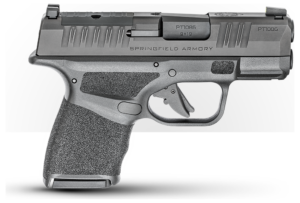
The draw stroke is the single most important physical skill a concealed carrier can develop. It is the bridge between recognizing a lethal threat and being able to address it. A smooth, efficient draw from concealment — under stress, with fine motor skills degraded by adrenaline — does not happen by accident. It is built through hundreds of deliberate repetitions.
Most professional instructors teach the draw as a 4-count process. Each count is a distinct position, and each position has a purpose.
Count 1 — Establish the Grip
Your strong hand drives to the holstered firearm and establishes a full firing grip while the gun is still in the holster. Simultaneously, your support hand moves to your chest or centerline (depending on your training methodology) to prepare for the two-handed grip later.
This is where concealment garments matter. If you carry under an untucked shirt, your strong hand sweeps the garment up and back to access the holster. If you carry under a jacket, you sweep the jacket hem. The garment clearance and the grip happen together as a single motion. This is also where most draw failures occur for new carriers — fumbling with the cover garment under stress.
Count 2 — Clear the Holster
Draw the firearm straight up and out of the holster until the muzzle is completely clear. The gun is now oriented generally forward, close to your body, with your elbow high. This is sometimes called the "retention position" because at this point, you could fire at a contact-distance threat if necessary without fully extending the firearm.
Count 3 — Join Hands (The "Press-Out" or "Meeting Point")
Your support hand meets your strong hand at the centerline of your chest. You now have a two-handed grip on the firearm, close to your body. The gun is oriented toward the target. From this position, you can fire at close range with both hands on the gun, or you can extend outward to Count 4.
Count 4 — Full Extension
Press the firearm out to full arm extension, acquiring your sights (or your red dot) as the gun reaches your visual plane. This is the final firing position — full two-handed grip, arms extended, sights on target, trigger finger indexed on the frame until you have made the conscious decision to fire. If you are still building out your setup, check out our guide to the best concealed carry holsters.
Why the 4-Count System Matters
Breaking the draw into counts allows you to practice each component independently and to deliver the firearm at any distance. A contact-distance threat might only require Counts 1 and 2. A threat at room distance might use Counts 1 through 3. A threat at distance requires the full 4-count extension.
The draw stroke from concealment should be practiced daily. Dry fire practice (with a verified unloaded firearm and snap caps for added safety) is how this skill is built. Ten minutes of deliberate draw practice every day will build more competence than a monthly range session alone.
Legal Basics: The AOJ Triad
Understanding when you are legally justified in using lethal force is not optional knowledge for a concealed carrier. It is essential. Getting this wrong means either hesitating when your life depends on acting, or acting when the law does not support it — and spending years in prison as a result.
Important: Laws governing the use of lethal force vary significantly by state. What follows is a general educational framework, not legal advice. You are responsible for knowing the specific laws in your state and any state where you carry. Consult a qualified attorney for legal guidance specific to your situation.
The AOJ Triad — Ability, Opportunity, Jeopardy — is a widely taught framework for understanding whether a use of lethal force is legally defensible. All three elements must be present simultaneously.
Ability
The threat has the ability to cause you death or serious bodily harm. This could be a weapon (firearm, knife, blunt object), a significant physical advantage (size disparity, multiple attackers), or specialized training or capability. A 250-pound attacker striking a 120-pound defender has the ability to cause serious harm even without a weapon. Two or more attackers acting together have the ability even if individually they might not.
Opportunity
The threat has the opportunity to use that ability against you right now. A person with a knife who is 100 yards away has ability but not opportunity — they can't reach you. That same person at 15 feet has both ability and opportunity (a person with an edged weapon can close 21 feet in approximately 1.5 seconds — this is known as the Tueller Drill concept). A person with a firearm has opportunity at much greater distance.
Jeopardy
The threat is acting in a way that a reasonable person would interpret as placing you in jeopardy of death or serious bodily harm. This is the intent component. A person standing near you with a knife in their pocket has ability and proximity, but if they're peacefully standing in line at the grocery store, there is no jeopardy. Jeopardy exists when the person's words, actions, or behavior indicate they intend to harm you — raising the weapon, advancing aggressively, making verbal threats of imminent violence.
All Three, Simultaneously
Remove any one element and the legal justification for lethal force collapses. A person screaming threats from across a football field has ability and jeopardy but no opportunity. A small child throwing a tantrum may have jeopardy (intent to harm) but lacks ability. A friend at the range holding a loaded firearm has ability and opportunity but no jeopardy. For additional reading, see NRA training and certification programs.
Understanding the AOJ triad gives you a mental checklist that runs in the background during any potential encounter: Does this person have the ability to kill or seriously injure me? Do they have the opportunity right now? Are they putting me in jeopardy? If all three answers are yes, and you have no reasonable ability to retreat or de-escalate (depending on your state's laws regarding duty to retreat vs. stand your ground), lethal force may be justified.
State laws vary enormously. Duty to retreat, stand your ground, castle doctrine, defense of third parties, civil liability — these all differ by jurisdiction. Our training resources provide a comprehensive legal framework covering these variations, a state-by-state reference checklist, guidance on interacting with law enforcement after a defensive shooting, and a recommended reading list of authoritative legal resources for armed citizens. Know your state's laws before you carry.
Top 5 Mistakes New Concealed Carriers Make
After talking with firearms instructors, reviewing training literature, and spending time in concealed carry communities, these five mistakes come up consistently. If you're new to carrying, audit yourself against this list honestly.
1. Carrying Without Practicing Draws from Concealment
This is the most common and most dangerous mistake. A concealed carrier who has never practiced drawing from under a garment, from their actual holster, in their actual carry position, has a tool they cannot effectively deploy. The draw from concealment is a fundamentally different motion than drawing from an open holster at a range lane. The cover garment adds a step. The holster position changes the angle. The concealment clothing you wear affects access.
If you have not practiced your draw from concealment at least 50 times, you are not prepared to use your firearm under stress. Period. Clear your firearm, verify it is unloaded, put on your carry setup and your normal clothing, and practice the draw. Do it slowly at first, then build speed only after the mechanics are smooth. Use snap caps during dry fire practice so you can safely verify trigger press and follow-through without risk.
2. Neglecting Ongoing Training After Getting the Permit
The permit class is the bare minimum. It is the equivalent of passing your driver's test at 16 — you're legal, but you're not skilled. Many concealed carriers take the permit class, buy a gun, buy a holster, and never train again. Their skill level freezes at "just barely passed the state-mandated shooting qualification" and degrades from there.
Skills are perishable. If you haven't drawn your firearm from concealment in three months, your draw is slower and sloppier than it was. If you haven't fired your carry gun in six months, your marksmanship has degraded. Ongoing training — even 15 minutes of dry fire practice at home three times a week — is what separates a person who carries a gun from a person who can actually use one.
3. Choosing Comfort Over Accessibility (Bad Holster Position)
New carriers sometimes migrate their holster to whatever position is most comfortable rather than most accessible. The holster slides to 5 o'clock because it doesn't poke them when they sit down. They use a loose clip because a tight clip is harder to put on. They carry in a pocket holster because IWB feels intrusive.
Comfort matters — an uncomfortable holster is one you'll stop wearing. But accessibility matters more. Can you reach your firearm from a seated position in your car? Can you access it if someone has knocked you to the ground? Can you draw one-handed if your support arm is injured or pinned? Your holster position needs to balance comfort with practical access. Invest in a quality holster and a proper gun belt — these solve most comfort issues without compromising your draw. (See our full guide to the best concealed carry holsters for specific recommendations.) If you are still building out your setup, check out our picks for the best concealed carry guns for women.
4. Not Carrying Consistently
The firearm sitting in your nightstand safe is not protecting you at the grocery store. The gun locked in your car's center console is not accessible when you're walking through a parking garage. The pistol you left at home because you were "just running a quick errand" is useless during the errand that turns into an emergency.
Violent encounters do not schedule themselves for your convenience. They happen at random, in places you didn't expect, at times you didn't anticipate. If you've made the decision to carry, carry. Every day. Every errand. If your current carry setup is too uncomfortable or inconvenient to carry consistently, that is a gear problem to solve (smaller gun, better holster, proper belt), not a reason to leave the house unarmed.
5. Failing to Understand Their State's Use of Force Laws
An alarming number of concealed carriers cannot articulate when they are legally justified in using lethal force. "Someone breaks into my house" is not a complete answer in every state. "Someone threatens me" is not a threshold for lethal force in most jurisdictions without additional conditions being met.
You need to know: Does your state have a duty to retreat? Does castle doctrine apply, and if so, what does it actually cover? Can you use lethal force to defend a third party? What are the rules regarding verbal warnings? What should you say (and not say) to police after a defensive shooting? These are not abstract legal questions — they are the rules that will determine whether you go home or go to prison after the worst day of your life. For additional reading, see United States Concealed Carry Association.
Why Ongoing Training Matters
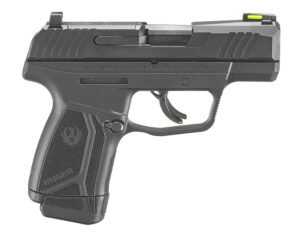
Let's address a hard truth: the initial CCW permit class in most states is inadequate preparation for carrying a firearm in public. Many state-mandated courses are 4 to 8 hours long. Some don't even require live fire. The ones that do typically require hitting a large target at short range with no time pressure — a standard that virtually anyone can meet regardless of actual skill.
The permit class exists to satisfy a legal requirement. It does not exist to make you competent. Competence requires ongoing, deliberate training across multiple dimensions:
Dry Fire Practice
This is the backbone of concealed carry training, and it's free. Clear your firearm (check it three times), use snap caps, and practice your draw, your trigger press, your sight alignment, and your target transitions in the safety of your home. Laser training systems can add feedback to dry fire sessions and make them more productive. Ten minutes of focused dry fire three to five times per week builds more skill than a monthly range trip alone.
Live Fire Range Sessions
Dry fire builds mechanics. Live fire validates them under recoil. Shoot your carry gun, from your carry holster (if the range allows holster work), at realistic distances. Most defensive shootings occur within 7 yards. Practice at 3, 5, and 7 yards with time pressure. Can you put two rounds on a chest-sized target in under 3 seconds from the holster? That's a reasonable baseline standard. Work toward it.
Professional Instruction
Take at least one post-permit class from a reputable defensive shooting instructor every year. Organizations and instructors to look for include those affiliated with or recommended by serious defensive training schools. A good 2-day defensive pistol course will teach you more in a weekend than you'll learn in a year of solo range sessions. Force-on-force training with simunitions or airsoft, if available in your area, adds a stress inoculation component that no paper target can replicate.
Scenario-Based Mental Training
Walk through your daily routine mentally and consider: where are the choke points? If something happened in this parking lot, where is cover? If someone approached me aggressively in this store, what are my options before I even consider the firearm? This mental rehearsal takes seconds and costs nothing, but it pre-loads decision-making frameworks that will be critical under stress.
Essential Training Gear for Concealed Carriers
You don't need a lot of gear to train effectively, but a few items make home practice safer and more productive:
- Snap caps / dummy rounds: Inert training rounds that allow you to practice loading, unloading, draw strokes, trigger press, and malfunction drills without live ammunition. Essential for dry fire practice. — Browse snap caps on Amazon | Brownells
- A quality concealed carry holster: Train with the holster you actually carry. Practicing draws with a different holster or no holster at all builds the wrong muscle memory. — Browse holsters on Amazon | MidwayUSA
- A proper gun belt: A belt designed for concealed carry provides the rigidity and stability that keeps your holster in position during the draw. A department-store belt will shift and sag. — Browse gun belts on Amazon
- A shot timer (or phone app): Measuring your draw time and split times is the only way to track improvement objectively. Several free and paid phone apps work for this purpose.
- Laser training cartridge (optional but recommended): A snap cap with a built-in laser that flashes when the firing pin strikes. Gives you instant visual feedback on where your muzzle was pointed at the moment of trigger press. An outstanding dry fire tool.
Frequently Asked Questions
Do I need a permit if my state allows permitless carry?
Yes -- and we'd strongly recommend getting one even if your state doesn't require it. The permit class is an opportunity to learn the legal framework around carrying a concealed firearm, qualify with your carry gun under structured conditions, and demonstrate a baseline level of competence. Beyond the training value, the permit itself often comes with tangible benefits: in many states, a concealed carry permit exempts you from the NICS background check when purchasing a firearm (faster purchases). It also gives you reciprocity -- the ability to legally carry in other states that recognize your permit, which permitless carry does not. And if you ever need to demonstrate to law enforcement or a court that you took carrying seriously enough to get trained and permitted voluntarily, that permit tells a story about your intent and responsibility.
If you know of any forums or sites that should be referenced on this listing, please let us know here.