The $200 NFA tax stamp on suppressors is gone. As of January 1, 2026, under the One Big Beautiful Bill Act (signed July 4, 2025), the federal excise tax on suppressors, SBRs, SBSs, and AOWs dropped to $0. The ATF paperwork is still there — we'll get into that — but the single biggest financial barrier to suppressor ownership just disappeared. If you've been wondering how to buy a suppressor, the answer just got a lot simpler.
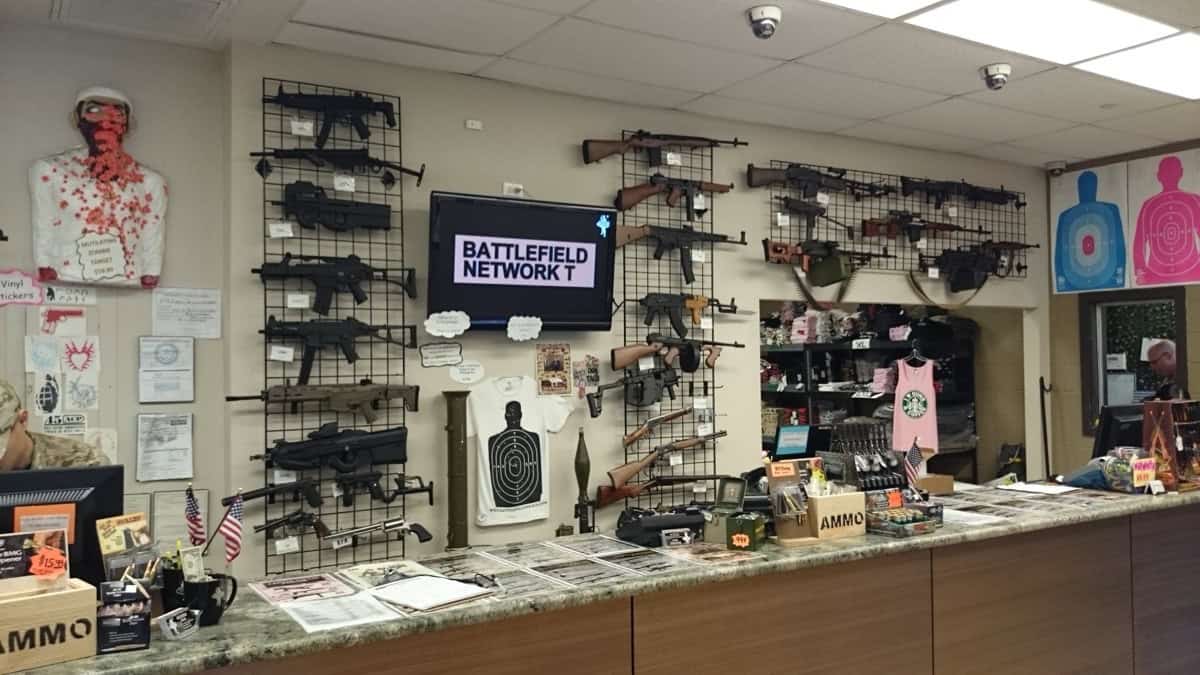
If you've been on the fence, this is the push. Here's everything you actually need to know about buying your first can, with zero fluff and no Hollywood mythology.
How Suppressors Actually Work
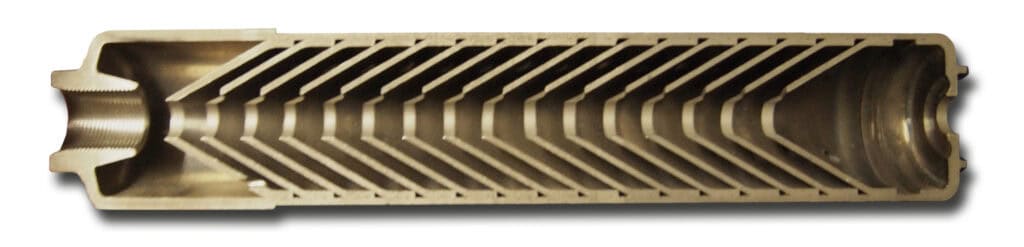
A suppressor is a series of baffles inside a tube. That's it. When you fire a round, hot expanding gas follows the bullet out of the barrel. Without a suppressor, that gas hits open air and creates a pressure wave — that's the bang. A suppressor gives that gas somewhere to go. It enters expansion chambers between the baffles, cools, slows down, and loses energy before exiting. Less pressure at the muzzle means less sound.
How much less? A typical unsuppressed gunshot runs 155-170 dB depending on caliber. A suppressed shot typically lands between 130-140 dB for centerfire cartridges. A suppressed .22 LR with subsonic ammo can get down to 113-120 dB.
For context, 140 dB is the threshold for immediate hearing damage from a single exposure. So a good suppressor on a centerfire rifle gets you right around that line — still loud, but no longer guaranteed to destroy your hearing with every trigger pull. On a .22 LR, you're genuinely in "hearing safe" territory.
What a suppressor does NOT do: make a gunshot sound like a mouse click. That's pure Hollywood. A suppressed 5.56 still sounds like a gunshot. It just sounds like a gunshot that won't give you tinnitus.
How to Buy a Suppressor: The 2026 Process
The tax is gone. The paperwork is not. Here's the step-by-step:
1. Pick your suppressor and find a dealer. You can buy from a local Class 3 / SOT dealer, or use an online dealer like Silencer Central, Silencer Shop, or Capitol Armory. If you buy online, the suppressor ships to a local dealer (a licensed SOT) for transfer. Silencer Central is worth a special mention — they handle the entire process including NFA paperwork, photos, and fingerprints, and they ship directly to your door in most states.
2. Complete ATF eForm 4. This is the transfer form for NFA items. Your dealer handles most of this electronically. You'll need:
- A valid government-issued photo ID
- Passport-style photo (many dealers have kiosks for this)
- Fingerprints (again, kiosks or ink cards)
- Your Social Security number (not technically required, but it speeds up the background check significantly — use it)
3. CLEO notification. A copy of your Form 4 goes to your local Chief Law Enforcement Officer. This is a notification, not a request for permission. They don't have to approve anything.
4. Background check and wait. The ATF runs your background check. Current eForm 4 approval times are running fast — individual filings are averaging around 2-3 days, trust filings around 3-5 days. These are historically unprecedented speeds. However, with the $0 tax stamp drawing a flood of new submissions in early 2026, expect some variability. Clean submissions with no complications still move fast. But don't be surprised if yours takes a couple of weeks.
5. Pick up your suppressor. Once approved, the ATF emails the approved stamp to your dealer. You go in, fill out a 4473 (same form as any other firearm purchase), pass the NICS check, and walk out with your can.
No, you cannot take it home same day. The eForm approval process still takes at minimum a day or two, and your dealer holds the suppressor until that approval comes through. Plan accordingly.
Individual vs. Trust: Does It Still Matter?
Short answer: it depends on your situation.
Individual registration is simpler. It's just you. One person, one set of fingerprints, one background check. The downside is that only YOU can possess that suppressor. If your spouse wants to take it to the range without you physically present, that's technically a felony.
A gun trust allows multiple trustees (your spouse, adult children, shooting buddies) to legally possess and transport the suppressor without you being there. Each trustee listed as a "responsible person" on the trust needs to submit fingerprints and a photo and pass a background check.
The trust used to have another advantage — it cost the same $200 whether you filed individually or through a trust, so you might as well get the shared access. With the tax at $0, the marginal cost argument is gone, but the legal flexibility argument remains.
My take: if you shoot with a spouse or family member and anyone else might need access to your stuff when you're not around, get a trust. A basic single-shot trust from a service like National Gun Trusts or Silencer Shop runs $25-$50. Cheap insurance. If it's just you, individual is fine.
One important note: if you file as an individual now and decide you want a trust later, transferring the suppressor into a trust requires a new Form 4. Right now that's free. Nobody knows if it will stay that way. Think about it before you file.
State Legality — Check Before You Buy
Suppressors are legal in 42 states. They are banned in California, Delaware, Hawaii, Illinois, Massachusetts, New Jersey, New York, and Rhode Island, plus Washington D.C. If you live in one of those states, this guide doesn't apply to you, and I'm sorry.
Types of Suppressors
Not all cans are created equal. Here's what you're choosing between:
Rimfire (.22 LR)
The quietest, cheapest, and most fun category. A good .22 suppressor on a bolt-action rifle with subsonic ammo is genuinely movie-quiet — you'll hear the firing pin hit the primer louder than the report. Prices typically run $300-$500. If you've never owned a suppressor before, a rimfire can on a .22 pistol or rifle is the best introduction to what suppression actually does.
Pistol (9mm, .45 ACP)
Designed for handgun calibers and pistol-caliber carbines (PCCs). These use a different mounting system than rifle cans — most attach via a piston that accommodates the tilting-barrel action of semi-auto pistols. They work great on fixed-barrel hosts too (like a Ruger Mark IV or a PCC). Suppressed 9mm with subsonic ammo (147-grain) is a genuinely pleasant shooting experience.
Rifle (.223/5.56, .308/7.62, .30 cal)
The workhorse category. A .30-caliber rifle suppressor will handle anything from .223 up through .308 and .300 Win Mag. These see the most abuse — high pressures, high temperatures, high round counts. Build quality matters here more than anywhere else. Expect to pay $700-$1,200 for a good one.
Multi-Caliber / Do-Everything
Cans rated for a wide range of calibers, sometimes from .22 up through rifle cartridges. The SilencerCo Hybrid 46M is the poster child — rated for nearly everything .46 caliber and smaller. The tradeoff is that a can optimized for everything is optimized for nothing. It'll be bigger, heavier, and louder on any given caliber than a dedicated suppressor for that caliber. But if you can only buy one, this category exists for you.
Dedicated vs. Multi-Cal
A dedicated .22 suppressor will be quieter on .22 than a multi-cal will ever be. A dedicated 5.56 can will be shorter and lighter than a .30-cal can doing 5.56 duty. But buying a separate suppressor for every host gets expensive and means more paperwork.
For most people, the smart play is two cans: a dedicated rimfire suppressor (because the performance gap between dedicated and multi-cal is enormous in rimfire) and a .30-cal rifle suppressor that can do double duty on 5.56. Add a pistol can if you shoot handguns a lot. We break down this decision in detail — with head-to-head comparisons and real dB numbers — in our multi-caliber vs dedicated suppressor guide.
Key Specs: What to Look At
When you're comparing suppressors, here's what actually matters:
Sound reduction (dB). This is the headline number, but be careful — there's no universal testing standard, so manufacturer claims aren't always apples-to-apples. PEW Science does independent, standardized testing and is the gold standard for sound data. Check their reviews before you buy.
Length and weight. A longer suppressor generally means more sound reduction, but also more weight hanging off your muzzle and a longer overall package. This matters a lot on a rifle you're carrying in the field and less on a range toy.
Material. Stainless steel is heavy but durable and cheap. Titanium is light but expensive and can't handle sustained full-auto fire on most centerfire rifles. Inconel and stellite are used in high-temperature baffles for full-auto-rated rifle cans. Aluminum is light but only suitable for rimfire and some pistol calibers.
Full-auto rated vs. semi-only. This matters even if you don't own a machine gun. "Full-auto rated" means the suppressor can handle rapid sustained fire and the heat that comes with it. If you do mag dumps at the range or shoot a lot of volume in a session, you want a full-auto-rated can.
Barrel length minimums. Some rifle suppressors have minimum barrel length requirements — typically 10" or 16" depending on caliber. Shorter barrels mean more unburned powder, higher gas pressure, and more heat entering the suppressor. Respect the minimums or you'll void your warranty and potentially damage the can.
Warranty. Some manufacturers offer lifetime warranties with no round-count limits (Dead Air, Rugged). Others have limitations. Read the fine print. A suppressor should last a lifetime with proper care.
Mounting Systems
How your suppressor attaches to your barrel matters more than most new buyers realize. We cover this topic in depth in our complete suppressor mounting systems guide, but here's the overview. You have two basic options:
Direct Thread
The suppressor screws directly onto the threaded barrel. Simple, light, cheap — no extra muzzle device needed. The downside: it's slower to remove, and the point of impact (POI) can shift slightly every time you thread it on and off because the exact rotational position varies. For a dedicated host that lives suppressed, direct thread is perfectly fine. For swapping between multiple guns, it's less ideal.
Quick-Detach (QD)
The suppressor locks onto a muzzle device (flash hider or brake) that's already installed on your barrel. QD systems are faster to attach and detach and provide more consistent POI because the lockup is repeatable. The tradeoff: the muzzle device adds cost ($60-$150 each, and you need one per host), adds weight, and adds length.
Major QD / Mounting Systems Worth Knowing
Dead Air KeyMo. One of the most proven QD systems on the market. Positive mechanical lock with a tapered interface. Heavy (the adapter adds about 4.3 oz and 1.6"; total system with muzzle device around 8.3-9.0 oz) but bombproof. Standard on Dead Air rifle suppressors.
HUB (1.375x24 thread standard). This is quickly becoming the universal standard. Most new suppressors ship with HUB-compatible threading, and you can then choose from multiple adapters and QD systems. If you're buying a new suppressor today, look for HUB compatibility.
Plan-B / Rearden Atlas. A taper-mount QD system that's lighter than KeyMo (about 4.4 oz, adds 0.5") and very popular with the precision rifle crowd. The Q Cherry Bomb uses the same interface. Growing rapidly in adoption.
SilencerCo ASR. SilencerCo's proprietary QD system. Works fine but is being superseded by the HUB standard on newer SilencerCo models.
Griffin Taper Mount. Another solid taper-mount option. Good compatibility across thread pitches (1/2x28 and 5/8x24).
My recommendation: if you're buying a rifle suppressor in 2026, make sure it has HUB threads. That gives you maximum flexibility to choose your mounting system now and swap later if something better comes along.
Recommendations: What to Actually Buy
These are honest picks, not paid placements. I'm recommending these because they're proven, well-supported, and represent good value.
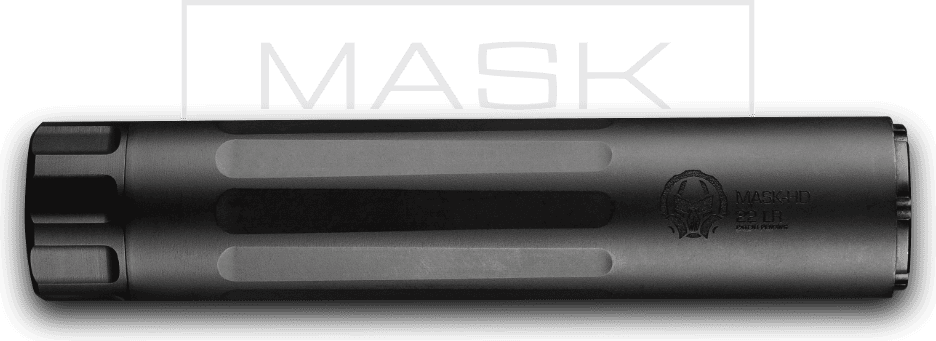
Best First Rimfire: Dead Air Mask HD
The Mask HD has been the default recommendation in this category for years, and it still holds up. Stainless steel and titanium construction, 5.1 inches long, 6.6 ounces. It's one of the quietest rimfire suppressors ever tested — PEW Science data puts it around 113-114 dB on a bolt-action .22 with subsonic ammo. Virtually no first-round pop. Full-auto rated. Lifetime warranty. Price is $489 MSRP (often available for $400–$450 at retailers like Silencer Central). Hard to beat. Check price at Silencer Central
Runner-up: Rugged Oculus 22. Modular (long or short configuration), great sound performance, and Rugged's lifetime warranty.
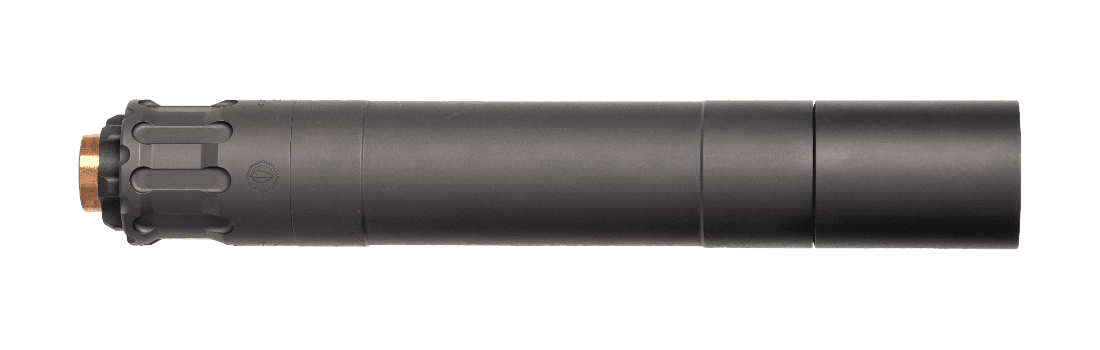
Best First Pistol: Rugged Obsidian 45
The Obsidian 45 runs in both long and short configurations (Rugged's ADAPT system), handles everything from 9mm through .45 ACP, and is consistently one of the quietest pistol suppressors tested. A suppressed 9mm with 147-grain subs through the Obsidian in long configuration is genuinely quiet — well under 135 dB on most hosts. It comes with a piston, a fixed-barrel spacer, and a booster assembly. Lifetime warranty. MSRP is $930 (often discounted at dealers). Check price at Silencer Central
If you only shoot 9mm: Look at the Rugged Obsidian 9. Smaller, lighter, and optimized for 9mm. Same build quality and warranty. Around $550-$650.
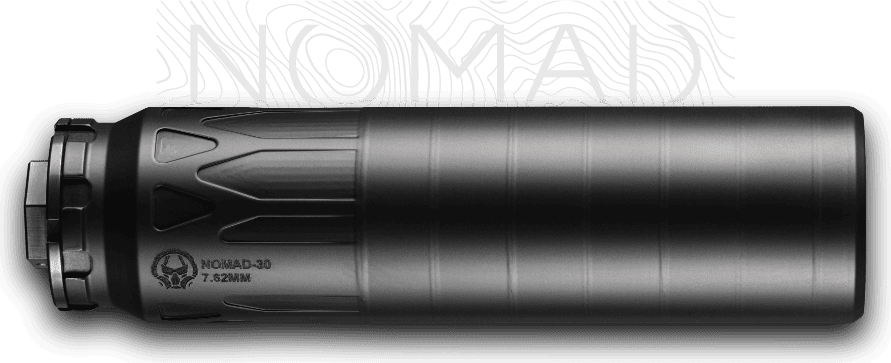
Best First Rifle (.30 Cal): Dead Air Nomad-30
The Nomad-30 hits the sweet spot of sound suppression, weight (14.5 oz), and versatility. It handles everything from 5.56 through .300 Win Mag, has no barrel-length restrictions, and is full-auto rated. HUB-compatible, so you can run it with KeyMo, Plan-B/Rearden, or direct thread — your call. MSRP is $949 (dealer prices vary). Check price at Silencer Central
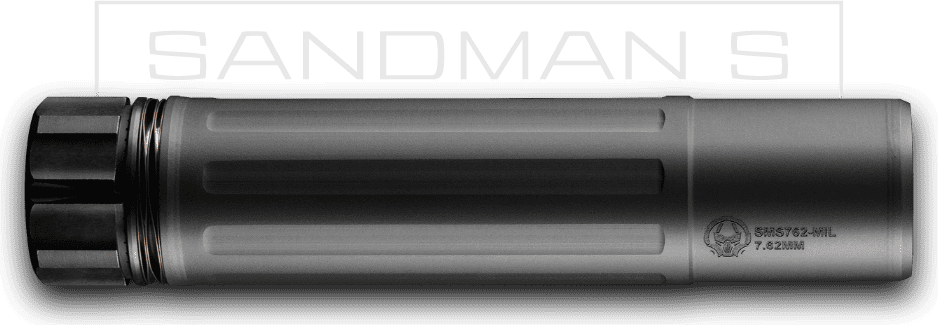
Also excellent: Dead Air Sandman-S. Heavier (17.7 oz) but built like an absolute tank — fully welded stellite baffle stack. If you plan to abuse your suppressor with high volume or want maximum durability and don't care about weight, the Sandman-S is the one. Comes standard with KeyMo. Around $800-$900. Check price at Silencer Central
Best Multi-Cal Do-Everything: SilencerCo Hybrid 46M
If you genuinely want one suppressor for pistol calibers, rifle calibers, and everything in between, the Hybrid 46M is the standard answer. Rated for nearly every cartridge .46 caliber and smaller, modular (long or short configuration), and built to handle a huge range of use cases. It won't be the quietest on any single caliber, but it'll be decent on all of them. Around $1,117 MSRP. Check price at Silencer Central
Budget Picks
Silencer Central Banish series offers solid performance at lower price points, and they handle the entire purchasing process (including a payment plan) through their own dealer network. The Banish 30 V2 runs around $999 and covers most rifle calibers.
YHM (Yankee Hill Machine) makes legitimately good suppressors at budget prices. The YHM Turbo T3 (.223/5.56) and Resonator R2 (.30 cal) are well-regarded and typically run $500-$700.
What to Avoid
Stay away from no-name suppressors from manufacturers you've never heard of. And if you're tempted by "solvent trap" kits marketed as a cheaper alternative, read our breakdown of suppressors vs solvent traps first — the legal risk is catastrophic and now completely unnecessary. A suppressor is a pressure vessel mounted inches from your face. This is not the place to save $100. Stick with established manufacturers — Dead Air, Rugged, SilencerCo, Q, YHM, CGS, HUXWRX (formerly OSS), Thunder Beast, and Surefire all make quality products.
Also avoid buying based purely on manufacturer dB claims without checking independent testing. Some companies test under conditions that produce flattering numbers. PEW Science exists for a reason. Use it.
What Else You Need (That New Buyers Forget)
The suppressor itself is only part of the equation. Budget for these:
Thread protectors. Your barrel threads are exposed when the suppressor is off. A $5-$10 thread protector keeps them from getting dinged up. Get extras — you'll lose them. Check thread protectors on Amazon
Suppressor-height sights (pistol). A suppressor on a handgun blocks your factory sights. You need taller sights to co-witness over the can. AmeriGlo and Trijicon both make good options. Budget $80-$150.
Piston and booster assembly (pistol). Most semi-auto pistols use a tilting-barrel design (Glock, Sig, S&W M&P, etc.). The suppressor needs a piston/booster system (often called a "Nielsen device") to allow the barrel to tilt and cycle properly. Most pistol suppressors come with one piston included, but if you have multiple handguns with different thread pitches, you'll need additional pistons. $50-$75 each.
Suppressor cover. A rifle suppressor gets screaming hot under sustained fire. A cover prevents mirage (heat waves in your sight picture) and burns. Burn Proof Gear and Cole-TAC make the best ones. $50-$100.
Subsonic ammo. A suppressor reduces the sound of the gunshot itself, but it does nothing about the supersonic crack of the bullet. If you want maximum suppression, you need subsonic ammunition — rounds loaded below 1,100 fps. This matters most for 9mm (147-grain subs are standard), .300 Blackout (purpose-built for suppressed subsonic use), and .22 LR (CCI Standard Velocity and CCI Quiet-22 are great choices). Note that subsonic 5.56/.223 is not really a thing — the cartridge needs velocity to function.
A good host. Some guns suppress better than others. Bolt-action rifles are quieter than semi-autos (no action noise). Pistols with fixed barrels (like the Ruger Mark IV series) are quieter than tilting-barrel designs. If you're buying your first suppressor, consider what you're putting it on. A threaded Ruger Mark IV with the Mask HD and CCI Standard Velocity is one of the most satisfying shooting experiences you'll ever have.
Where to Buy a Suppressor Online
Now you know the process and the products. Here's where to actually buy a suppressor and who makes it easiest for first-time buyers.
Silencer Central — Best for First-Time Buyers
Silencer Central is the simplest way to buy a suppressor if you've never done it before. They're a licensed dealer that handles everything remotely — the NFA paperwork, photos, fingerprints, trust setup, and Form 4 submission. You never need to visit a local dealer. Once approved, they ship the suppressor directly to your door (in states that allow it). They also offer interest-free payment plans that let you spread the cost over several months while your paperwork processes. Their average order runs about $1,150 and their catalog covers all the major brands including Dead Air, Rugged, SilencerCo, and YHM.
First suppressor recommendation from Silencer Central:
- Rimfire: Dead Air Mask HD — $489 MSRP (often less at dealers), the gold standard for .22 LR suppression
- Rifle: Dead Air Sandman-S or Nomad-30 — $949 MSRP (dealer prices vary), bombproof .30-cal cans that do double duty on 5.56
- Pistol: Rugged Obsidian 45 — $930 MSRP (often discounted at dealers), handles 9mm through .45 ACP in a modular package
- Budget all-rounder: Banish 30 V2 — $999, Silencer Central's own rifle can at a competitive price
The buying process with Silencer Central: pick your suppressor on their site, start your purchase (payment plan available), they mail you a fingerprint kit, you submit everything online, and they handle the Form 4 filing. When approval comes through — currently averaging days, not months — they ship your can. That's it. For someone figuring out how to buy a suppressor for the first time, they've removed nearly every friction point.
Stop Thinking About It and Go Buy One
Suppressors aren't exotic NFA exotica anymore. The tax is gone, approval times are measured in days instead of months, and there are excellent options at every price point. A suppressor is hearing protection that never runs out of batteries, never falls off your head, and makes every trip to the range more enjoyable for you and everyone on the line next to you.
Now you know how to buy a suppressor, what to look for, and where to get one. Pick a category, pick a can, head to Silencer Central, and file your paperwork. Your ears will thank you.
If you know of any forums or sites that should be referenced on this listing, please let us know here.