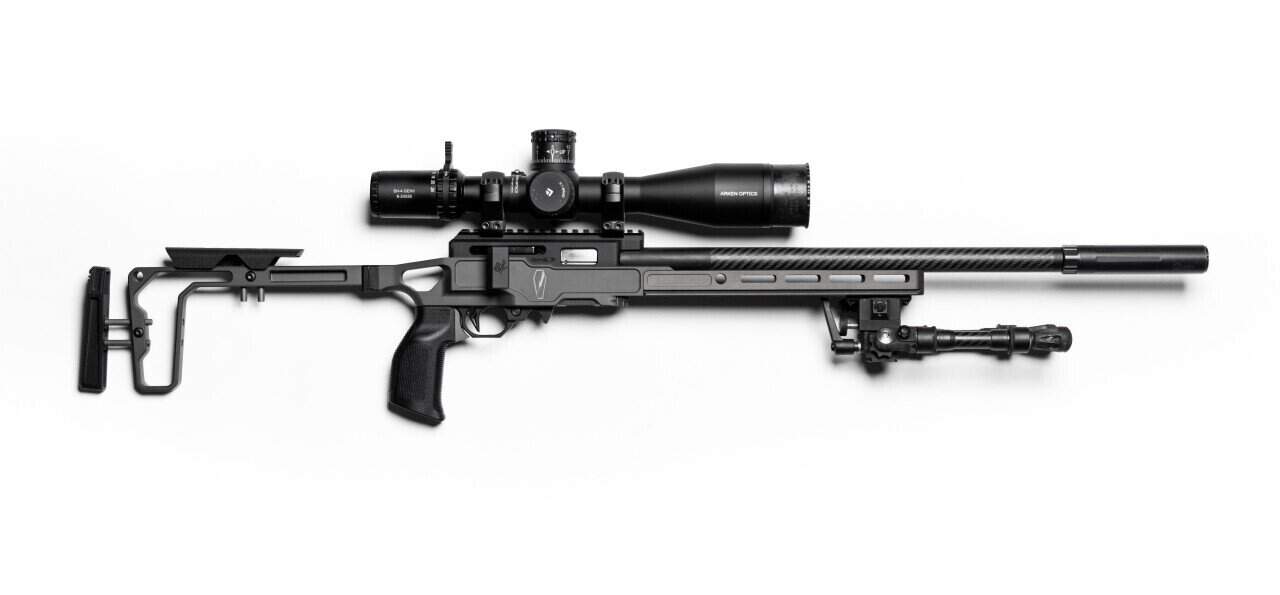
In the debate over suppressors vs solvent traps, the answer is now clearer than ever. The $200 NFA tax stamp on suppressors is gone. As of January 1, 2026, it costs you exactly zero dollars in federal tax to buy a legal suppressor. The One Big Beautiful Bill Act eliminated the excise tax on suppressors, short-barreled rifles, short-barreled shotguns, and AOWs.
So if you're still browsing those "solvent trap" listings on sketchy websites, thinking you're going to save yourself some money and hassle — stop. The one excuse people had for going that route just evaporated. And the consequences haven't changed one bit.
Suppressors vs Solvent Traps: What the Law Actually Says
Under federal law, a suppressor (or "silencer" — the law uses both terms interchangeably) is any device designed, made, or intended to muffle the report of a firearm. That's 18 U.S.C. Section 921(a)(24) and 26 U.S.C. Section 5845(a)(7). The definition is broad on purpose. It covers finished suppressors, suppressor parts, and any combination of parts intended to make one.
Suppressors are regulated under Title II of the National Firearms Act. Until January 2026, buying one meant filing an ATF Form 4, submitting fingerprints and a passport photo, passing a NICS background check, and paying a $200 excise tax — then waiting months for approval. That wait time and that $200 fee were the two things people complained about most.
One of those problems is now solved permanently. The other is getting better.
The Wink-Wink World of "Solvent Traps"
A "solvent trap" is marketed as a cleaning device. You thread it onto your barrel, run solvent through the bore, and the trap catches the dirty solvent so it doesn't drip everywhere. That's the legal fiction. And yes, some people genuinely use them for cleaning.
But the market for solvent traps didn't explode because America suddenly got passionate about bore cleaning. These devices — aluminum or titanium tubes with internal baffles and threaded end caps — are dimensionally identical to suppressor components. The only difference between a solvent trap and a suppressor, in many cases, is a few holes that haven't been drilled yet.
The ATF knows this. You know this. The sellers know this. The whole industry operated in a gray zone where everyone pretended the emperor had clothes.
In November 2023, the ATF issued an Open Letter to all Federal Firearms Licensees explicitly classifying certain solvent trap devices as silencers based on their "objective design features and characteristics." Devices with pilot holes, score marks, or other features that facilitate conversion got reclassified. The gray zone got a lot smaller.
The Legal Reality
Here's where it stops being a theoretical discussion and starts being a "this will ruin your life" discussion.
Manufacturing an unregistered suppressor — which is what you're doing when you drill out the baffles and end cap on a solvent trap without filing an ATF Form 1 — is a federal felony under 26 U.S.C. Section 5861. The penalties: up to 10 years in federal prison and fines up to $250,000 per device.
And it's not just the manufacturing. Possession of an unregistered NFA item is the same charge. You don't have to get caught at the range. Having it in your safe is enough.
The ATF has been actively pursuing these cases. When they raided Diversified Machine in late 2020, they didn't just shut down the company — they seized the entire customer database going back to 2015. The week after Christmas 2021, thousands of customers across the country received warning letters via FedEx, demanding they surrender the devices or face prosecution. Diversified Machine's operators pleaded guilty to manufacturing and selling silencer kits without a Federal Firearms License. Owner Christopher Ridenour, who had taken in over $1 million in online sales of silencer components marketed as "solvent traps," died by suicide the day before his sentencing. Co-defendant Nick Logan was sentenced to federal prison time followed by supervised release.
The ATF has shut down multiple other companies operating in this space — Darkside Defense among them. And in United States v. Sternquist (2d Cir., 2025), the Second Circuit affirmed that solvent traps found in a defendant's possession could be treated as silencers for sentencing purposes, triggering significant guideline enhancements. The court didn't buy the "cleaning device" defense.
The federal sentencing guidelines paint a grim picture even for first-time offenders:
- Minimal criminal history, single device, no aggravating factors: probation to home confinement — if you're lucky
- Some criminal history (Category II-III): 12-24 months in federal prison
- Significant history or aggravating factors: 24-42 months
- Used in connection with drug trafficking or violent crime: mandatory minimums of 5-30 years
And here's the part people forget: a federal felony conviction permanently strips your gun rights under 18 U.S.C. Section 922(g). Forever. You wanted a quiet range day, and instead you can never legally own a firearm again.
What Changed — And Why It Matters

The One Big Beautiful Bill Act (H.R.1), signed by President Trump on July 4, 2025, reduced the NFA excise tax on suppressors, SBRs, SBSs, and AOWs to $0, effective January 1, 2026. This is permanent law, not a temporary measure.
The tax is gone. That $200 that people griped about for decades? Zero.
Now, the NFA process itself hasn't been eliminated. You still file an ATF Form 4 (for transfers) or Form 1 (for manufacturing). You still submit fingerprints, a passport photo, and pass a NICS background check. The registration requirement remains.
But the financial barrier — the one that made people say "I'm not paying $200 in tax for a $500 suppressor" — is gone.
There's also significant legal movement happening. In April 2025, the Department of Justice requested a 30-day extension in the Fifth Circuit case USA v. Peterson to "re-evaluate its litigation positions regarding silencers." By May 2025, the DOJ filed a supplemental brief arguing that suppressors enjoy some degree of Second Amendment protection as accessories useful in exercising the right to bear arms — a stunning reversal from the previous administration's position. Then in August 2025, the NRA, American Suppressor Association, Firearms Policy Coalition, and Second Amendment Foundation filed a joint lawsuit (Brown v. ATF, E.D. Missouri) challenging the constitutionality of the NFA's registration regime for suppressors now that the tax has been eliminated, arguing Congress's authority came from the Taxing Clause. A second suit (Jensen v. ATF, N.D. Texas) followed in October 2025, with the plaintiffs filing for summary judgment in November.
The legal landscape is shifting rapidly in favor of suppressor owners. But none of that helps you if you're sitting in a federal courtroom because you drilled out a solvent trap last year.
The Math
Run the numbers. It's not complicated.
A legal suppressor: $500-$1,500 for a quality can from SilencerCo, Dead Air, Rugged, or similar — and our multi-caliber vs dedicated suppressor guide can help you decide which type fits your shooting (try Silencer Central for competitive pricing). $0 in tax. A few weeks to a few months of paperwork wait. Legal. Registered. Yours.
An illegal solvent trap conversion: Same $50-$200 for the "trap" itself, plus drill bits and your time. Then: up to 10 years in federal prison. Up to $250,000 in fines. A federal felony on your record. Permanent loss of gun rights. Career destruction. Good luck passing a background check for employment, housing, or anything else for the rest of your life.
Even before the tax was eliminated, the risk/reward calculation was insane. You were betting your entire future on saving $200 and some wait time. Now you're not even saving the $200. You're risking everything for nothing.
The "solvent trap" was always a bad bet. Now it's a suicidal one.
How to Buy a Legal Suppressor in 2026
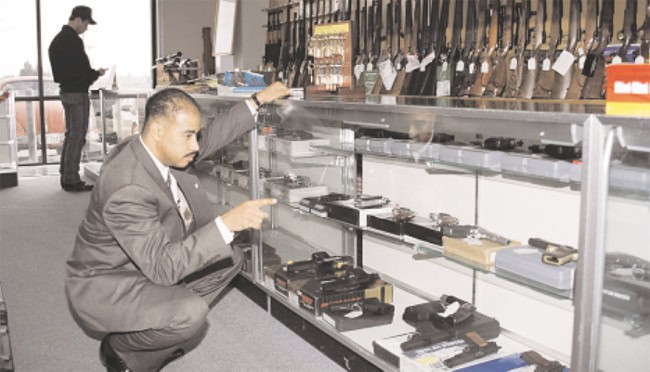
The process is straightforward (and we've got a complete first-time buyer's guide if you want the full breakdown — and see our suppressor mounting systems guide to understand how cans attach to your barrel):
- Find a suppressor you want from a manufacturer or dealer. Silencer Central, Silencer Shop, Capitol Armory, your local Class III dealer — plenty of options.
- Purchase and file your ATF eForm 4 — this is done electronically now. Your dealer will walk you through it if you haven't done it before.
- Submit your documentation — passport-style photo, fingerprints (electronic kiosk at many dealers, or FD-258 cards), and responsible person information if using a trust.
- Pass the NICS background check — same system used for regular firearms purchases.
- Wait for approval — here's the one remaining friction point. By late 2025, eForm 4 approvals were averaging under a week — some came back in a single day. But the elimination of the $200 tax has driven a massive surge in applications, and wait times are expected to stretch back out to weeks or months as the ATF works through the backlog. Get your paperwork in sooner rather than later.
- Pick up your suppressor — once approved, your dealer transfers it to you. Done.
No tax. No $200. Just paperwork, a background check, and patience.
The Bottom Line
I'm going to be blunt, because this is a topic where being polite can get people locked up.
There was never a good reason to convert a solvent trap into an unregistered suppressor. The risk was always catastrophic relative to the savings. But at least before January 2026, people could point to the $200 tax and the 6-12 month waits and say "the government made it too expensive and too slow." That argument had some emotional logic to it, even if the legal math never worked.
That argument is dead now. The tax is zero. The waits are getting shorter. The legal purchase process is simpler than it's ever been. And the ATF is still prosecuting people — tax or no tax — for possessing unregistered NFA items.
If you have a solvent trap that you've been using as an actual solvent trap, keep using it for that. If you have one that you've been thinking about "modifying," throw that thought away. And if you already converted one — I strongly suggest you consult a firearms attorney immediately, because the ATF has customer lists from multiple seized companies, and they've shown they're willing to knock on doors years after the original purchase.
Buy a legal suppressor from a reputable dealer like Silencer Central. Do the paperwork. Wait the wait. Shoot quiet and sleep well at night.
The alternative isn't worth it. It never was. And now there's not even a bad excuse left.
If you know of any forums or sites that should be referenced on this listing, please let us know here.