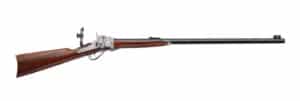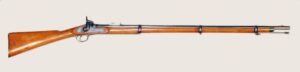

Additional Historical Context
The evolution of firearm technology is marked by a series of innovative designs aimed at producing more efficient and effective weapons. One such influential design in the latter half of the 19th century was the Remington M1867 rifle. Though not as globally recognized as other firearms, the Remington M1867 played a crucial role in warfare during its era and represented a significant step in firearm development. This article delves into the history, development, manufacturing, and utilization of this fascinating firearm.
The Remington M1867 was not born in a vacuum; rather, it was the product of an era of rapid advancements in firearm technology, marking a critical step towards modern infantry weapons. The M1867 is also known as the Remington rolling block rifle due to its unique action. This action is characterized by a separate breechblock and hammer, each able to rotate on the receiver. This design, patented in 1863, offered simplicity and strength that resulted in a highly durable and reliable firearm.
Manufacturing the Remington M1867 was an intricate process that reflected the technological capabilities of its time. Remington Arms Company was the sole manufacturer of the M1867 rifle. The company, founded in 1816, was among the oldest firearms manufacturers in the United States and known for its innovation and craftsmanship.
The M1867 was built using a combination of industrial machinery and skilled manual labor. Workers would be assigned to specific stages of the manufacturing process, allowing them to specialize and excel in their tasks. After machining, skilled gunsmiths would assemble the parts, ensuring each rifle’s smooth operation and correct alignment. The rifles were then proof-tested for safety and reliability.
The M1867 saw extensive use, both domestically and internationally. In the United States, the Remington M1867 was initially issued to the U.S. Navy and later to some army units. The rifle’s reliability and robustness made it well-suited to the rigorous conditions of military use.
Internationally, the Remington M1867 was a favored choice of many countries. This was particularly true in Scandinavia, where Sweden and Norway adopted it as their standard service rifle, producing licensed versions domestically. The M1867 remained in Scandinavian service into the early 20th century, and many surplus rifles were later used by civilian shooters.
The Remington M1867 was chambered for various cartridges depending on the specific model and the nation using it. The U.S. versions were typically chambered for .50-70 Government or .45-70 Government cartridges, while the Scandinavian versions were chambered for the 12.17x42mm rimfire cartridge, locally produced in Sweden and Norway.
The Remington M1867 demonstrated excellent reliability and durability. Its simple yet robust rolling block design ensured fewer parts were likely to break, and the rifle was easier to maintain. The M1867 was also known for its accuracy, especially at short to medium ranges, making it an excellent choice for infantry units.
The Remington M1867 marked a significant advance in firearm design. Its rolling block action was not only simple and reliable but also cheap and easy to manufacture. As such, it influenced subsequent rifle designs, particularly in terms of breech-loading mechanisms.
While the Remington M1867 has long since been superseded by more modern designs, its impact on the evolution of firearm technology cannot be understated. Today, it remains a favorite among firearms collectors and historical re-enactors, a testament to its important place in the annals of firearm history.
<\!-- wp:heading -->The Pioneering Role of the Remington M1867 in Firearm Evolution
Introduction: The Legacy of the Remington M1867 Rolling Block Rifle
The Remington M1867 Rolling Block Rifle stands as one of the most pivotal firearms of the 19th century, shaping military small arms development worldwide. While it may not command the instant recognition of the Winchester lever-action rifles or the Springfield Trapdoor, the Remington M1867 was a technological marvel that influenced countless military and civilian firearms across Europe, the Americas, and beyond.
Noted for its rugged simplicity, unmatched strength, and superb accuracy, the Remington rolling block action became one of the most widely adopted and exported military rifle designs of its era. Used by nations including Sweden, Norway, Denmark, Spain, France, Argentina, Egypt, and the United States, this rifle was central to modernizing infantry weaponry in the post-Civil War period.
This authoritative guide explores the full history, development, technical specifications, and battlefield performance of the Remington M1867, along with its influence on later firearms. We’ll also examine its modern-day collector value and provide expert insights into its historical significance.
Origins and Development of the Remington M1867
The Genesis of the Rolling Block Action
The Remington M1867 owes its origins to the groundbreaking rolling block action, an innovative breech-loading system that became synonymous with Remington rifles. While many sources erroneously claim the action was first patented in 1863, the reality is more nuanced.
The earliest precursor to the rolling block action was the split-breech carbine, designed by Leonard Geiger and refined by Joseph Rider, a prolific Remington engineer. Patents related to this action include:
- U.S. Patent No. 37,501 (January 1863) – Covering the early split-breech mechanism.
- U.S. Patent No. 45,123 (November 15, 1864) – This patent finalized the rolling block design, credited to Joseph Rider.
This system allowed for quick, reliable reloading—a crucial advantage over muzzleloaders and even many early breechloaders. The shooter manually rotated the breechblock backward, inserted a metallic cartridge, closed the breech, cocked the hammer, and fired.
Key Advantages of the Rolling Block Action
The rolling block mechanism provided exceptional benefits compared to contemporary breech-loading systems:
✔ Unmatched Durability: The solid breechblock and robust locking mechanism allowed the rifle to handle powerful black powder cartridges without mechanical failure.
✔ Mechanical Simplicity: With fewer moving parts than the Springfield Trapdoor or the Martini-Henry, it was easier to maintain and had fewer points of failure.
✔ Ease of Use: The single-shot design, combined with a simple loading process, made it an excellent military rifle—ideal for training and reliable under stress.
Military Adoption and Global Success
Limited U.S. Military Use
Despite its superior design, the United States Army did not fully adopt the Remington M1867 for infantry service, largely due to logistical and political reasons. Instead, the Springfield Trapdoor rifle (chambered in .45-70 Government) was chosen for standardization. However, the U.S. Navy and Marine Corps purchased limited quantities of the Remington M1867, chambered in .50-70 Government, for naval security and shipboard use.
Widespread European Adoption: Sweden & Norway
In 1867, Sweden and Norway were searching for a modern breechloading infantry rifle to replace their aging muzzleloaders. After evaluating several options, the Remington rolling block design emerged as the clear winner.
Production in Scandinavia
Rather than relying on Remington Arms for mass production, Sweden and Norway acquired manufacturing licenses and began producing their own versions at state arsenals:
- Carl Gustafs Stads Gevärsfaktori (Sweden)
- Kongsberg Våpenfabrikk (Norway)
This resulted in the M1867 Scandinavian rolling block rifles, chambered in 12.17x42mm RF (later converted to centerfire). These rifles remained in service well into the early 20th century, with reserve units using them as late as World War I.
Other Nations Using the Rolling Block
The Remington rolling block rifle saw global adoption, with various countries utilizing it in conflicts and colonial wars:
✔ Spain – Standard issue as the Fusil Remington Modelo 1871, chambered in 11.15×58mmR Spanish Remington. Used extensively in Cuba and the Philippines.
✔ Denmark – Issued to the Danish army in 11.7×51mmR Danish Remington.
✔ France – Used by the Garde Nationale during the Franco-Prussian War (1870-1871).
✔ Argentina – Purchased large numbers for military use in the late 19th century.
✔ Egypt – Issued during the Russo-Turkish War (1877-1878) and various conflicts.
Technical Specifications and Performance
| Feature | Specification |
|---|---|
| Action | Rolling block, single-shot |
| Barrel Length | Typically 36 inches (some carbine versions shorter) |
| Weight | ~9.5 lbs (4.3 kg) |
| Stock Material | American walnut, oil-finished |
| Sights | Adjustable ladder sight |
Calibers & Ballistics
The M1867 was chambered in various calibers, depending on country of adoption:
| Country | Cartridge | Bullet Weight | Muzzle Velocity | Effective Range |
|---|---|---|---|---|
| USA (Navy Model) | .50-70 Govt | 450-grain | ~1,250 fps | 300-500 yards |
| Sweden/Norway | 12.17x42mm RF | ~555-grain | ~1,200 fps | 600 yards |
| Spain | 11.15×58mmR | 370-400 grain | ~1,350 fps | 500 yards |
Performance & Reliability
- Accuracy: Exceptional at 200-400 yards.
- Recoil: Heavy but manageable.
- Durability: Known for its indestructible reliability, even in harsh climates.
Collector Value & Modern-Day Interest
Today, the Remington M1867 rolling block rifle remains a highly desirable collector’s firearm. Rarity, condition, and historical provenance determine value.
Estimated Collector Prices (2024)
✔ Standard models: $1,500 – $2,500
✔ U.S. Navy variants: $3,500 – $5,000
✔ Rare Scandinavian marked rifles: $4,000+
Conclusion: A Lasting Firearm Legacy
The Remington M1867 rolling block rifle represents one of the most significant advancements in firearm history. Its simplistic yet robust design set the standard for reliability, making it a favorite among soldiers, sportsmen, and collectors.
While eventually eclipsed by bolt-action rifles, the rolling block remains an icon of 19th-century firearms engineering, influencing designs well into the 20th century. Whether in military conflicts, colonial wars, or on the collector’s market today, the M1867’s impact endures.
For those seeking a historic, mechanically elegant rifle, the Remington rolling block is an unparalleled choice.
Discussions on this and other Remington firearms can be found on the Remington Society.