
Introduction to the .308 Cartridge
The .308 Winchester cartridge, otherwise known as 7.62x51mm NATO, is a staple in the world of firearms, with its origins tracing back to the mid-20th century. This ammunition is renowned for its versatility and effectiveness, finding use in applications ranging from military service to big game hunting to precision competition shooting.
Invention and History
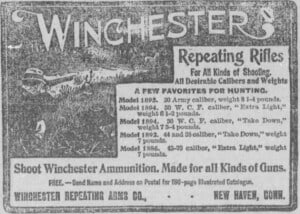
The .308 Winchester was first introduced by the Winchester Repeating Arms Company in 1952, a time when the firearms industry was transitioning from military cartridge production to new sporting cartridges. It was designed to be a shorter, more efficient version of the .30-06 Springfield, which had been the U.S. military's standard service cartridge since the early 1900s.
The .308, compared to its predecessor, had similar performance characteristics but in a more compact size. This resulted in improved cycling through the actions of semi-automatic and fully automatic firearms, making it an attractive option for both civilian shooters and military organizations. The development traced back to the T65 experimental cartridge, which was designed in the late 1940s to offer ballistic performance similar to the .30-06 in a shorter case.
In 1954, two years after the .308 Winchester's commercial release, the cartridge was adopted by NATO as the 7.62x51mm NATO. It became the standard rifle cartridge for NATO countries during the Cold War, cementing its position in global military history.
.308 Winchester vs. 7.62x51mm NATO
While often used interchangeably, the .308 Winchester and 7.62x51mm NATO are not identical:
- Pressure: The .308 is loaded to higher SAAMI pressures (62,000 psi), whereas 7.62x51mm NATO has a lower standardized pressure (~50,000 psi). Using high-pressure .308 loads in a military rifle chambered for 7.62x51mm NATO can cause excessive wear.
- Case Thickness: Military 7.62x51mm brass is thicker, reducing case capacity slightly compared to .308 Winchester cases.
- Headspace: Some 7.62x51mm NATO chambers have looser tolerances, which can affect accuracy when using commercial .308 Winchester ammunition.
Notable Firearms Using the .308 Cartridge
The .308 Winchester has seen use in a wide variety of weapons due to its versatile performance and relatively compact size:
- M14 Battle Rifle: Adopted by the U.S. military in the late 1950s as the standard-issue infantry rifle from 1959 to 1970.
- FN FAL: This Belgian-made battle rifle earned the nickname "The Right Arm of the Free World" and was adopted by many NATO countries.
- HK G3: German battle rifle widely adopted by NATO forces.
- M60 Machine Gun: U.S. general-purpose machine gun from the late 1950s onward.
- AR-10: The ArmaLite AR-10 is a 7.62mm battle rifle whose design later led to the development of the AR-15.
- Remington Model 700: One of the most popular bolt-action rifles for hunting and precision shooting.
- Springfield M1A: A civilian-legal version of the M14 rifle.
Performance
The .308 Winchester boasts impressive specifications. It's a medium-ranged cartridge capable of reaching out to 800 yards, or even beyond under the right circumstances. With standard bullet weights ranging from 150 to 180 grains, it's capable of taking down a variety of big game at reasonable distances.
| Bullet Weight | Muzzle Velocity (fps) | Energy (ft-lbs) | Effective Range |
|---|---|---|---|
| 150 gr | 2,820 | 2,648 | 600+ yards |
| 168 gr | 2,650 | 2,619 | 800+ yards |
| 175 gr | 2,600 | 2,627 | 1,000 yards |
| 180 gr | 2,570 | 2,640 | 1,000+ yards |
The .308 delivers relatively light recoil compared to larger calibers, contributing to its popularity among a wide range of shooters. Verifying these velocities with a quality shooting chronograph is essential for precision handloads. The 168-grain and 175-grain match bullets are favored by precision shooters for their superior consistency at long ranges.
Comparisons
Compared to the .30-06, the .308 has a shorter case (2.015 inches vs. 2.494 inches), slightly less velocity, and less recoil. Against the 6.5 Creedmoor, the .308 retains more energy on impact but has a less flat trajectory and higher recoil. The 6.5 Creedmoor is ideal for long-range precision shooting, while the .308 is superior for hunting large game.
Successors and Current Use
Despite its long-standing use, the .308 has given way to several successors in military usage, most notably the 5.56x45mm NATO cartridge. The 5.56mm is lighter, smaller, and allows soldiers to carry more ammunition. However, in civilian use, the .308 Winchester remains extremely popular. Its balance of power, accuracy, and manageable recoil continue to earn it a significant place in the world of firearms. Whether in military or civilian hands, on the battlefield, at the shooting range, or in the wilderness, the .308 remains a reliable choice.

You might also be interested in our article on short-action vs long-action cartridges.
If you know of any forums or sites that should be referenced on this listing, please let us know here.