Long range shooting for beginners can feel overwhelming, but it is the discipline that humbles you fastest and rewards patience most generously. At 100 yards, a mediocre shooter with a mediocre rifle can hit a steel plate every time. At 500 yards, the variables multiply: wind speed and direction at multiple points along the bullet’s path, temperature, altitude, barrel harmonics, trigger control, breathing, natural point of aim, and the internal ballistics of the specific load you’re firing.
At 1,000 yards, all of those variables matter more than you think, and the margin between a hit and a miss is measured in fractions of a degree. Long range shooting for beginners can feel overwhelming, but the fundamentals are straightforward once you break them down.
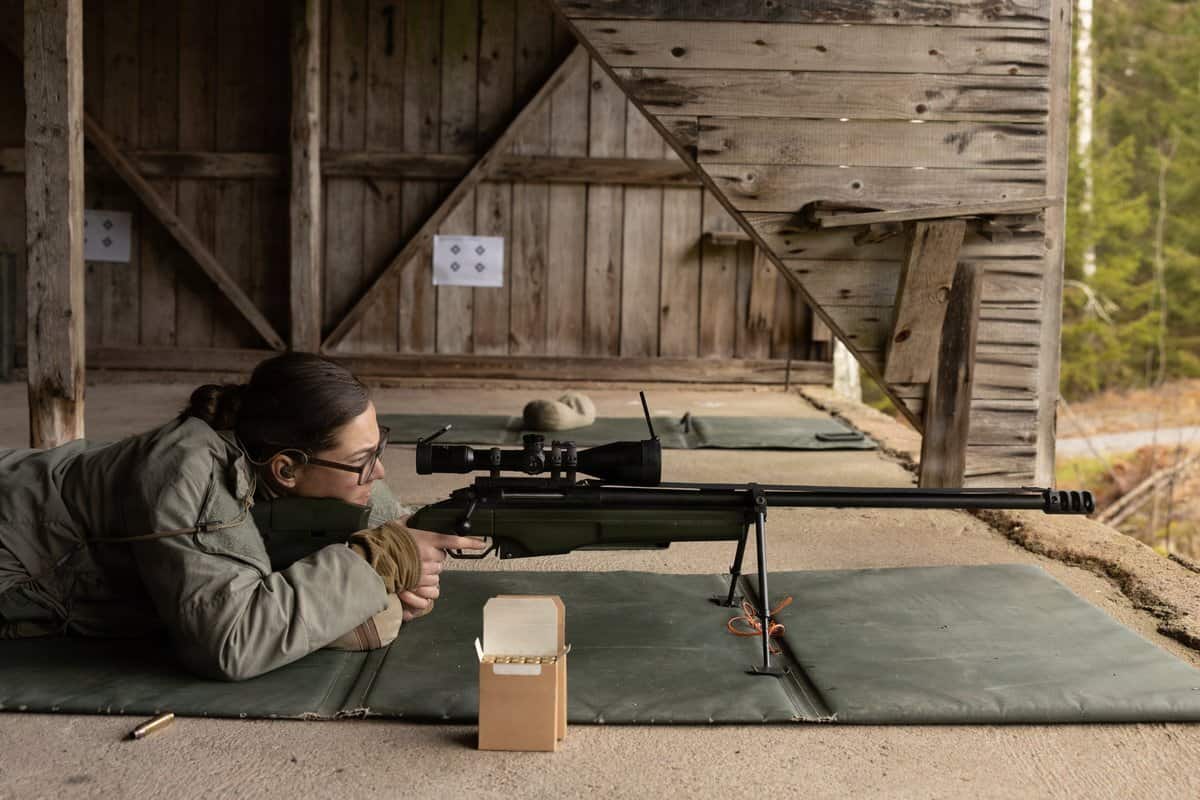
That’s what makes it addictive. Every round at distance is a problem to solve. And when you call your shot, send a round 1,000 yards downrange, wait for the supersonic crack to travel back to you, and hear steel — that feedback loop is unlike anything else in shooting sports.
This long range shooting for beginners guide is for shooters who want to start. Not for people who already own a $4,000 custom action and a $2,500 scope — they know what they’re doing. This is for the hunter who wants to stretch beyond 300 yards, the AR-15 owner who’s curious about bolt guns, or the complete beginner who watched a long range competition on YouTube and thought “I want to learn that.”
We’ll cover everything long range shooting for beginners demands: the rifle, the optic, the ammunition, the gear, and the skills — in the order that matters.
Quick Picks: Best Long Range Rifle Gear for Beginners
| Item | Category | Best Pick | Price Range |
|---|---|---|---|
| Bergara B-14 HMR | Rifle | Best Overall Beginner Precision Rifle | ~$950-1,100 |
| Howa 1500 in MDT Chassis | Rifle | Best Budget Precision Rifle | ~$700-850 |
| Ruger Precision Rifle (RPR) | Rifle | Best Chassis Rifle Under $1,500 | ~$1,200-1,500 |
| Tikka T3x CTR | Rifle | Best Action / Trigger Out of Box | ~$950-1,100 |
| Vortex Viper PST Gen II 5-25×50 | Scope | Best Overall Beginner Long Range Scope | ~$600-700 |
| See also: Best Rifle Scopes Under $500 | Scope | Budget precision optics roundup | $250-500 |
| Magpul Bipod | Support | Best Bipod Under $125 | ~$95-115 |
| Kestrel 5700 Elite | Ballistic Computer | Best Ballistic Solver | ~$450-550 |
Long Range Shooting for Beginners: Choosing Your First Rifle
Caliber Selection
Your first decision — and the one that affects everything else — is cartridge selection. For a beginner getting into long range, the answer is simpler than the internet makes it seem.
6.5 Creedmoor is the default recommendation, and the shooting community consensus exists for good reason:
- Ballistic efficiency: The 6.5mm bullet diameter offers an outstanding ratio of sectional density to frontal area. Translation: 6.5mm bullets resist wind and retain velocity at distance better than .308 bullets of similar weight.
- Manageable recoil: Roughly 50-60% of .300 Win Mag recoil, which means you can spot your own hits at distance through the scope and shoot longer sessions without fatigue.
- Ammunition availability: Factory match ammunition from Hornady (ELD Match), Federal (Gold Medal), and others is widely available and excellent. You don’t need to reload to shoot well.
- Barrel life: 2,500-3,000 rounds typical — adequate for a beginner who won’t burn through that volume quickly.
- Component availability: If you decide to reload (and you probably will eventually), 6.5 Creedmoor brass, bullets, and load data are abundant.
.308 Winchester is the other strong contender for beginners:
- Pros over 6.5 CM: Cheaper factory ammunition, longer barrel life (~5,000 rounds), wider availability at local shops, more forgiving of imprecise reloading.
- Cons vs. 6.5 CM: More wind drift (roughly 20-30% more at 1,000 yards), more recoil, more bullet drop.
- Best for: Shooters on a tight ammunition budget, those who already own .308 rifles, or shooters who prioritize barrel longevity over ballistic efficiency.
Our recommendation: Start with 6.5 Creedmoor unless you already have a .308 platform. The ballistic advantage simplifies the learning curve — you’ll spend less time compensating for wind and drop, and more time developing fundamentals.
Action Type
For long range precision, bolt-action is the standard. The rigidly locked breech provides the consistency that precision demands. Semi-automatic rifles (AR-10 platform in .308 or 6.5 CM) can be accurate, but bolt-action rifles deliver better consistency at the same price point.
Stock/Chassis
The stock or chassis is the interface between you and the rifle. For precision shooting, you need:
- Adjustable cheek riser (comb height): Your eye must align naturally with the scope when you mount the rifle. If the stock is too low, you’ll crane your neck downward, introducing inconsistency.
- Adjustable length of pull: The distance from the trigger to the buttpad should match your arm length so the trigger falls naturally under your finger.
- Flat forend: A flat or wide forend provides a stable platform for bipod and bag use.
- QD sling swivel mounts: For carrying the rifle to and from position.
Barrel
For long range precision:
– Length: 22-26 inches. Longer barrels extract more velocity from the powder charge, which translates to less drop and less wind drift at distance. 24 inches is the sweet spot for most 6.5 Creedmoor and .308 rifles.
– Twist rate: 1:8 for 6.5 Creedmoor (stabilizes heavy 140+ grain bullets). 1:10 for .308 (stabilizes 168-175 grain match bullets).
– Profile: Heavy or medium-heavy (“varmint” or “heavy sporter”). Thicker barrels resist heat, and heat degrades accuracy. If you’re shooting strings of 10+ rounds at the range, barrel thickness matters.
– Threading: 5/8×24 is standard for .308/6.5 CM. Useful if you add a muzzle brake or suppressor.
Long Range Shooting for Beginners: Best Rifles Reviewed
1. Bergara B-14 HMR — Best Overall Beginner Precision Rifle
Our top recommendation for new long range shooters.

The Bergara B-14 HMR (Hunting and Match Rifle) occupies the exact sweet spot that beginners should target: it’s accurate enough to compete, affordable enough to leave budget for a scope, and well-built enough that you won’t need to upgrade for years.
Bergara manufactures their own barrels (they’re actually a barrel manufacturer first, rifle manufacturer second), and the quality shows. The HMR’s barrel is the same quality found in their higher-priced Premier line. Combined with a crisp, adjustable trigger and a mini-chassis stock with adjustable cheek riser and length of pull, the HMR delivers sub-MOA accuracy from the factory with match ammunition.
The B-14 action uses a Remington 700 footprint, which means it’s compatible with the enormous Remington 700 aftermarket for stocks, chassis, triggers, and bottom metal. When (not if) you decide to upgrade, the B-14 drops into any Rem 700 chassis on the market.
Key Specs:
– Caliber: 6.5 Creedmoor, .308 Win (also available in others)
– Barrel: 22″ or 26″ (caliber-dependent), 5/8×24 threaded, #6 contour
– Trigger: Bergara Performance Trigger (adjustable, ~2.5-4 lbs)
– Stock: Mini-chassis with adjustable comb and LOP
– Magazine: AICS-compatible detachable box magazine
– Weight: ~9.1 lbs
– Remington 700 footprint
What we like: The barrel quality punches above the price class. Sub-MOA accuracy is realistic with match ammunition, not a marketing claim you’ll never reproduce. The adjustable trigger is excellent for the price. Remington 700 compatibility means limitless upgrade path. AICS magazine compatibility is the current standard.
What we don’t: The factory mini-chassis stock is functional but not as rigid as a dedicated chassis system. The bolt handle is slightly small for gloved operation. The action, while good, isn’t as smooth as Tikka’s.
Who should buy this: Any new long range shooter looking for the best combination of accuracy, features, and value under $1,100. This is the rifle we recommend most frequently at Powder & Lead for good reason.
Check price at Brownells | Check price at EuroOptic | Check price at Palmetto State Armory
2. Howa 1500 in MDT Chassis — Best Budget Precision Rifle
The Howa 1500 action is one of the best-kept secrets in the budget precision rifle world. Japanese-manufactured with tight tolerances, a smooth bolt throw, and genuine accuracy, the Howa action punches well above its price class. When paired with an MDT (Modular Driven Technologies) chassis, the result is a precision rifle platform that costs $700-850 and shoots like rifles costing twice as much.
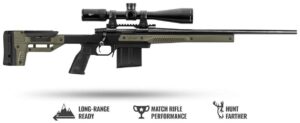
MDT offers several Howa 1500 packages that combine the barreled action with a chassis, grip, stock, and magazine — essentially a factory-built precision rifle at component pricing.
Key Specs:
– Caliber: 6.5 Creedmoor, .308 Win (multiple options)
– Barrel: 22″ or 24″, threaded
– Trigger: HACT two-stage trigger (adjustable)
– Chassis: MDT LSS-XL or MDT Oryx (depending on package)
– Magazine: AICS-compatible
– Weight: ~9-10 lbs depending on chassis
What we like: The Howa action is genuinely smooth and well-machined. MDT chassis options provide adjustable cheek risers, adjustable LOP, and M-LOK forends — all the features you need for precision shooting. The price-to-accuracy ratio is the best in the market. The HACT two-stage trigger is outstanding for a factory trigger.
What we don’t: Howa’s aftermarket isn’t as deep as Remington 700’s — fewer custom stocks and accessories. The brand recognition is lower (which is why the price is lower, not because the quality is). Some MDT chassis configurations require assembly.
Who should buy this: Budget-conscious new shooters who want to maximize rifle quality and minimize total cost. Shooters who want to invest more in optics (a smart approach).
Check price at Brownells | Check price at Brownells
3. Ruger Precision Rifle (RPR) — Best Chassis Rifle Under $1,500
The Ruger Precision Rifle essentially created the “affordable precision chassis rifle” category. It arrived at a time when precision chassis rifles cost $3,000-5,000, offered a complete package for under $1,500, and proved that a factory rifle could compete with semi-custom builds at the range.
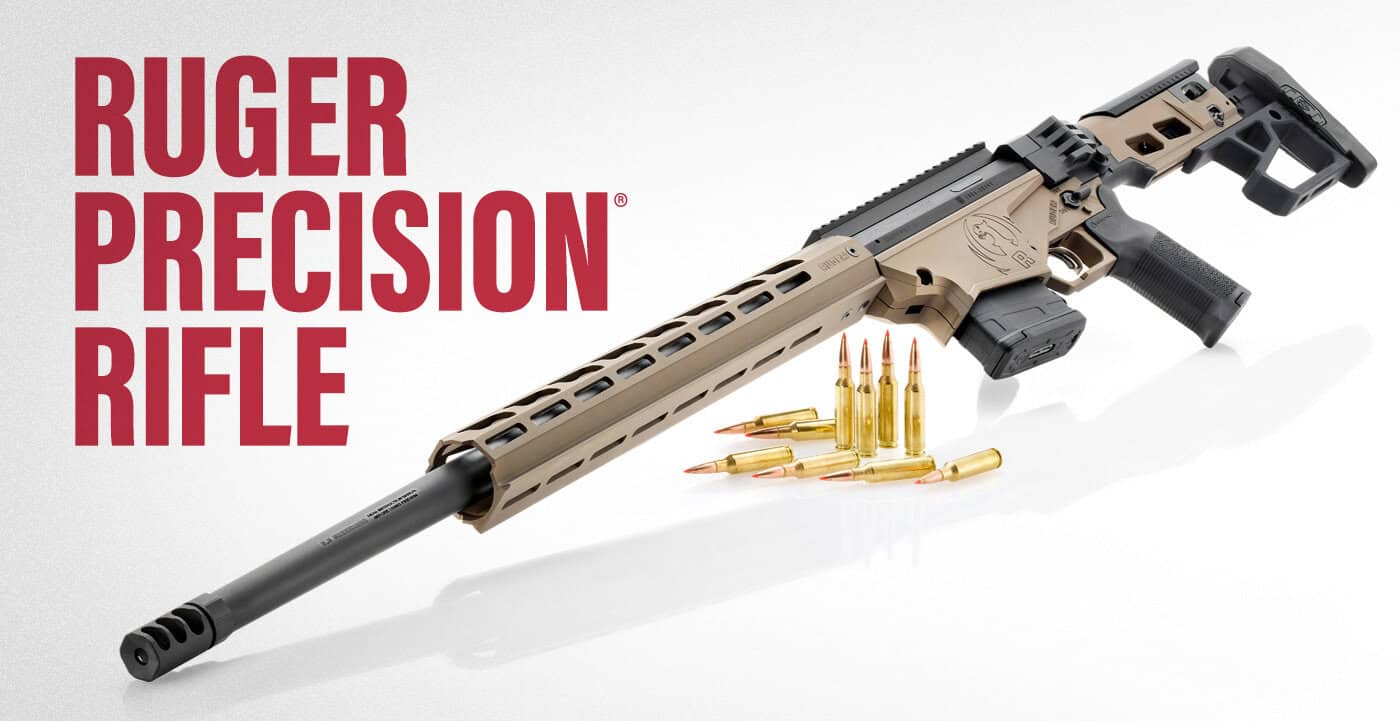
The RPR is a complete system: folding adjustable stock, 20 MOA Picatinny rail, Ruger Marksman Adjustable Trigger, AICS magazine compatibility, AR-style grip and safety, and a cold hammer-forged barrel. It’s purpose-built for precision shooting from the factory. If you are still building out your setup, check out our guide to the best rifle scopes under $500.
Key Specs:
– Caliber: 6.5 Creedmoor, .308 Win (also 6mm CM, .300 WM, .338 LM)
– Barrel: 24″ or 26″ (caliber-dependent), cold hammer-forged, 5/8×24 threaded
– Trigger: Ruger Marksman Adjustable (externally adjustable, ~2.25-5 lbs)
– Stock: Folding adjustable with adjustable LOP and comb
– Magazine: AICS and Magpul-compatible
– Rail: 20 MOA Picatinny
– Weight: ~9.7-11 lbs
What we like: The most feature-complete factory precision rifle under $1,500. The folding stock is a genuine asset for transport and storage. The pre-installed 20 MOA rail means you’re ready for a scope out of the box. Ruger’s customer service is excellent.
What we don’t: The trigger, while adjustable, doesn’t match the Bergara or Tikka triggers for feel. The cold hammer-forged barrel is good but not outstanding — accuracy-focused shooters may want to rebarrel after 2,000+ rounds. The rifle is heavy (close to 11 lbs before optics).
Who should buy this: Shooters who want a do-everything precision chassis rifle straight from the box. NRL Hunter and PRS Production competitors. Anyone who values the folding stock for transport.
Check price at Brownells | Check price at Palmetto State Armory | Check price at Palmetto State Armory
4. Tikka T3x CTR — Best Action and Trigger Out of the Box
If you prioritize the shooting experience — the feel of the bolt, the break of the trigger, the smoothness of the action — the Tikka T3x CTR is the answer. Tikka’s bolt action is the smoothest factory bolt in the precision rifle world, and the trigger breaks cleanly from 2 to 4 lbs with adjustment.

The CTR (Compact Tactical Rifle) adds a threaded barrel, a Picatinny rail, and a semi-match chamber to the standard T3x platform. The synthetic stock is adjustable (with spacers) for length of pull but lacks an adjustable cheek riser — the one significant limitation.
Key Specs:
– Caliber: 6.5 Creedmoor, .308 Win (others available)
– Barrel: 20″ or 24″ (caliber dependent), threaded
– Trigger: Tikka adjustable single-stage (2-4 lbs)
– Stock: Synthetic with adjustable LOP via spacers
– Magazine: Tikka T3x proprietary (steel, reliable)
– Weight: ~7.9 lbs (notably light)
What we like: The bolt is impossibly smooth — cycling the T3x is a genuinely pleasurable experience. The trigger is the best factory trigger in this price range. The relatively light weight (7.9 lbs) makes it a practical hunting and field rifle in addition to a range precision platform. Tikka’s accuracy guarantee (sub-MOA with quality ammo) is backed by genuine barrel quality.
What we don’t: The stock lacks an adjustable cheek riser — for precision shooting with a magnified optic, you’ll want to upgrade to a KRG Bravo or MDT chassis ($250-400). The Tikka proprietary magazine works well but isn’t AICS-compatible (limiting magazine options). Aftermarket support isn’t as deep as Remington 700 footprint rifles.
Who should buy this: Shooters who value action quality and trigger above all else. Hunters who want a precision-capable rifle light enough for the field. Anyone planning to drop the action into an aftermarket chassis (the T3x action in a KRG Bravo is an exceptional combination).
Check price at Brownells | Check price at EuroOptic | Check price at Palmetto State Armory
Choosing Your Long Range Scope
Your scope is arguably more important than your rifle at distance. A $600 scope on a $900 rifle will outperform a $300 scope on a $1,500 rifle because the scope is where you make elevation and windage corrections, where you read your reticle for holdovers, and where you observe your impacts for correction.
What to Look For in a Long Range Scope
For precision shooting at distance, you need these features at minimum:
- Magnification range: 4-16x or 5-25x. Enough to see bullet trace and spot impacts, but not so much that mirage and wobble dominate your view.
- First focal plane (FFP) reticle with mil or MOA markings — the standard for precision shooting because subtensions remain accurate at every magnification.
- Accurate turret tracking: When you dial 1 mil, the point of impact must move exactly 1 mil. Test with a tall turret test before trusting your scope at distance.
- Side parallax adjustment: Essential beyond 200 yards. Without it, parallax error can shift your point of impact by several inches at long range.
- Quality glass: Sharper images, more light transmission, less eye strain. This is where price differences are most visible.
For our top scope picks under $500 — including the Vortex Diamondback Tactical, Primary Arms SLx, and more — see our complete Best Rifle Scopes Under $500 guide. That article covers detailed reviews, specifications, and head-to-head comparisons for budget-friendly precision optics.
Scope Recommendations by Budget
Here is how we recommend allocating your optics budget for long range shooting:
| Budget | Scope | Why |
|---|---|---|
| Under $300 | Primary Arms SLx 4-14×44 FFP | Best FFP scope at this price; outstanding ACSS reticle. Full review here. |
| $300-400 | Vortex Diamondback Tactical 4-16×44 FFP | Best all-around precision scope under $500; XD glass, reliable tracking. Full review here. |
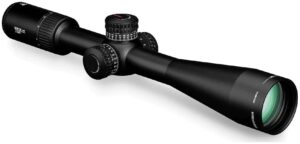
| $600-700 | Vortex Viper PST Gen II 5-25×50 | The scope most new long range shooters buy. Excellent glass, EBR-7C reticle, zero stop. The sweet spot for serious precision work. |
| $750-900 | Athlon Ares ETR 4.5-30×56 | Best value in a 34mm FFP scope. More adjustment range, better glass than the Viper PST. For shooters who want to invest in optics and grow into the scope. |
Our top recommendation for most beginners: the Vortex Viper PST Gen II 5-25×50 (~$600-700). It delivers accurate turret tracking, a well-designed FFP reticle, a zero stop, and Vortex’s unconditional lifetime warranty. If budget is the primary constraint, any of the sub-$500 options in our scopes guide will get you started without holding you back.
Essential Gear for Long Range Shooting
Beyond the rifle and scope, you’ll need the following to get started. We’ve listed these in priority order.
Bipod
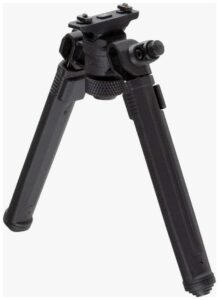
A stable rest is essential. The bipod plants the rifle’s forend on the ground, providing a consistent, repeatable platform.
Our pick: Magpul Bipod (~$95-115)
Lightweight, sturdy, smooth pan and tilt, M-LOK or Picatinny mounting. Better than the Harris HBRMS at a similar price due to smoother leg extension and more sophisticated tilt lock.
Rear Bag
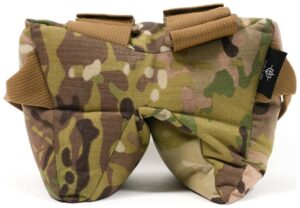
Your bipod supports the front of the rifle; a rear bag supports the stock. Squeezing the rear bag adjusts your point of aim vertically — this is how precision shooters make fine elevation adjustments without touching the turrets.
Our pick: Armageddon Gear Game Changer (~$45-55)
Fills with poly beads or sand, provides consistent rear support, and the tab design works for both PRS-style shooting and casual bench use.
Ballistic Solver
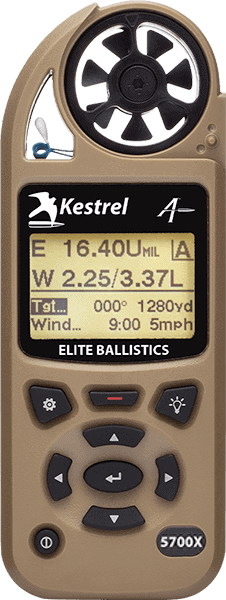
At distance, you cannot guess your elevation and wind corrections. A ballistic solver calculates the precise adjustment based on your bullet, muzzle velocity, distance, wind, temperature, humidity, and altitude.
Beginner option: Applied Ballistics app on your phone (~$30) — Works well, requires manual input of environmental data.
Serious option: Kestrel 5700 Elite with Applied Ballistics (~$450-550) — Measures wind speed, temperature, humidity, altitude, and calculates the ballistic solution in one integrated device. This is what competitive PRS shooters use.
Ammunition
For beginners, factory match ammunition is the right choice. Don’t reload until you’ve established a baseline with factory ammo — you need to know what the rifle is capable of before you can evaluate your handloads.
Top factory match ammunition for 6.5 Creedmoor:
– Hornady ELD Match 140gr: The default choice. Consistent, accurate, widely available. ~$1.50-1.80/round.
– Federal Gold Medal Berger 130gr: Excellent consistency and accuracy. ~$1.60-2.00/round.
Top factory match ammunition for .308 Winchester:
– Federal Gold Medal Match 175gr SMK: The classic .308 match load. ~$1.20-1.50/round.
– Hornady ELD Match 168gr: Modern polymer-tip match bullet with outstanding consistency. ~$1.30-1.60/round.
Building Your Skills: The Progression Path
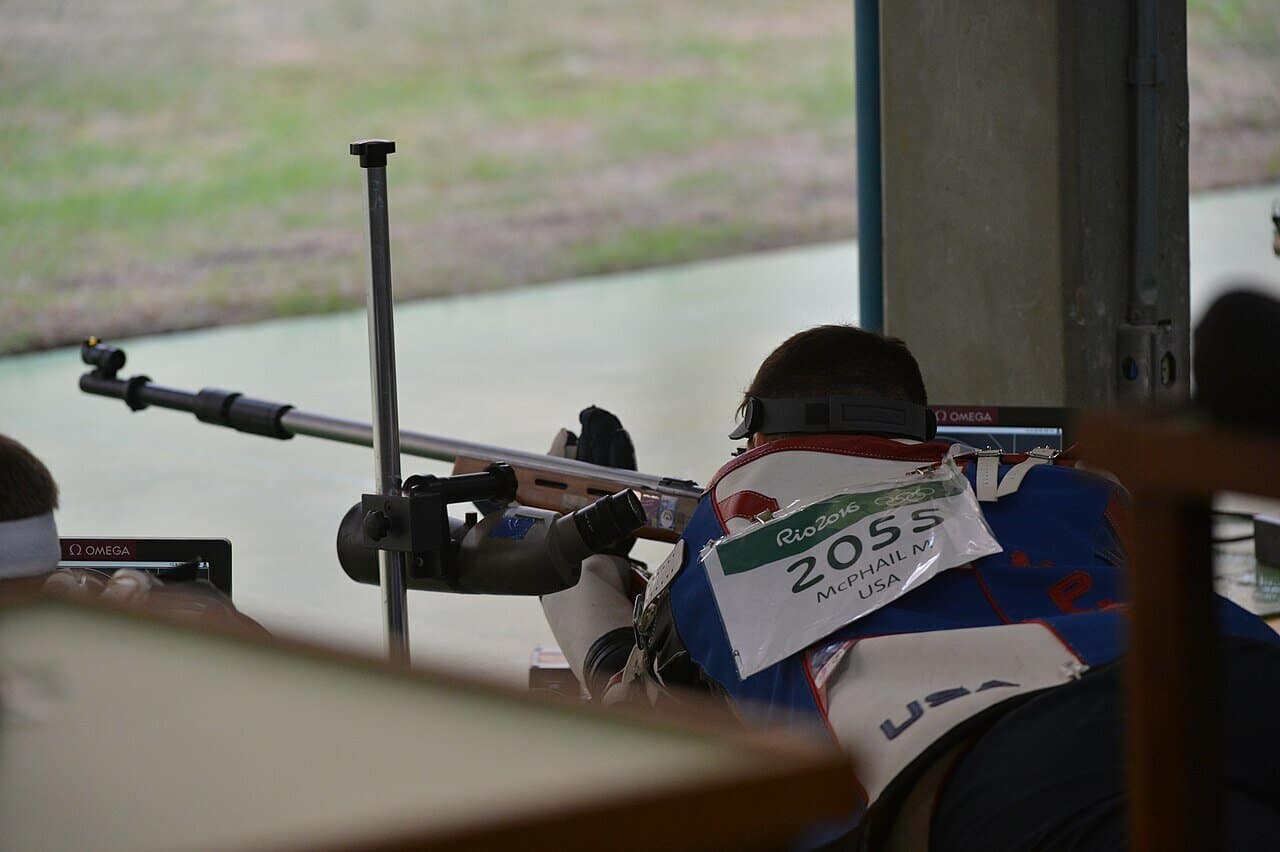
Stage 1: 100 Yards — Zeroing and Fundamentals (Weeks 1-2)
- Zero your scope at 100 yards (confirm your turrets track by doing a box test or tall target test)
- Practice consistent body position (natural point of aim)
- Practice consistent trigger press (straight back, surprise break)
- Practice consistent breathing (shoot during the natural respiratory pause)
- Shoot 5-shot groups and record them. Your goal: sub-MOA (1″ at 100 yards) consistently
Stage 2: 300-500 Yards — Introduction to Corrections (Weeks 3-6)
- Begin using your ballistic solver to calculate elevation corrections
- Learn to dial your turret for distance (not holdover — learn to dial first)
- Observe bullet trace through the scope (you can see the bullet’s path through the air at magnification)
- Introduce wind reading: start with a flag or wind meter at the shooting position, observe how different wind values affect your impact
Stage 3: 500-800 Yards — Wind Reading and Positional Shooting (Months 2-4)
- Wind becomes the dominant variable. Learn to read terrain (grass movement, mirage, dust) to estimate wind speed between you and the target
- Practice shooting from tripod, barricade, and unsupported positions (not just prone behind a bipod)
- Begin using your reticle for holdovers (faster than dialing in some situations)
- Shoot steel targets — the instant audible feedback is invaluable for learning
Stage 4: 800-1,000+ Yards — Advanced Ballistics (Months 4+)
- Transonic zone management (where the bullet transitions from supersonic to subsonic — accuracy degrades significantly)
- Spin drift and Coriolis effect become relevant
- Reading mirage for wind direction and speed
- Consider NRL Hunter or PRS competition to accelerate your learning with structured courses of fire
Long Range Shooting FAQ
How much does it cost to get started in long range shooting?
A realistic budget for a beginner setup:
| Item | Budget Option | Recommended Option |
|---|---|---|
| Rifle | $700 (Howa/MDT) | $1,000 (Bergara B-14 HMR) |
| Scope | $350 (PA GLx) | $650 (Vortex Viper PST Gen II) |
| Rings/Mount | $50 | $80 |
| Bipod | $50 (Harris) | $100 (Magpul) |
| Rear bag | $30 | $50 |
| 200 rounds match ammo | $300 | $300 |
| Total | $1,480 | $2,180 |
You can start for under $1,500 if you’re strategic about your purchases. The recommended setup at ~$2,200 gives you equipment you won’t outgrow for years.
Is 6.5 Creedmoor better than .308 for long range?
Ballistically, yes — 6.5 Creedmoor has less wind drift, less drop, and less recoil than .308 at every distance beyond 300 yards. But .308 has cheaper ammunition, longer barrel life, and wider availability. For a dedicated long range rifle, 6.5 Creedmoor is the better choice. For a dual-purpose hunting/long range rifle on a budget, .308 is a reasonable alternative.
Do I need to reload for long range shooting?
Not to start. Modern factory match ammunition (Hornady ELD Match, Federal Gold Medal) is genuinely excellent. Start with factory ammo, develop your skills, and then explore reloading when you want to fine-tune your loads for your specific rifle. Reloading will eventually improve your accuracy and reduce your per-round cost — but it’s not a prerequisite for getting started.
How far can a beginner realistically shoot?
With proper training and equipment: 600-800 yards within the first few months. 1,000 yards within the first year. The limiting factor isn’t the equipment — modern rifles and ammunition are capable of 1 mile+. The limiting factor is the shooter’s ability to read wind, maintain consistent form, and apply corrections. This is a skill that develops with practice.
Final Recommendation
For most beginners, the Bergara B-14 HMR in 6.5 Creedmoor paired with the Vortex Viper PST Gen II 5-25×50 is the setup we recommend most frequently. Total investment: ~$1,600-1,800 for the rifle and scope. Add a Magpul bipod, a rear bag, and 200 rounds of Hornady ELD Match, and you have everything you need to start hitting steel at 500+ yards.
If budget is the primary constraint, the Howa 1500 in an MDT chassis with the Primary Arms GLx 4-16×50 gets you started for under $1,200 — and the Howa action is accurate enough that you won’t need to upgrade the rifle for a long time.
Whatever you choose — shoot it. The best precision rifle in the world is the one you take to the range every weekend. Long range shooting rewards consistency and practice above all else.
If you know of any forums or sites that should be referenced on this listing, please let us know here.