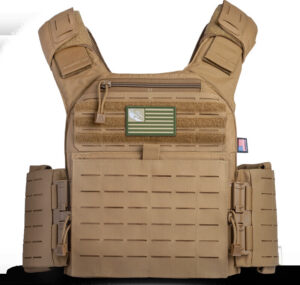
Body armor used to be something only law enforcement and military had access to. That has changed. Advances in materials and manufacturing have made high-quality armor plates and carriers available to civilians at prices that were unthinkable a decade ago. Whether you are building a home defense setup, equipping a plate carrier for training, or simply want protective equipment staged and ready, this guide covers the best body armor options available to civilians in 2026 — what works, what to avoid, and how to choose the right level of protection for your needs.
Key Takeaways
- Best Overall Rifle Plates: RMA Armament 1155 — NIJ .06 certified Level IV multi-curve ceramic plates at a price that makes armor accessible. Heavy, but proven protection.
- Best Lightweight Rifle Plates: Hesco L211 — a Level III+ special threat plate that stops common rifle rounds at a significantly reduced weight. NIJ 0101.06 tested. Ideal for everyday readiness setups.
- Best Concealed Soft Armor: Safariland Second Chance Summit SM — Level IIIA concealable vest for everyday wear under a dress shirt.
- Ceramic beats steel for body armor. Period. Steel plates cause spall (fragmentation), are heavier, and offer a false sense of security. Ceramic/polyethylene plates are the standard for a reason.
- Body armor is legal for civilians to purchase and own in 49 states. Connecticut requires in-person purchase and the buyer must hold a valid pistol permit, eligibility certificate, or ammunition certificate. Some states restrict ownership for convicted felons. Know your local laws.
Why Civilians Are Buying Body Armor
Finding the best body armor for civilians means navigating a market that has grown substantially because the products have gotten better, lighter, and more affordable. What once required a military or law enforcement contract is now available to anyone through direct-to-consumer sales. Whether you want armor for home defense, range safety, emergency preparedness, or your job, the options in 2026 are better than they’ve ever been.
This guide covers the best options across different protection levels, from concealable soft armor to standalone rifle plates. We’ll break down the NIJ rating system, explain the steel vs. ceramic debate, and help you choose the right setup for your needs.
Quick Comparison: Best Body Armor for Civilians
| Product | Type | Protection Level | Weight (per plate/panel) | Multi-Curve | NIJ Certified | Price (set) |
|---|---|---|---|---|---|---|
| RMA 1155 | Ceramic | Level IV | 8.2 lbs (10×12 MC) | Yes (MC) | .06 Certified | ~$270/set |
| Hesco L211 | Ceramic/PE | Level III+ (Special Threat) | 4.9 lbs | Yes | NIJ 0101.06 | ~$350/set |
| Hesco 4401 | Ceramic | Level IV | 7.5 lbs | No (SAPI cut) | .06 Certified | ~$300/set |
| Highcom 4S17M | Ceramic/PE | Level IV | 6.5 lbs | Yes | .06 Certified | ~$600/set |
| Spartan Omega AR500 | Steel | Level III+ | 8.0 lbs | No | III+ (mfg rated) | ~$200/set |
| Safariland Summit SM | Soft Armor | Level IIIA | 1.2 lbs/panel | N/A | .06 Certified | ~$700+ |
Hesco L211 is the successor to the discontinued L210. It is rated Level III+ to a special threat profile and is NIJ 0101.06 compliant. See detailed review below.
Understanding NIJ Protection Levels
Level IV: Stops .30-06 M2 AP (armor-piercing). This is the highest NIJ rating. Level IV plates will stop virtually all common rifle threats.
Special Threat: Not an NIJ level. Indicates a plate tested against specific threats (like 5.56 M193, 5.56 M855, 7.62×39 MSC) without meeting a full NIJ level standard. The Hesco L211 (successor to the discontinued L210) is the most popular example.
Armor Materials: What Your Plates Are Actually Made Of
NIJ levels tell you what a plate stops. The material tells you how it stops it — and what trade-offs you’re living with. There are four materials that dominate the body armor market right now, and each one has real advantages and real problems.
Aramid Fibers (Kevlar)
Kevlar is the original. DuPont introduced it in the 1970s and it fundamentally changed personal protection. Aramid fibers work by catching and decelerating a bullet across a web of incredibly strong synthetic threads — think of it like a very aggressive net.
Kevlar and other aramid-based panels are used in soft armor: the flexible vests rated at Level IIA, II, and IIIA. They stop handgun rounds. They are wearable under clothing. Law enforcement officers wear aramid vests on duty every day because you can actually move and work in them.
The downsides are real. Aramid degrades. Moisture, UV exposure, and simple age break down the fibers. Most manufacturers rate their soft armor panels for five years of service life, and that is not a suggestion — it is a genuine performance cliff. A ten-year-old Kevlar vest is wall decoration, not protection. Aramid also will not stop rifle rounds. A 5.56 NATO or 7.62×39 will punch straight through a IIIA Kevlar panel without meaningfully slowing down.
Steel
Steel plates are the budget option, and they are genuinely budget — you can find AR500-rated steel plates for under $100 per plate. They stop rifle rounds. They are nearly indestructible in terms of shelf life. You can throw a steel plate in your closet for a decade and it will perform identically to the day you bought it.
Now the problems, because they are significant. Weight is the first one. A steel Level III plate runs 8 pounds or more per plate. That is 16+ pounds just in plates before you add the carrier, magazines, or anything else. You will gas out fast if you are not conditioned for it.
The second problem is spall. When a bullet hits a steel plate, it does not just stop — it fragments. Those fragments spray outward at high velocity along the face of the plate. Your arms, your neck, your chin, your femoral arteries — all of it is in the splash zone. Anti-spall coatings (usually a thick truck bed liner-type buildup) help, but they wear down, and they add even more weight. Spall is not a theoretical concern. It is the primary reason most serious armor buyers have moved away from steel.
Steel has its place. If your budget is genuinely limited, if the plates are going to sit in a closet as a last-resort option and weight is not a concern, steel works. But if you can afford ceramic or polyethylene, you should buy ceramic or polyethylene.
Ceramic
Ceramic composite is what the U.S. military issues and what most law enforcement agencies use for rifle-rated protection. There is a reason for that.
A ceramic plate works by shattering the incoming projectile on impact. The hard ceramic face breaks the bullet apart, and the composite backing (usually aramid or polyethylene) catches the fragments. This is why ceramic plates crack when they take a hit — the cracking is the plate doing its job. That energy dissipation is by design.
Modern ceramic plates handle multiple hits far better than early designs. The old concern about “one hit and it’s done” was legitimate with early-generation plates but does not apply to current production from reputable manufacturers. A quality ceramic Level IV plate will take multiple rifle impacts and keep working.
Ceramic is lighter than steel — typically 5 to 6 pounds per plate at Level IV, compared to 8+ for steel at Level III. The trade-off is cost. Expect to pay $150 to $400+ per plate depending on certification level, cut, and manufacturer. It is worth it.
Ultra-High Molecular Weight Polyethylene (UHMWPE)
Polyethylene armor is the newest major player, and it is where the market is heading. UHMWPE plates achieve Level III rifle protection at weights that would have been fantasy ten years ago — some options come in under 3 pounds per plate. That is a massive difference when you are wearing the setup for any length of time.
PE plates work by deforming around the projectile, catching it in layers of incredibly dense polymer. No spall. No fragmentation risk. Significantly less blunt force transfer than steel.
The limitations: standalone PE plates at Level III can struggle with certain steel-core penetrator rounds (like M855 “green tip” 5.56 NATO). This is why you see “Level III+” and “special threat” designations from manufacturers like Hesco, Highcom, and RMA — they are engineering PE plates to handle specific threat profiles beyond the baseline Level III test. If you are buying PE plates, pay close attention to the specific rounds they are rated to stop.
PE used to be the most expensive option, but prices have dropped fast. Sub-$100 PE plates are now available from multiple manufacturers, putting this technology within reach of budget-conscious buyers for the first time. A pair of quality UHMWPE Level III plates will run $250 to $600+. For civilian buyers who want rifle protection they can actually wear without exhausting themselves, it is increasingly the best answer.
Plate Sizing, Cuts, and Coverage
Armor plates are not one-size-fits-all, and getting the sizing wrong defeats the purpose of wearing them.
Standard Plate Sizes
The most common sizes are Small (8.75″ x 11.75″), Medium (9.5″ x 12.5″), and Large (10.25″ x 13.25″). Medium fits the majority of adult males. The plate should cover your vital organs — from the notch at the top of your sternum down to about two inches above your navel, and wide enough to cover from nipple to nipple. A plate that’s too small leaves your heart or lungs exposed. A plate that’s too large restricts movement and rides up when you sit or crouch.
Plate Cuts
Full cut (square corners): Maximum coverage area. The standard military SAPI shape. Covers the most real estate but the square top corners can dig into your shoulders and restrict arm movement, especially when shouldering a rifle.
Shooter’s cut (angled top corners): The most popular civilian cut. The top corners are beveled at roughly 45 degrees, which clears your shoulder pocket and allows you to shoulder a rifle or shotgun without the plate jamming into your arm. Slightly less coverage than full cut, but the mobility trade-off is worth it for anyone who plans to actually use a firearm while wearing the plates.
Swimmer’s cut (aggressive top corner bevel): Even more material removed from the top corners than shooter’s cut. Maximum shoulder mobility. Popular with competitive shooters and high-mobility roles. Less coverage than shooter’s cut — your decision depends on whether mobility or coverage matters more for your use case.
Side Plates
Front and back plates protect your chest and spine. They do not protect the sides of your torso, where bullets can reach your heart, lungs, liver, and kidneys from a lateral angle. That’s what side plates are for. Side plates are typically 6″ x 6″ or 6″ x 8″ and sit in side plate pouches on your carrier.
Most civilians skip side plates — they add weight, cost, and bulk. For home defense or range use, front and back is usually sufficient. But if you’re building a setup for a scenario where threats could come from any direction, side plates close a real gap in your coverage. Military and law enforcement plate carriers almost always include side plate capability for this reason.
Single Curve vs. Multi-Curve
Single curve plates have one gentle bend from top to bottom, like a shallow bowl. They’re cheaper to manufacture and work fine for most people, but they don’t conform to your chest as well — especially if you have a larger frame.
Multi-curve plates curve both top-to-bottom and side-to-side, wrapping around your torso more naturally. The fit is noticeably better, the plate sits closer to your body (better concealment under clothing), and it distributes weight more evenly. Multi-curve costs more but if you plan to wear your plates for any length of time, the comfort difference is real. Most serious users consider multi-curve non-negotiable.
Budget Armor: The TikTok Plates and Gun Show Specials
We need to have an honest conversation about cheap armor.
If you have spent any time on TikTok, Instagram, or walked a gun show in the last couple of years, you have seen body armor plates selling for $50 to $100. Sometimes less. They show up on Amazon. They show up from brands you have never heard of. The packaging looks professional, the claims sound impressive, and the price seems too good to be true.
Here is the complicated part: some of them actually work.
Independent ballistic testing channels on YouTube — and there are several good ones — have put budget plates through legitimate shoot tests. Some of the cheap options genuinely stop the rounds they claim to stop. Not all of them. But enough that writing off the entire budget category as junk would be dishonest.
NIJ certification matters. It means the plate has been independently tested and the manufacturing facility is subject to follow-up inspections. It is the gold standard and it is what you should buy if you can afford it. But “not NIJ certified” and “will not stop a bullet” are not the same statement. NIJ certification is expensive for manufacturers. Some small companies produce plates that perform but cannot afford or have not completed the certification process.
The reality is this: if your budget is $600 for a full plate carrier setup and certified plates start at $300 per plate, you are priced out. A $75 plate that has been independently tested and shown to stop rifle rounds is meaningfully better than no plate at all. That is not a controversial opinion — it is math.
The caution is equally real. Some budget plates are genuine garbage. No testing. No quality control. Misleading or outright fabricated protection claims. Steel plates sold as “Level IV” that are just mild steel with spray paint. Polyethylene plates that are the wrong density or thickness to stop anything meaningful.
If you are shopping at the budget end, here is the practical advice:
- Look for plates that have been tested by independent YouTube ballistic testers. These channels buy plates with their own money and shoot them. That is real-world data.
- Be skeptical of claims that are not backed by any testing — not NIJ, not independent, not anything.
- Avoid plates where the seller will not tell you what the plate is actually made of.
- If a deal seems impossibly cheap, it probably is. There is a floor for materials cost.
- Save up for certified plates if at all possible. The price gap between budget and entry-level certified (like the RMA 1155 at around $140 per plate) is smaller than you think.
This is not an endorsement of cutting corners on the thing designed to save your life. It is a realistic acknowledgment that some protection beats zero protection, and not everyone has $400+ to spend on plates right now.
Behind-Armor Blunt Trauma: Stopping the Bullet Is Only Half the Problem
This is the part that most first-time armor buyers do not think about, and it matters a lot.
When a rifle round hits your plate and the plate stops it, the bullet’s kinetic energy does not just disappear. Physics does not work that way. That energy transfers through the plate and into your body. The bullet does not go through you, but the impact force absolutely reaches you.
This is called Behind Armor Blunt Trauma — BABT. It can break ribs. It can bruise your lungs and heart. It can cause internal bleeding. A stopped round from an intermediate rifle cartridge delivers roughly the same impact energy as getting hit in the chest with a baseball bat swung by a professional athlete, concentrated into an area smaller than your fist. Depending on where the round hits the plate, BABT can be anything from extremely painful to medically serious.
The NIJ testing standard does account for this. Plates are tested against a clay backing that measures the depth of deformation (called backface deformation or BFD). To pass, the deformation cannot exceed 44mm. But 44mm of deformation into your chest is still a significant impact event.
This is where trauma pads come in. Also called backer pads, these are foam or composite inserts that sit between the armor plate and your body inside the plate carrier. They help absorb and distribute the impact energy across a wider area, reducing the peak force that any single point on your chest or back receives.
This is especially critical with polyethylene (PE) plates. Because PE is a soft material, it deforms significantly more on impact than ceramic or steel. That deformation translates directly to more backface bulge — the plate flexes inward toward your body, concentrating the impact energy over a smaller area. With ceramic plates, backface deformation is typically well under the NIJ’s 44mm standard. With budget PE plates, you may be closer to that limit or even exceeding it. A quality trauma pad behind a PE plate can be the difference between broken ribs and bruised ribs. If you run PE plates without trauma pads, you are accepting substantially more injury risk than the plate’s rating suggests.
Most plate carriers do not include trauma pads. They are a separate purchase, typically $20 to $50 per pad. Some carrier manufacturers offer them as accessories for their specific carriers. They add a small amount of thickness and a few ounces of weight. It is a worthwhile trade-off.
A few things to understand clearly:
- Trauma pads are not a substitute for quality armor. They supplement it.
- They make the biggest difference with PE plates, which deform significantly more on impact than ceramic or steel. Steel plates have minimal backface deformation because the material is rigid — the problem with steel is spall (bullet fragmentation on impact), not blunt trauma behind the plate.
- Even with trauma pads and excellent armor, getting shot in a plate is a bad day. You will survive — that is the entire point — but you will not shrug it off and keep running. Expect broken ribs, severe bruising, and potentially worse depending on the round and range.
- If your plate setup does not include trauma pads, add them. It is one of the cheapest meaningful upgrades you can make to your kit.
The movies get this wrong. Every time. Nobody takes a rifle round to the chest and keeps fighting like nothing happened. The plate keeps you alive. The trauma pad makes the aftermath more survivable. Your body still takes a serious hit. Plan accordingly.
Detailed Reviews: Best Body Armor for Civilians
1. RMA Armament 1155 Multi-Curve — Best Overall Value Rifle Plates
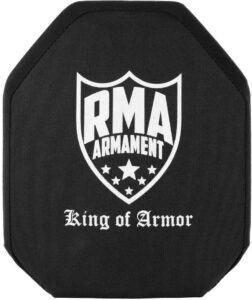
Multi-curve is important. The earlier RMA 1155 was a single-curve (SAPI profile) plate that curved front-to-back but was flat side-to-side. The multi-curve (1155 MC) version curves in both directions, conforming to your torso. This dramatically improves comfort, especially when wearing the plates for extended periods. The difference between single-curve and multi-curve is the difference between wearing a cutting board and wearing armor that moves with you.
The trade-off is weight. At approximately 8.2 pounds per plate (10×12 multi-curve shooter’s cut), a set of 1155 MCs adds over 16 pounds to your kit before you even count the plate carrier. This is the reality of Level IV ceramic armor at this price point — stopping AP rounds requires material, and material has mass. For home defense or vehicle staging, the weight is manageable. For extended wear or physical activity, it’s substantial.
Pros:
- NIJ .06 certified Level IV — the real deal
- Multi-curve for dramatically improved comfort
- Best value in certified Level IV plates
- American-made with responsive customer support
- Proven track record in the community
Cons:
- Heavy at approximately 8.2 lbs per plate (10×12 multi-curve shooter’s cut)
- Ceramic is fragile to drops (handle with care)
- Lead times can be extended during demand surges
- 10×12″ shooter’s cut only (no SAPI sizing options)
- Thick profile (1.1″) may not fit all carriers
2. Hesco L211 — Best Lightweight Special Threat Plates

Check price at Hesco (authorized dealers)
Check price at Brownells
The Hesco L211 is the direct successor to the discontinued L210, and it has quickly become one of the most popular plates in the civilian market because it answers a practical question: what threats are you actually most likely to face?
The L211 is a Level III+ special threat plate, NIJ 0101.06 compliant. It’s designed to stop: 5.56 M193 (55gr at muzzle velocity), 5.56 M855 (62gr at muzzle velocity), and 7.62×39 MSC (123gr at muzzle velocity). These are the three most common rifle threats in the civilian context. What the L211 does NOT stop: .30-06 M2 AP, 7.62×51 M80 at NIJ Level III velocities, or other AP rounds. The L211 improves on the L210 with NIJ 0101.06 compliance — the latest testing standard — providing additional confidence in its rated performance.
The weight advantage is substantial. At approximately 4.9 pounds per plate (similar weight class to the L210 it replaces), the L211 saves over 3 pounds per plate compared to the RMA 1155. That’s nearly 7 pounds less for a set. Over hours of wear, this difference is enormous. The L211 maintains a slim profile, making it easy to fit in standard carriers.
Multi-curve and a swimmer’s cut profile make the L211 comfortable and unobtrusive. It moves well during physical activity, doesn’t dig into your arms, and sits flat against the body. For a plate you might actually wear regularly — during training, range days, or staged near the bed — comfort is a major factor.
The practical argument for the L211 is sound. Most civilian defensive scenarios involving rifles will involve 5.56 NATO or 7.62×39 Soviet — the two most common rifle calibers in American civilian circulation. The L211 handles these at muzzle velocity. If you’re planning for threats that require Level IV protection (armor-piercing rifle rounds), the RMA 1155 is the answer. But if you want the most wearable rifle protection against the most common threats, the L211 is hard to beat.
Hesco is a major armor manufacturer that supplies military and law enforcement worldwide. The L211, like the L210 before it, has been tested to rigorous standards and carries NIJ 0101.06 compliance. It’s a legitimate, well-proven plate from a trusted manufacturer.
Pros:
- Significantly lighter than Level IV plates (~4.9 lbs each)
- Stops the three most common rifle threats at muzzle velocity
- NIJ 0101.06 compliant (latest testing standard)
- Multi-curve swimmer’s cut for comfort
- Proven successor to the widely trusted L210
Cons:
- Special threat profile — does not meet full NIJ Level III (no M80 ball rating)
- Will not stop AP rounds
- Premium pricing for the protection level
- Availability can be spotty through unauthorized dealers (buy from authorized sources)
- Relatively new to market as the L210’s successor (though same Hesco pedigree)
3. Hesco 4401 — Proven Level IV Workhorse
Check price at authorized dealers
Check price at Brownells
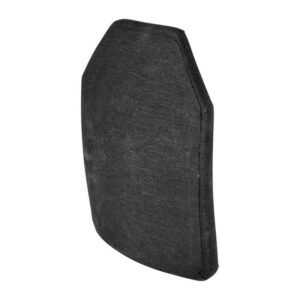
The Hesco 4401 is one of the most widely deployed Level IV plates in both law enforcement and civilian use. It’s a single-curve SAPI-cut plate that has been stopping rounds for years and carries NIJ .06 certification. If you are still building out your setup, check out our roundup of the best gun safes in 2026.
At 7.5 pounds per plate, the 4401 splits the difference between the lightweight L211 and the budget-friendly RMA 1155. It’s a pound lighter per plate than the RMA while still providing full Level IV protection. Over a set of plates, that’s 2 pounds saved — meaningful for extended wear.
The 4401 is a single-curve plate, which is its main drawback compared to multi-curve options. Single-curve plates curve front-to-back but remain flat side-to-side, creating gaps at the edges where the plate doesn’t conform to your body. This is less comfortable than multi-curve and provides slightly less coverage at the edges. For many users, this is an acceptable trade-off at the price point.
NIJ .06 certification is current and verified. You can look up the 4401 on the NIJ’s Compliant Products List. This matters. Certification means independent testing by an accredited lab under controlled conditions. Manufacturer claims without NIJ certification should be viewed with skepticism for any plate you’re trusting your life to.
The Hesco 4401 is available in multiple sizes (small, medium, large, and extra-large SAPI cuts), which is an advantage over the RMA 1155’s one-size approach. Proper plate sizing ensures that the plate covers your vital organs without being so large that it restricts movement or doesn’t fit your carrier.
Construction is alumina ceramic with a polyethylene backer — the same proven technology as the RMA 1155. Ceramic plates have a shelf life; Hesco rates their plates for 5 years of use, though ceramic does not degrade from age alone. Mechanical damage (drops, impacts) is the primary concern.
Pros:
- NIJ .06 certified Level IV
- Lighter than RMA 1155 (7.5 lbs vs 8.3 lbs per plate)
- Available in multiple SAPI sizes
- Proven, widely deployed plate with extensive track record
- Hesco’s reputation and quality control
Cons:
- Single-curve only (no multi-curve option in 4401)
- More expensive than RMA 1155
- SAPI cut may not fit all commercial carriers
- Still heavy for extended wear
- Less widely available direct-to-consumer (use authorized dealers)
4. Highcom 4S17M — Best Lightweight Level IV

Check price at Highcom Armor
Check price at Apex Armor Solutions
If you want Level IV protection without the punishing weight, the Highcom 4S17M is the plate to buy. At 6.5 pounds per plate, it’s nearly 2 pounds lighter per plate than the RMA 1155 while providing the same NIJ .06 certified Level IV protection.
The weight savings come from advanced materials. The 4S17M uses a silicon carbide ceramic face (harder and lighter than the alumina oxide used in budget plates) backed by ultra-high-molecular-weight polyethylene. Silicon carbide is more expensive to manufacture, which is reflected in the higher price, but it provides the same ballistic protection at reduced weight.
Multi-curve profile is standard on the 4S17M, and the fit is excellent. The plate conforms to the torso, doesn’t create pressure points, and allows natural breathing even during physical activity. For anyone who plans to train in their armor (and you should), the comfort difference compared to budget plates is significant.
At roughly $300 per plate ($600 for a set), the 4S17M costs more than double the RMA 1155. That’s a real price difference, and whether it’s worth it depends on your use case. If you’re staging plates in a quick-access carrier for home defense and will rarely wear them, the RMA 1155 at half the price makes sense. If you’re wearing plates during training, courses, or extended periods, the 4S17M’s weight savings are worth every penny.
Highcom is a U.S. manufacturer based in Columbus, Ohio, that has supplied armor to military and law enforcement for decades. Their quality control is excellent, and the 4S17M is a proven plate with NIJ .06 certification.
The 4S17M is also thinner (0.95″) than most Level IV plates, which improves the plate’s profile in a carrier and makes it less visible under outer garments. For anyone using a low-profile carrier, this matters. For additional reading, see NIJ body armor protection levels.
Pros:
- NIJ .06 certified Level IV at 6.5 lbs per plate
- Multi-curve for excellent comfort
- Silicon carbide ceramic face (superior material)
- Thinner profile than budget Level IV plates
- American-made with strong military/LE track record
Cons:
- Premium price (~$300 per plate / $600 per set)
- Still heavy compared to special threat plates
- Less widely available than RMA or Hesco
- Silicon carbide, while superior, is more brittle than alumina (handle with care)
- Limited sizing options compared to Hesco
5. Spartan Armor AR500 Level III+ — The Steel Plate (With Caveats)
Check price at Spartan Armor
Check price at MidwayUSA | Find at Brownells
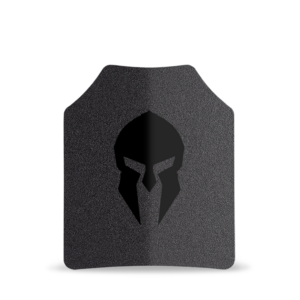
We’re including a steel plate option because many civilians buy them, and we’d rather give you honest information than pretend they don’t exist. The Spartan Armor AR500 Level III+ plates are among the better steel options on the market. But steel body armor comes with significant disadvantages that you need to understand.
The case for steel: It’s affordable (~$100 per plate / $200 per set), it’s durable (won’t crack if dropped), and it provides multi-hit capability against rifle rounds. The Spartan AR500 with their Encapsaloc anti-spall coating is rated to stop 5.56 M193, 5.56 M855, 7.62×51 M80, and 7.62×39 MSC. For the budget-conscious buyer who wants rifle protection, the price is attractive.
The case against steel — and it’s strong:
Spall and fragmentation are the biggest concerns. When a bullet hits a steel plate, it doesn’t just stop. The bullet fragments and those fragments go somewhere — usually upward toward your neck, face, and arms, and downward toward your femoral arteries. Anti-spall coatings (like Spartan’s Encapsaloc) mitigate this, but they don’t eliminate it. After multiple hits, the coating degrades and spall becomes a serious risk. Ceramic plates absorb the bullet’s energy and capture fragments. Steel deflects them.
Weight is comparable to Level IV ceramic while providing less protection. The Spartan AR500 Level III+ plates weigh 8.0 pounds each, which is actually heavier than the Hesco 4401 (Level IV at 7.5 lbs). You’re carrying more weight for less protection.
Steel plates are flat (single-curve at best), which means they don’t conform to your body. They’re uncomfortable for extended wear, create pressure points, and don’t provide the coverage that a properly fitting multi-curve ceramic plate offers.
Steel does not stop AP rounds. Despite the “Level III+” rating, AR500 steel will not stop common AP rifle rounds. Level IV ceramic will.
So why do people buy steel? Durability (won’t crack), shelf life (essentially unlimited), multi-hit capability, and price. For training plates that see repeated hits at the range, steel makes some sense. For actual protective use, ceramic and polyethylene are objectively superior.
Pros:
- Very affordable (~$100 per plate)
- Extremely durable — won’t crack from drops
- Essentially unlimited shelf life
- Multi-hit capable
- Encapsaloc coating reduces (doesn’t eliminate) spall
Cons:
- Spall and fragmentation risk, even with coating
- Heavy (8.0 lbs) for Level III+ protection
- Flat profile doesn’t conform to body
- Does NOT stop AP rounds despite being heavy
- Ceramic/PE provides better protection at lower weight
6. Safariland Second Chance Summit SM — Best Concealed Soft Armor
Check price at authorized Safariland dealers
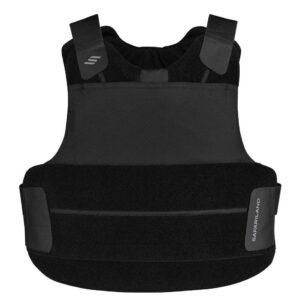
Shifting from rifle plates to concealable soft armor: the Safariland Second Chance Summit SM is a Level IIIA soft armor panel system designed to be worn under a dress shirt, polo, or light jacket as a concealable vest.
Level IIIA soft armor stops all common handgun rounds up to .44 Magnum. It will NOT stop rifle rounds. If your threat model involves handgun threats (most civilian self-defense scenarios), concealable soft armor provides meaningful protection without the weight and profile of rifle plates.
The Summit SM uses Safariland’s proprietary woven aramid fiber construction, producing panels that are thin, flexible, and lightweight. At roughly 1.2 pounds per panel, a full vest weighs around 2.5 pounds — barely noticeable under clothing. The panels flex with your body, breathe reasonably well (by armor standards), and can be worn all day with minimal discomfort.
Concealability is excellent. Under a dress shirt or polo, the Summit SM is virtually invisible. The vest carrier is available in white and neutral colors, with a smooth outer surface that doesn’t print through clothing. For professionals who work in environments where concealed armor is appropriate — executive protection, high-risk employment, personal security concerns — the Summit SM is a top-tier option.
NIJ .06 certification is current, confirming that the vest has been independently tested and verified to stop .44 Magnum semi-jacketed hollow points at 1,430 fps. This is the gold standard for concealable armor.
The price is significant. Quality concealable soft armor from Safariland starts around $700 and can exceed $1,000 depending on size, carrier options, and features. This is substantially more than rifle plates, which may seem counterintuitive. The premium reflects the advanced materials and construction required to produce thin, concealable, comfortable armor.
Proper fit is critical for soft armor. Safariland offers sizing guides and recommends professional fitting. An ill-fitting vest creates gaps in coverage, shifts during movement, and is uncomfortable enough that you won’t want to wear it. If you’re investing in concealable armor, invest in proper sizing.
Pros:
- Level IIIA stops all common handgun rounds
- Extremely lightweight (~2.5 lbs for full vest)
- Thin, flexible panels that conceal under dress clothing
- NIJ .06 certified
- Safariland’s proven quality and reputation
Cons:
- Does NOT stop rifle rounds
- Expensive ($700+)
- Requires professional fitting for optimal performance
- Warm to wear in hot climates
- Panels have a limited service life (typically 5 years)
Buyer’s Guide: How to Choose the Best Body Armor for Civilians
Determine Your Threat Model
This is the most important step, and it should drive every other decision.
Handgun threats only: Level IIIA soft armor. Concealable, lightweight, wearable all day. Appropriate for most civilian self-defense scenarios.
Common rifle threats (5.56, 7.62×39): Special threat plates (Hesco L211) or Level III+ plates. Lighter than Level IV, handles the most likely threats.
Maximum rifle protection: Level IV plates (RMA 1155, Hesco 4401, Highcom 4S17M). Stops armor-piercing rounds. Heaviest option.
Most civilians buying rifle plates should choose Level IV. The weight difference between Level III+ and Level IV is often minimal, and Level IV provides definitively superior protection. The exception is if you prioritize wearability and the weight savings of a special threat plate like the L211 justify the reduced threat coverage.
Steel vs. Ceramic — The Definitive Answer
Buy ceramic or ceramic/polyethylene plates. Steel body armor is an inferior product for protective use. The spall risk alone disqualifies it for serious defensive applications. Ceramic plates are lighter (per protection level), capture fragments, conform to your body in multi-curve profiles, and provide higher protection levels.
The only legitimate argument for steel is cost and durability for training plates. If you need a plate to absorb hits at the range during training drills, steel works. For anything you’d wear when real bullets might be incoming, ceramic is the standard.
Plate Carriers — Matching Your Plates to a Carrier
Your plate carrier must fit your plates. This sounds obvious, but plate sizing (10×12 shooter’s cut vs. SAPI sizing) varies between manufacturers.
Recommended carriers for civilian use:
- Crye Precision JPC 2.0: The gold standard. Lightweight, minimal, comfortable. ~$240. Fits 10×12 and SAPI plates.
- Ferro Concepts Slickster: Minimalist, slick profile for low-vis applications. ~$160. Popular for home defense setups.
- Defense Mechanisms MEPC: American-made, modular, excellent value. ~$170. Highly configurable.
- Shellback Tactical Patriot: Budget-friendly, well-made, adjustable. ~$100. Good entry-level option.
Weight Management
A loaded plate carrier with Level IV plates, magazines, and a first aid kit can easily exceed 25 pounds. Here’s how to manage it:
- Choose the lightest plates your budget allows for your required protection level
- Multi-curve plates distribute weight more evenly than single-curve
- Properly adjust your carrier. The top of the plate should sit at or just below the notch at the top of your sternum. Shoulder straps and cummerbund should be snug but not restrictive.
- Train in your armor. Wearing armor during physical activity is a skill. Start with short sessions and build up.
Legal Considerations
Body armor is legal for civilian purchase and ownership in 49 states. Connecticut requires body armor to be purchased in a face-to-face transaction (no online orders shipped to CT). Some states and localities restrict body armor ownership for individuals with felony convictions. As of 2026, there are no federal laws prohibiting civilian ownership of body armor.
Check your state and local laws before purchasing. Laws can change, and this article is not legal advice.
Frequently Asked Questions
Is body armor legal for civilians?
Yes, in 49 states. Connecticut requires in-person purchase and the buyer must hold a valid pistol permit, eligibility certificate, or ammunition certificate. Some states restrict ownership for convicted felons. There are no federal prohibitions on civilian body armor ownership as of 2026. Check your local laws.
How long does body armor last?
Most manufacturers rate soft armor panels for 5 years and hard plates for 5-10 years. Ceramic doesn’t degrade from age alone — mechanical damage (drops, impacts) is the primary concern. Store plates in a temperature-controlled environment away from moisture and UV light.
Will Level IIIA soft armor stop a rifle round?
No. Level IIIA is rated for handgun rounds up to .44 Magnum. Rifle rounds require Level III, III+, or Level IV hard plates. There is no soft armor that reliably stops rifle rounds.
Should I buy steel or ceramic plates?
Ceramic or ceramic/polyethylene. Steel plates pose a spall risk, are heavier per protection level, and don’t conform to your body. See the buyer’s guide above for the full breakdown.
What’s the difference between NIJ certified and “tested to NIJ standards”?
NIJ certified means the product has been independently tested by an NIJ-accredited laboratory and appears on the NIJ Compliant Products List. “Tested to NIJ standards” or “meets NIJ standards” means the manufacturer claims compliance but has not undergone independent certification. Always verify on the NIJ CPL.
Can body armor stop a knife or stab attack?
Standard ballistic armor is NOT designed to stop stabbing or slashing attacks. Stab-resistant armor is a separate product category with its own testing standards. Some combination (multi-threat) armor exists, but it’s specialized and expensive.
How do I size my plates?
The plate should cover your vital organs: from the top of the sternum (suprasternal notch) to approximately two inches above your navel, and from nipple to nipple. Most adult males fit a 10×12 shooter’s cut or medium SAPI. Smaller-framed individuals may need a small SAPI or 8×10 plate.
Final Verdict
For most civilians buying their first set of rifle plates, the RMA 1155 Multi-Curve is the best starting point. NIJ .06 certified Level IV protection at ~$270 per set is an extraordinary value. Pair it with a Ferro Concepts Slickster or Defense Mechanisms MEPC and you have a capable setup for under $450.
If weight is your priority, the Hesco L211 provides protection against the most common rifle threats at a significant weight savings, and the Highcom 4S17M delivers full Level IV at the best weight-to-protection ratio available.
For concealed handgun protection, the Safariland Summit SM is the premium choice for soft armor that you can wear under business clothing all day.
Whatever you choose, buy from authorized dealers, verify NIJ certification on the official CPL, and train with your equipment. Armor you’ve never worn and never practiced in provides a fraction of its potential benefit.
Last updated: March 2026. Prices, availability, and NIJ certification status subject to change. Verify current certification at the NIJ Compliant Products List. This article is for informational purposes and does not constitute legal advice.
If you know of any forums or sites that should be referenced on this listing, please let us know here.