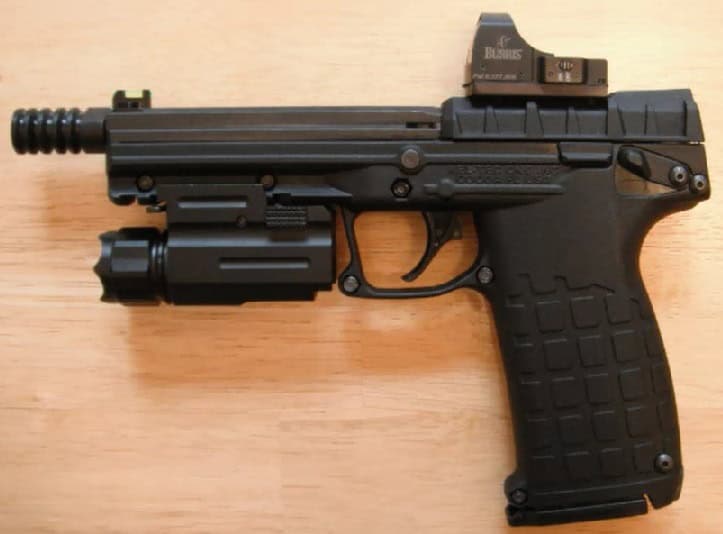
Pistol-mounted red dot sights have gone from competition novelty to mainstream necessity. What started in the action shooting sports has spread to duty use, concealed carry, and recreational shooting. Today, nearly every major pistol manufacturer ships optics-ready models, and the red dot market has responded with options ranging from budget-friendly to bombproof.
Affiliate Disclosure: Powder & Lead is reader-supported. When you buy through links on our site, we may earn an affiliate commission at no additional cost to you. This helps us continue providing quality firearms content.
The benefits are clear: a properly zeroed red dot allows faster target acquisition, improved accuracy (especially at distance), better low-light performance, and an easier sight picture for aging eyes. The learning curve is real — finding the dot quickly takes dedicated dry-fire practice — but once you’ve adapted, going back to irons feels like downgrading from a rifle scope to iron sights.
The challenge is choosing from a market flooded with options. Durability, battery life, window size, dot size, mounting footprint, and price all factor into the decision. And the right choice depends heavily on whether you’re carrying concealed, competing in USPSA Carry Optics, or equipping a duty gun.
This guide breaks down the best pistol red dot sights for every application in 2026.
Quick Comparison Table
| Optic | Window Size | Dot Size | Battery Life | Footprint | Weight | Price Range | Best For |
|---|---|---|---|---|---|---|---|
| Trijicon RMR Type 2 | 22mm | 3.25 MOA | 4+ years | RMR | 1.2 oz | $450–$530 | Duty/carry durability |
| Trijicon RMRcc | 18mm | 3.25 MOA | 4+ years | RMRcc | 1.2 oz | $450–$500 | Micro/subcompact carry |
| Holosun 507C X2 | 22mm | 2/32 MOA | 50,000 hrs | RMR | 1.5 oz | $280–$330 | Best value carry optics |
| Holosun 407C X2 | 22mm | 2 MOA | 50,000 hrs | RMR | 1.5 oz | $230–$270 | Budget carry optics |
| Holosun EPS Carry | 17mm | 2/6 MOA | 50,000 hrs | EPS/K | 1.0 oz | $330–$380 | Enclosed micro carry |
| Holosun 509T X2 | 20mm | 2/32 MOA | 50,000 hrs | 509T | 1.6 oz | $350–$410 | Enclosed emitter value |
| Leupold DeltaPoint Pro | 25.7mm | 2.5/6 MOA | 1,600 hrs (lowest brightness, motion-activated) | DPP | 1.95 oz | $400–$480 | Largest window |
| Sig Sauer Romeo1 Pro | 24mm | 3/6 MOA | 20,000 hrs | Romeo1Pro | 1.6 oz | $300–$380 | Sig P320/P226 |
| Aimpoint ACRO P-2 | 19mm | 3.5 MOA | 5 years | ACRO | 2.1 oz | $550–$620 | Ultimate enclosed duty |
| Swampfox Liberty | 22mm | 3 MOA | ~4,000 hrs | RMR | 1.3 oz | $200–$250 | Budget entry |
Understanding Pistol Red Dots
Open vs. Enclosed Emitter
This is the single most important distinction in the pistol red dot market today.
Open Emitter — The LED emitter sits exposed at the bottom of the window. Examples: Trijicon RMR, Holosun 507C, Leupold DeltaPoint Pro. Open emitters are lighter and often less expensive, but the exposed emitter can be blocked by debris, rain, snow, or lint from concealment garments.
Enclosed Emitter — The LED sits inside a sealed housing, protected from the elements. Examples: Aimpoint ACRO P-2, Holosun EPS, Holosun 509T. Enclosed emitters are more reliable in adverse conditions and are increasingly preferred for duty and carry use. The trade-off is typically a slightly smaller window, more weight, and higher cost.
For a range-only competition gun, open emitter is perfectly fine. For a gun you carry daily or stake your life on, enclosed emitter provides an extra margin of reliability.
Dot Size: MOA Explained
Dot size is measured in Minutes of Angle (MOA). A larger MOA dot is easier to find quickly but covers more of the target at distance. A smaller dot is more precise but harder to pick up.
- 2 MOA — Precise, favored by competition shooters. Covers about 2″ at 100 yards.
- 3.25 MOA — The Trijicon RMR standard. Good balance of speed and precision.
- 6 MOA — Large, fast-acquisition dot. Excellent for carry and close-range defensive use. Covers about 6″ at 100 yards.
- 32 MOA circle — Holosun’s ring reticle. The large circle helps you find the dot, then the inner dot provides precision. Many shooters find the circle-dot reticle to be the best of both worlds.
Mounting Footprints
Pistol red dots don’t share a universal mounting standard. The major footprints are:
- RMR footprint — The most common. Used by Trijicon RMR, Holosun 507C/407C, and many others. Most optics-ready pistols support this footprint.
- RMRcc footprint — Trijicon’s smaller footprint for micro/subcompact pistols.
- Shield RMSc footprint — Popular on smaller carry guns. Holosun K-series and EPS Carry use this.
- DeltaPoint Pro footprint — Leupold’s proprietary mounting pattern.
- ACRO footprint — Aimpoint’s standard for the ACRO series.
- Romeo1 Pro footprint — Sig’s proprietary pattern, primarily for Sig pistols.
Always verify that your pistol’s optics cut matches the red dot you’re considering, or plan for an adapter plate.
Best Pistol Red Dot Sights Reviewed
Trijicon RMR Type 2 (RM06) — Best Duty/Carry Red Dot
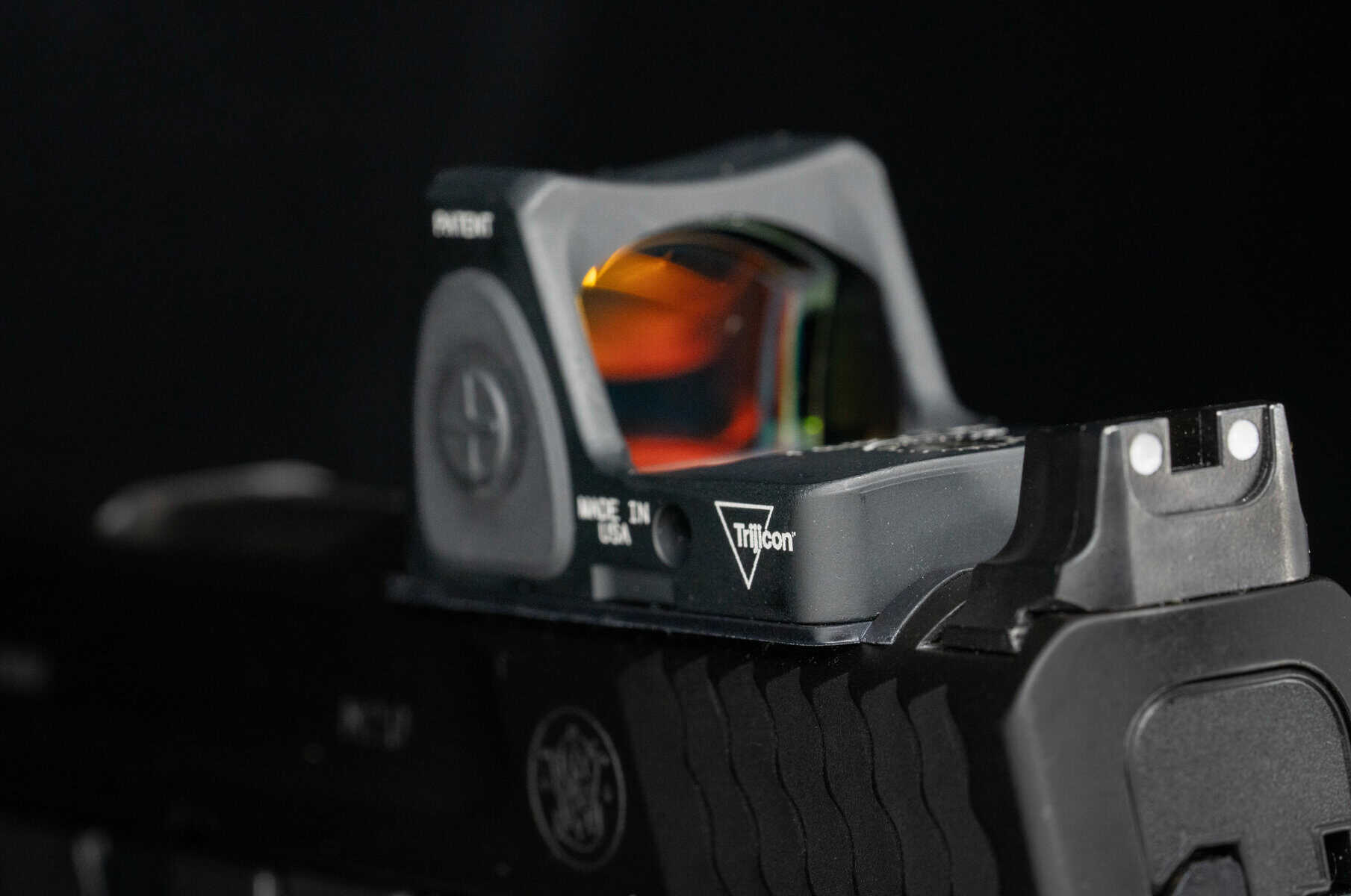
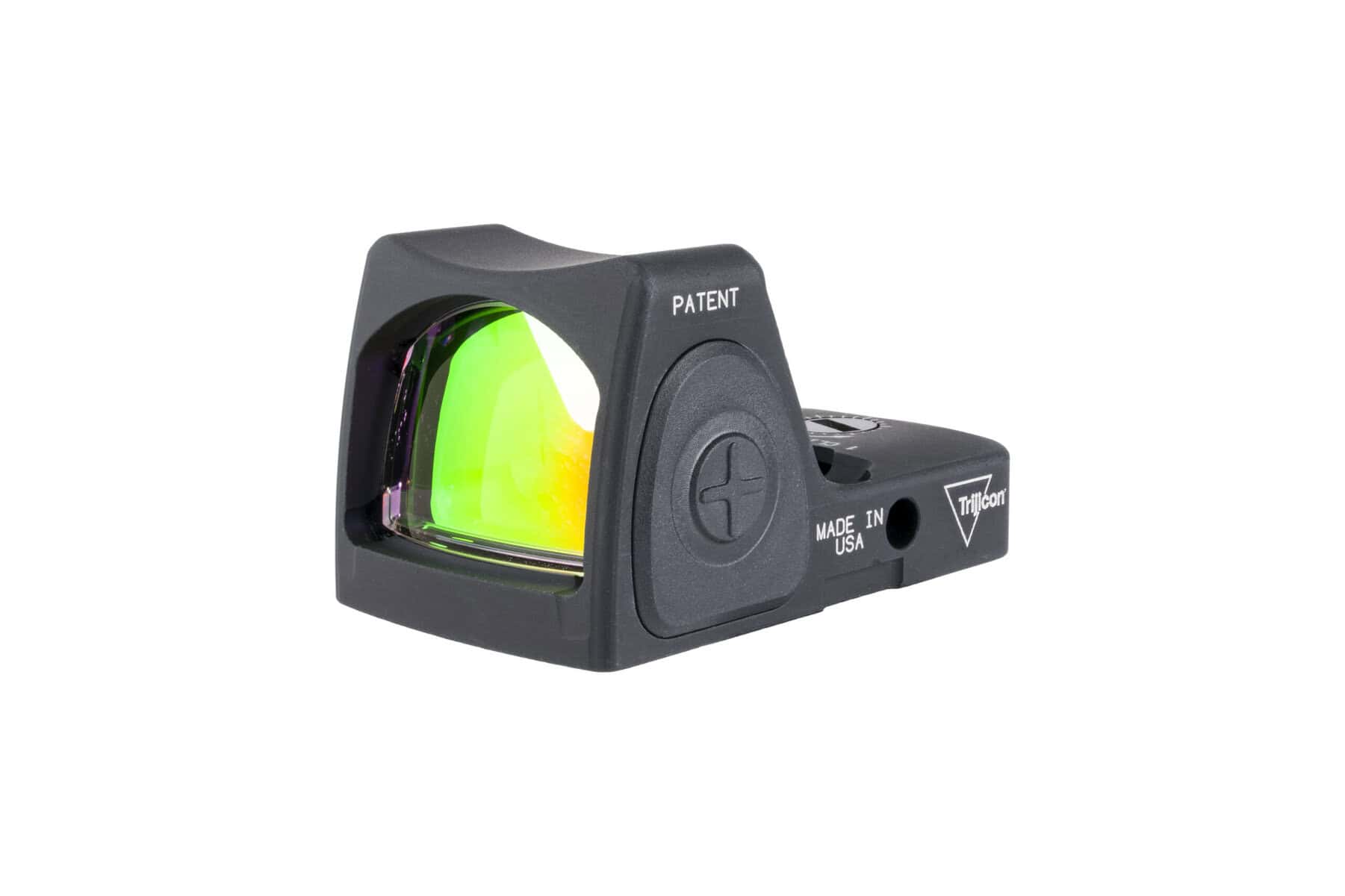
Price: $450–$530 | Window: 22mm | Dot: 3.25 MOA | Battery: CR2032, 4+ years | Weight: 1.2 oz
The Trijicon RMR Type 2 is the standard against which all pistol red dots are measured. It’s been the top choice of military, law enforcement, and serious concealed carriers since its introduction, and its reputation for indestructible durability is well-earned.
The RMR’s housing is forged 7075-T6 aluminum — the same alloy used in aircraft frames. The patented shape deflects impacts away from the lens. Stories of RMRs surviving drops onto concrete, being run over by vehicles, and functioning after being submerged in mud are not marketing; they’re field reports.
The Type 2 improvement added buttons for manual brightness adjustment alongside the auto-brightness sensor. The 3.25 MOA dot (RM06 model) is the most popular variant, offering a good balance between speed and precision. Battery life exceeds four years of continuous use on a CR2032 — meaning you can change the battery annually and never worry about losing your dot.
The RMR is an open-emitter design, which is its primary limitation in 2026. As enclosed-emitter options have matured, the exposed emitter is a legitimate concern for duty and carry use. However, the RMR’s track record in the field is longer and deeper than any enclosed option.
Who This Is Best For: Duty users, concealed carriers, and anyone who prioritizes proven, battle-tested durability above all else. If your life depends on the optic working when you need it, the RMR’s track record is unmatched.
Strengths:
- Legendary durability — forged 7075 aluminum housing
- 4+ year battery life
- Proven in military and law enforcement service
- Adjustable brightness (auto and manual)
- Universal RMR footprint fits most optics-ready pistols
- Lightest full-size option at 1.2 oz
Weaknesses:
- Open emitter design susceptible to debris
- Premium price point
- Smaller window than some competitors
- 3.25 MOA dot is a compromise size
- Blue tint to lens noted by some users
- Bottom-loading battery requires removal to change
Where to buy: OpticsPlanet
Trijicon RMRcc — Best for Micro/Subcompact Pistols
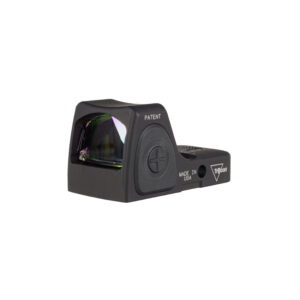
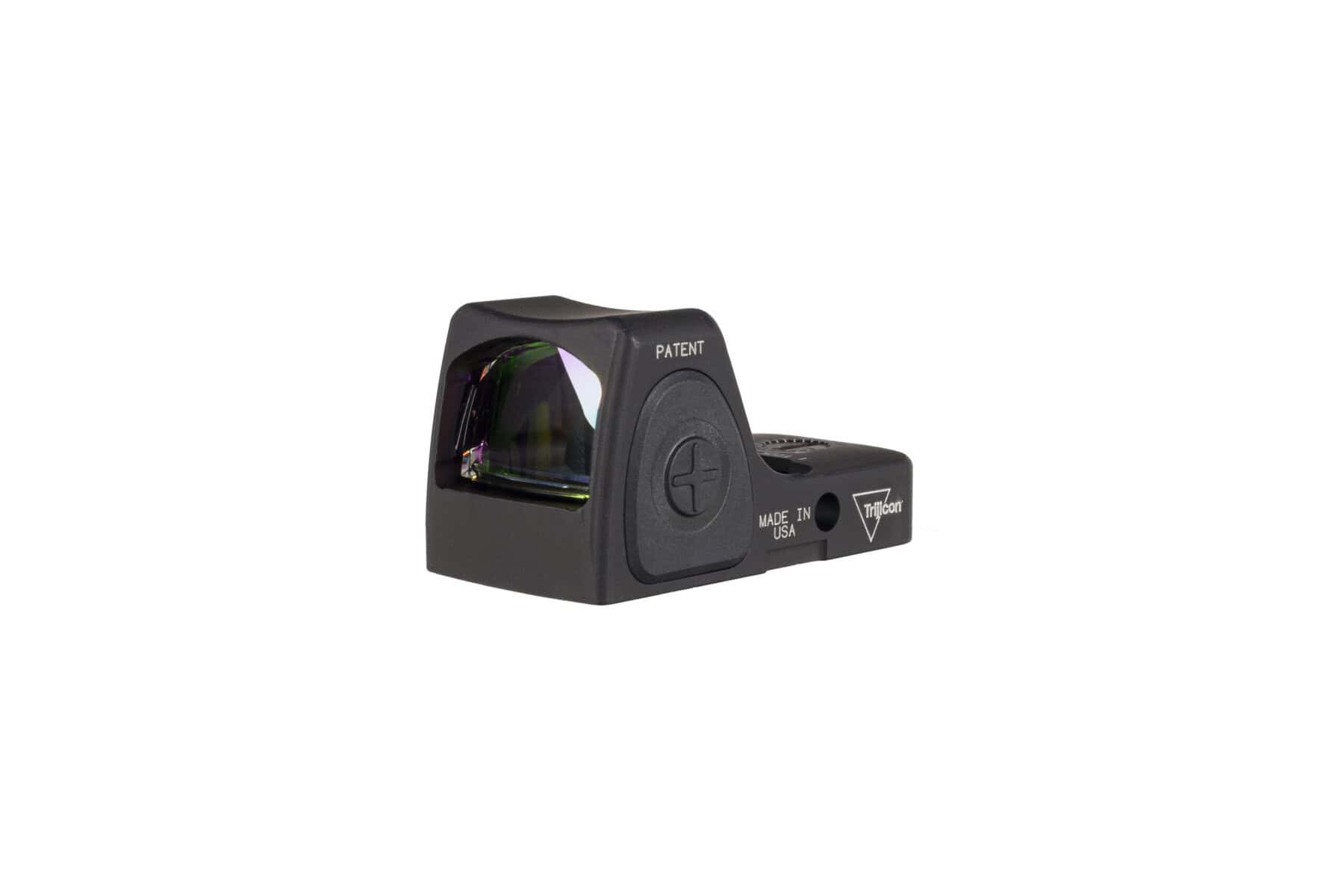
Price: $450–$500 | Window: 18mm | Dot: 3.25 MOA | Battery: CR2032, 4+ years | Weight: 1.2 oz
The RMRcc (Concealed Carry) is Trijicon’s answer to the micro red dot market. Designed specifically for subcompact and micro-compact pistols — the Sig P365, Glock 43X, Springfield Hellcat, and similar — the RMRcc provides the RMR’s legendary durability in a smaller, lighter package.
At just 1.2 ounces, the RMRcc adds virtually no perceptible weight to a carry gun. The 18mm window is smaller than the full-size RMR but perfectly adequate for defensive distances. Build quality matches the full-size model.
The RMRcc uses its own proprietary footprint, which is narrower than the standard RMR. Most modern micro-compact pistols either come cut for the RMRcc or can be milled for it. Adapter plates are also available.
Who This Is Best For: Concealed carriers running micro-compact pistols who want Trijicon’s durability and don’t want to compromise their gun’s concealability with a full-size optic.
Strengths:
- Same Trijicon durability in a smaller package
- Just 1.2 oz — negligible weight addition
- 4+ year battery life
- Sized for micro-compact pistols
- Minimal impact on concealment
Weaknesses:
- Smaller window than full-size options
- Proprietary footprint limits compatibility
- Open emitter
- Same premium pricing as full-size RMR
- Fewer aftermarket mounting options
Where to buy: OpticsPlanet
Holosun 507C X2 — Best Value Carry Optics Red Dot
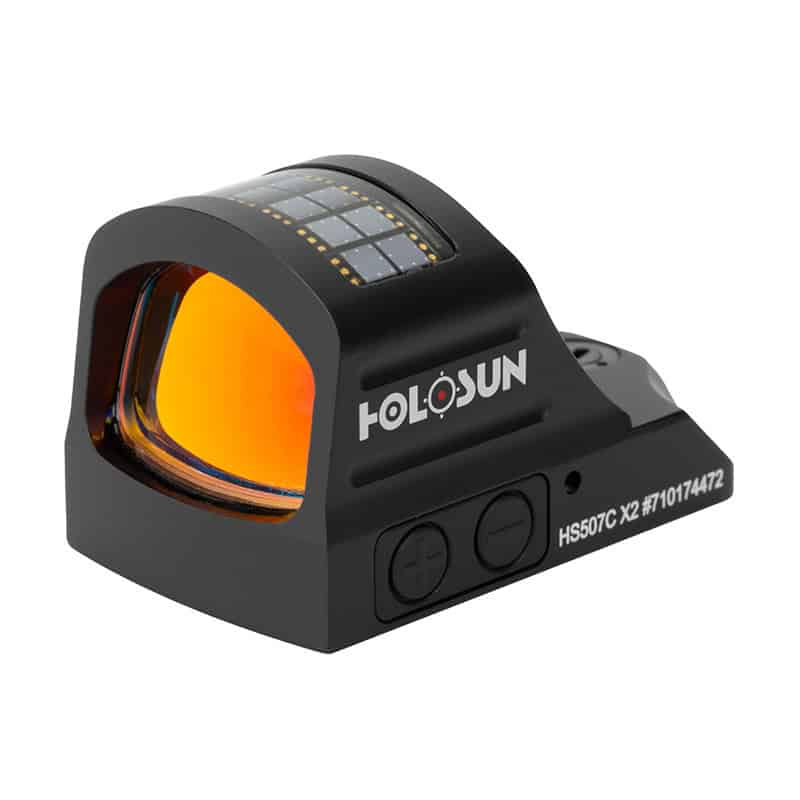
Price: $280–$330 | Window: 22mm | Dot: 2 MOA dot / 32 MOA circle / both | Battery: CR1632, 50,000 hrs | Weight: 1.5 oz
The Holosun 507C X2 has become one of the most popular pistol red dots on the market, and it’s not hard to see why. It offers features that match or exceed the Trijicon RMR at nearly half the price, with the addition of Holosun’s signature Multi-Reticle System (MRS).
The MRS lets you toggle between three reticle options: a 2 MOA dot only, a 32 MOA circle only, or both simultaneously (circle-dot). The circle-dot reticle is a revelation for many shooters — the large ring helps you find the dot quickly during presentation, while the precise center dot handles accuracy. For carry and competition use, this is a genuine advantage.
The 507C uses an RMR footprint, meaning it drops directly into any RMR-cut slide. Solar backup supplements the CR1632 battery, providing a failsafe if the battery dies. Battery life is rated at 50,000 hours on the middle brightness setting — well over five years of continuous operation.
Build quality is excellent. The 7075 aluminum housing handles recoil from full-size 9mm through 10mm without issue. Holosun’s reputation for reliability has improved dramatically, and the 507C has proven itself across thousands of users in competition and carry roles.
The main criticism is that it’s not as proven in extreme-abuse scenarios as the RMR. Holosun hasn’t been around as long as Trijicon, and the data set for torture-test durability is smaller. For most users, this distinction is academic — the 507C handles normal use and abuse without complaint.
Who This Is Best For: Anyone who wants an excellent pistol red dot without paying Trijicon prices. The multi-reticle system makes it particularly appealing for new red-dot shooters and USPSA Carry Optics competitors. Arguably the best overall value in the pistol optic market.
Strengths:
- Multi-Reticle System (dot, circle, circle-dot)
- Solar backup power
- 50,000+ hour battery life
- RMR footprint — universal compatibility
- Shake-awake technology
- Excellent value for the feature set
Weaknesses:
- Open emitter design
- Not as torture-test proven as RMR
- Slightly heavier than RMR at 1.5 oz
- Side-loading battery (better than bottom-load)
- Some reports of occasional auto-brightness inconsistency
Where to buy: OpticsPlanet
Holosun 407C X2 — Best Budget Carry Optics Red Dot
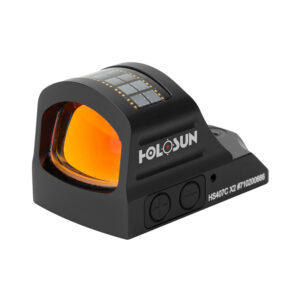
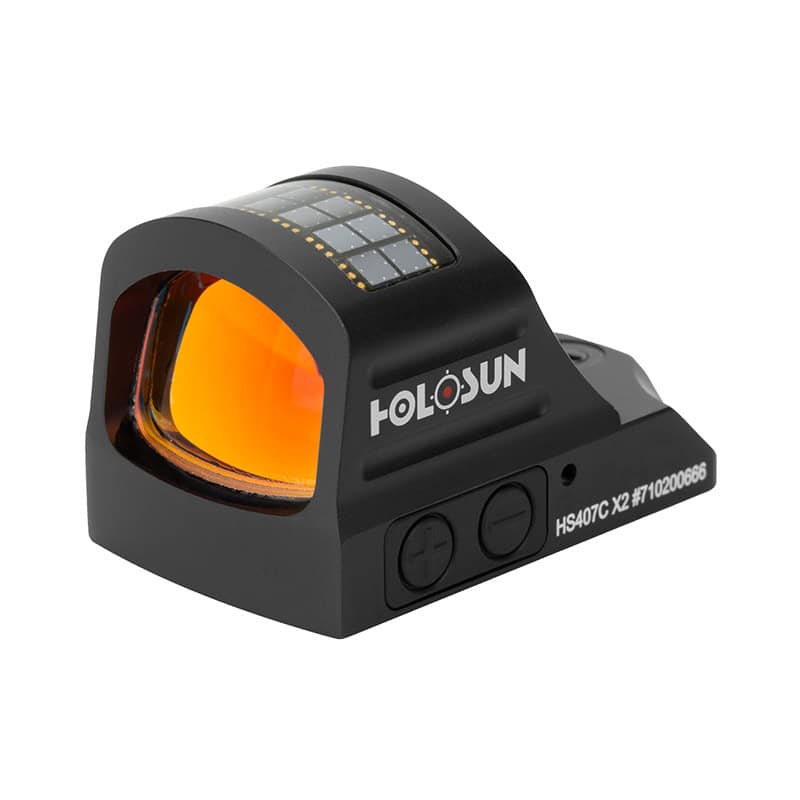
Price: $230–$270 | Window: 22mm | Dot: 2 MOA | Battery: CR1632, 50,000 hrs | Weight: 1.5 oz
The 407C X2 is the 507C’s simpler sibling. It shares the same housing, electronics, solar backup, and battery life, but offers only a single 2 MOA dot reticle instead of the Multi-Reticle System. If you know you want a dot-only reticle, the 407C saves you $50-60 over the 507C.
Everything else is identical: RMR footprint, shake-awake, side-loading battery, 7075 aluminum housing. It’s the same optic minus one feature, at a lower price.
Who This Is Best For: Budget-conscious shooters who want Holosun quality without the multi-reticle system. If you’ve used red dots before and know you prefer a simple dot, the 407C is the smart buy.
Strengths:
- Same build quality as 507C at a lower price
- 50,000+ hour battery life with solar backup
- RMR footprint compatibility
- Shake-awake technology
- Best price-to-performance ratio in the market
Weaknesses:
- Single reticle only (2 MOA dot)
- Open emitter
- Same durability questions as 507C vs. RMR
- No circle-dot option
Where to buy: OpticsPlanet
Holosun EPS Carry — Best Enclosed Micro Carry Optic
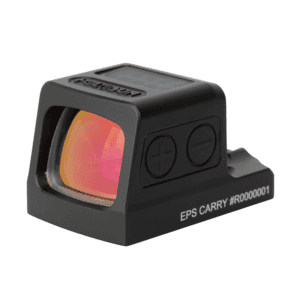
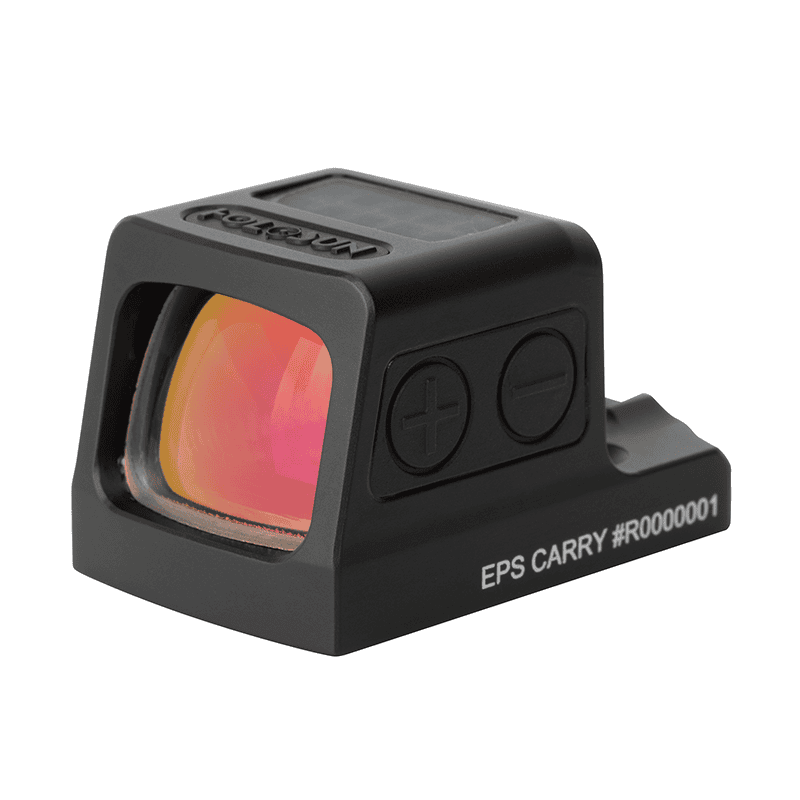
Price: $330–$380 | Window: 17mm | Dot: 2 MOA / 6 MOA options | Battery: CR1632, 50,000 hrs | Weight: 1.0 oz
The Holosun EPS Carry represents the direction the concealed carry optic market is heading: enclosed emitter in a package sized for micro-compact pistols. The sealed housing eliminates the open emitter’s vulnerability to lint, debris, and moisture — exactly the contaminants that concealed carry guns are exposed to daily.
At just 1.0 ounce, the EPS Carry adds negligible weight. The 17mm window is adequate for defensive distances, and the enclosed housing provides a cleaner sight picture than open-emitter designs. Available in 2 MOA and 6 MOA dot options (the 6 MOA is popular for defensive use due to faster acquisition).
The EPS Carry uses its own footprint (compatible with the K-series/Shield RMSc pattern with adapter plates for many pistols). Fitment continues to improve as manufacturers add EPS Carry cuts to their optics-ready slides.
Holosun also offers the full-size EPS for standard and full-size pistols, with a larger window and the same enclosed-emitter design.
Who This Is Best For: Concealed carriers who want the reliability of an enclosed emitter on a micro-compact pistol. The sealed design makes it the most practical choice for guns that live inside waistbands, under shirts, and in hostile environments.
Strengths:
- Enclosed emitter — sealed from debris and moisture
- Just 1.0 oz
- 50,000+ hour battery life
- Clean sight picture through enclosed housing
- Practical carry-focused design
Weaknesses:
- Smaller window than full-size options
- Footprint compatibility still catching up
- No multi-reticle (single dot only)
- Newer product with less long-term data
- More expensive than open-emitter Holosun options
Where to buy: OpticsPlanet
Holosun 509T X2 — Best Enclosed Emitter Value
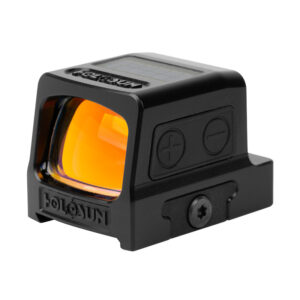
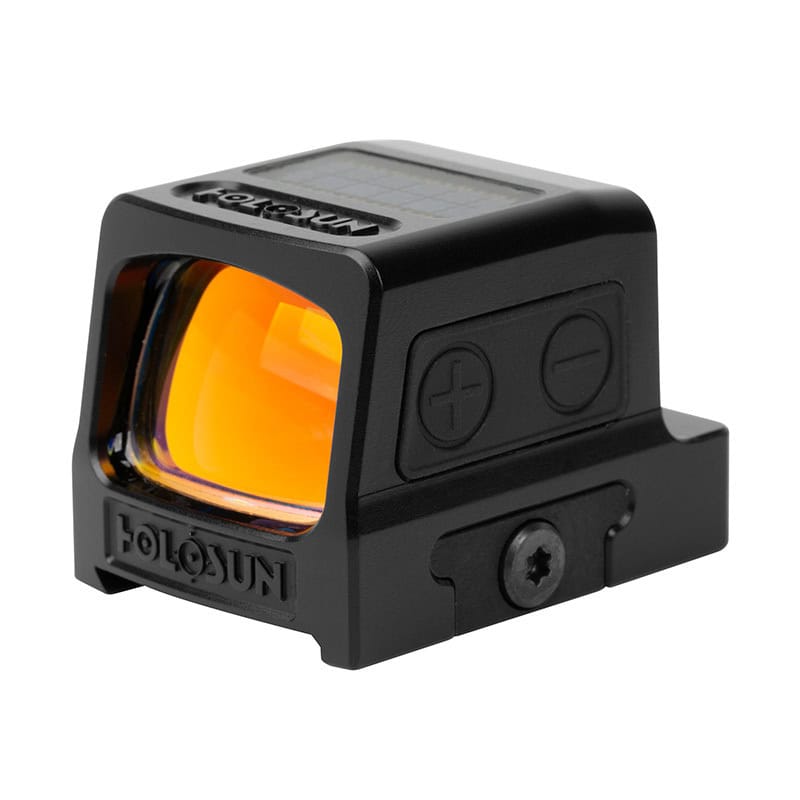
Price: $350–$410 | Window: 20mm | Dot: 2 MOA / 32 MOA circle | Battery: CR1632, 50,000 hrs | Weight: 1.6 oz
The 509T X2 brings Holosun’s enclosed-emitter technology to a full-size optic with the Multi-Reticle System. The titanium housing is tougher than the standard aluminum found on most competitors, and the enclosed design seals the emitter from environmental contamination.
The 509T uses its own proprietary footprint, but adapter plates for RMR and other patterns are widely available. The 20mm window is smaller than the DeltaPoint Pro but adequate for all practical purposes. The MRS circle-dot reticle works as well here as it does on the 507C — fast acquisition with precision when you need it.
This optic bridges the gap between the budget-friendly open-emitter Holosun options and the premium Aimpoint ACRO. You get enclosed-emitter reliability with Holosun’s feature set at roughly half the ACRO’s price.
Who This Is Best For: Shooters who want enclosed-emitter reliability with the multi-reticle system on a full-size duty or carry gun. A strong choice for anyone who finds the ACRO too expensive but wants better environmental protection than an open emitter provides.
Strengths:
- Enclosed emitter with titanium housing
- Multi-Reticle System (dot, circle, circle-dot)
- Solar backup and shake-awake
- 50,000+ hour battery life
- More affordable than Aimpoint ACRO
Weaknesses:
- Proprietary footprint requires adapter plates
- Heavier than open-emitter options at 1.6 oz
- 20mm window is smaller than some open-emitter competitors
- Adapter plate adds height — potential co-witness issues
Where to buy: OpticsPlanet
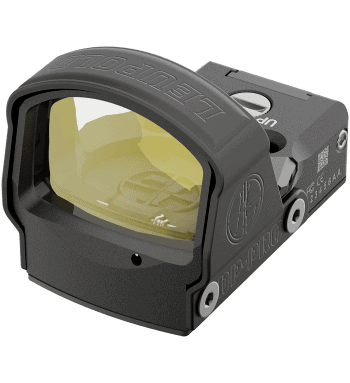
Leupold DeltaPoint Pro — Largest Window, Best Glass Clarity
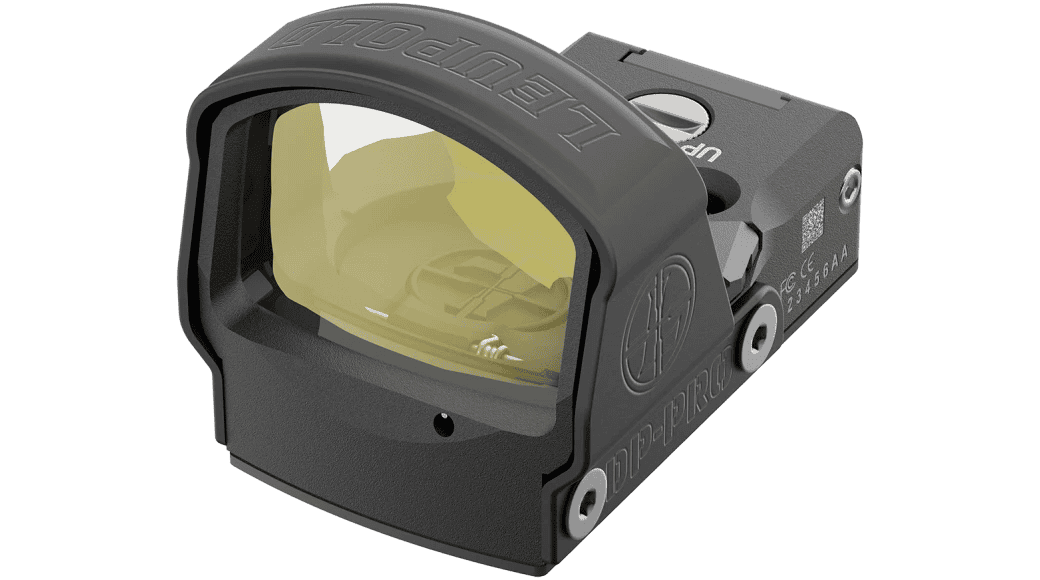
Price: $400–$480 | Window: 25.7mm | Dot: 2.5 MOA or 6 MOA | Battery: CR2032, 1,600 hrs at lowest brightness (motion-activated) | Weight: 1.95 oz
The Leupold DeltaPoint Pro has the largest window of any pistol red dot on the market at 25.7mm diagonal. That massive window makes finding the dot easier — especially for new red-dot shooters who struggle with dot acquisition during presentation.
Leupold’s glass quality is among the best in the industry. The lens clarity is noticeably better than most competitors, with minimal distortion and excellent light transmission. If you’ve ever looked through a cheap red dot and seen a starbursted, blurry dot, the DeltaPoint Pro’s crisp, clean dot is a welcome contrast.
Motion-sensing technology activates the dot when the pistol moves and puts it to sleep after inactivity, conserving battery. The rated 1,600-hour battery life (at the lowest brightness setting) sounds low compared to Holosun, but the motion activation means the dot isn’t running continuously. Real-world battery life with normal carry and use is typically 1-2 years.
The DeltaPoint Pro uses its own footprint, though many pistol manufacturers include DPP-compatible plates. It’s been a popular choice for competition shooters who value the massive window for fast target transitions.
Who This Is Best For: Competition shooters (especially USPSA Carry Optics) who want the largest possible window for fast dot acquisition. Also excellent for shooters new to pistol red dots who benefit from the forgiving window size.
Strengths:
- Largest window in the market (25.7mm)
- Exceptional glass clarity — best in class
- Clean, crisp dot with no starburst
- Motion-activated to conserve battery
- Made in USA (Gold Ring warranty)
Weaknesses:
- Open emitter
- Shorter battery life than Holosun/Trijicon
- Top-loading battery requires re-zeroing if not careful
- Heavier at nearly 2 oz
- Proprietary footprint
- Less rugged than RMR under extreme abuse
Where to buy: OpticsPlanet
Sig Sauer Romeo1 Pro — Best for Sig Pistols
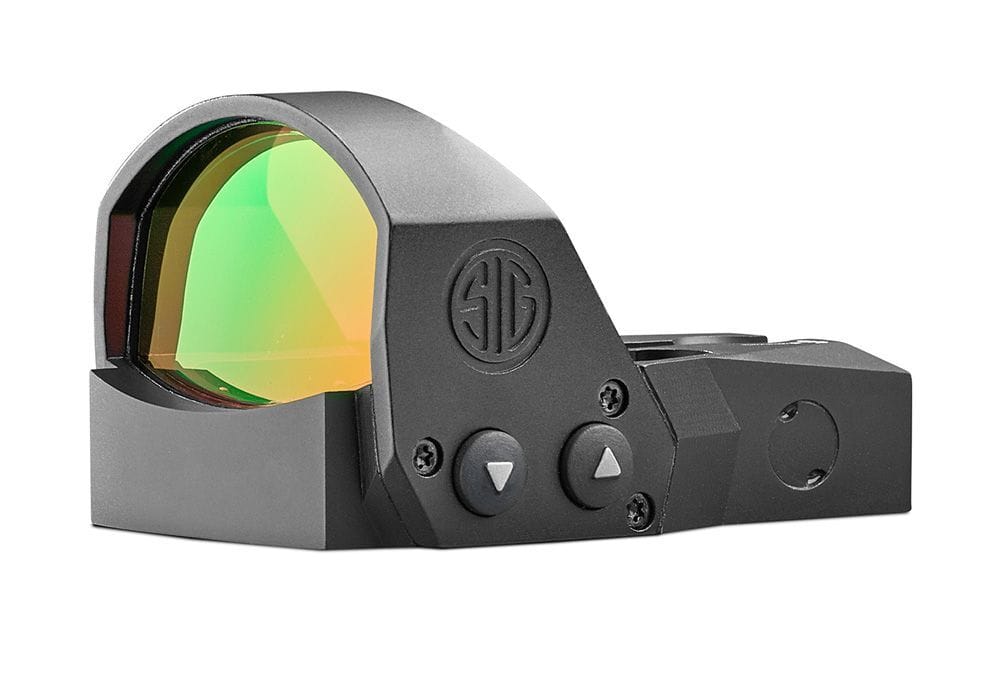
Price: $300–$380 | Window: 24mm | Dot: 3 MOA or 6 MOA | Battery: CR1632, 20,000 hrs | Weight: 1.6 oz
The Sig Romeo1 Pro is purpose-built for Sig Sauer pistols, though it works on other platforms with adapter plates. If you own a Sig P320, P226, or P229, the Romeo1 Pro is designed to be the ideal match — no adapter plates needed, direct mounting with a flush fit.
The 24mm window is second only to the DeltaPoint Pro in size, providing a generous field of view. The MOTAC (Motion Activated Illumination) system powers up the dot when the gun moves and conserves battery during storage. The 20,000-hour battery life on a CR1632 is solid.
The Romeo1 Pro features a steel shroud that protects the lens from impacts — a smart addition that addresses one of the common complaints about open-emitter durability. The corrosion-resistant housing handles weather and holster wear without issue.
Sig also offers the Romeo2, which features an enclosed emitter for those wanting additional protection.
Who This Is Best For: Sig Sauer pistol owners who want a native-fit optic without adapter plates. The large window and competitive pricing make it a strong choice for the Sig ecosystem.
Strengths:
- Direct fit on Sig pistols — no adapter plate
- Large 24mm window
- Steel lens shroud for protection
- MOTAC motion activation
- Competitive pricing for the features
- IPX7 waterproof rating
Weaknesses:
- Proprietary Sig footprint limits cross-platform use
- Open emitter (though shroud helps)
- Less proven track record than RMR or Holosun
- Not ideal as a first choice for non-Sig pistols
- Heavier than RMR
Where to buy: OpticsPlanet
Aimpoint ACRO P-2 — Ultimate Enclosed Duty Optic
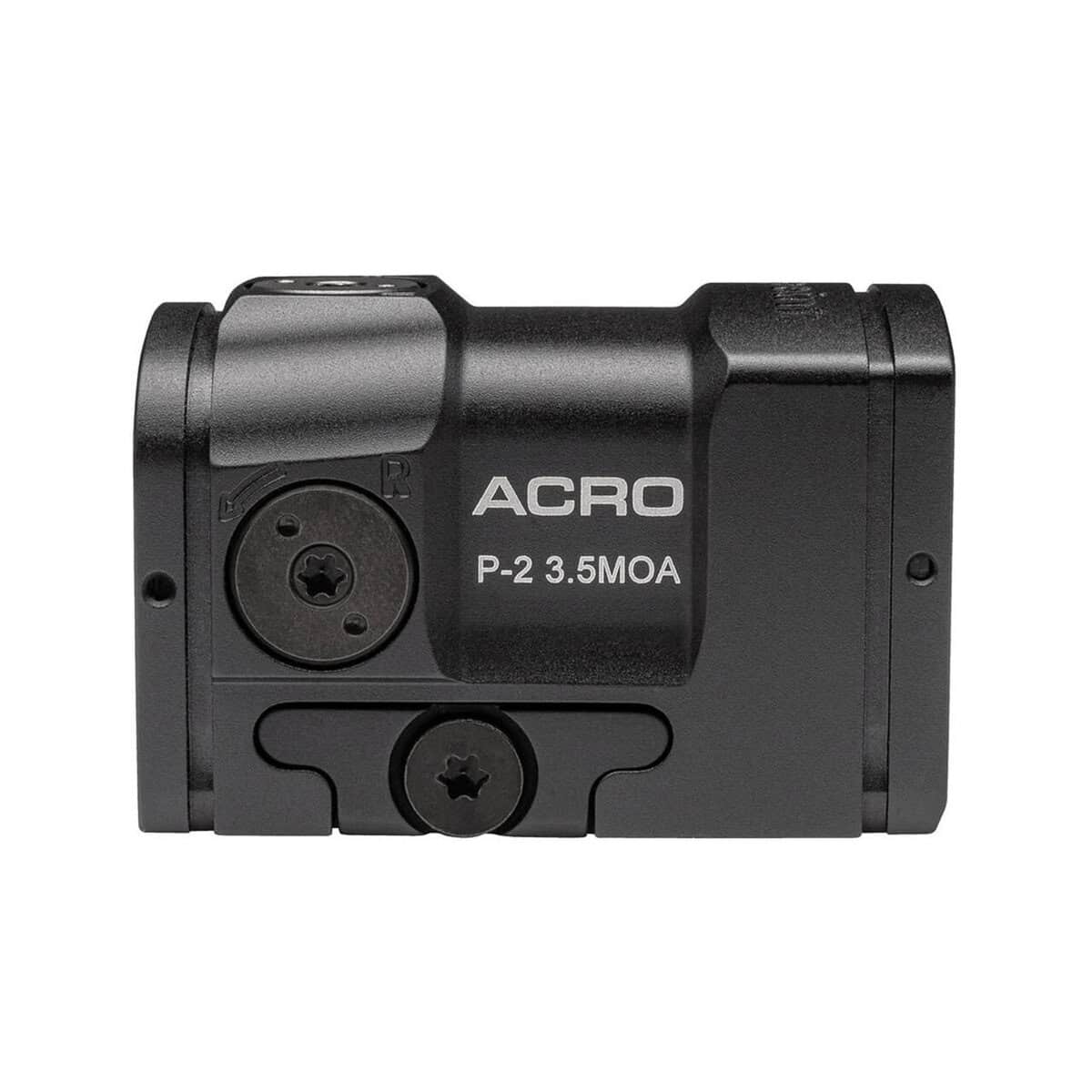
Price: $550–$620 | Window: 19mm | Dot: 3.5 MOA | Battery: CR2032, 5 years | Weight: 2.1 oz
The Aimpoint ACRO P-2 is the gold standard for enclosed-emitter duty optics. Aimpoint’s reputation in military and law enforcement optics is unmatched — their rifle optics have been the NATO standard for decades — and the ACRO brings that same engineering philosophy to the pistol platform.
The P-2 improved on the original ACRO C-1 with dramatically better battery life (5 years vs. 1.5 years) and a refined housing. The fully enclosed emitter is sealed to military specifications, making it impervious to rain, snow, mud, dust, and the lint that accumulates on concealed carry guns.
The 3.5 MOA dot is crisp and clean with zero bloom or starburst, as you’d expect from Aimpoint. The 19mm window is smaller than open-emitter alternatives, but the enclosed housing provides a cleaner sight picture — you’re looking through glass, not around a housing — which somewhat compensates for the smaller opening.
At 2.1 ounces, the ACRO is the heaviest option on this list. For a duty gun that lives in a holster, this is negligible. For a lightweight carry gun, the weight is noticeable.
The ACRO uses its own footprint. Adapter plates from C&H Precision, Forward Controls Design, and others enable mounting on most optics-ready pistols. Several manufacturers (including Glock with the MOS system) now include ACRO-compatible plates.
Who This Is Best For: Law enforcement, military, and serious defensive shooters who demand the absolute most reliable and durable pistol optic money can buy. The ACRO P-2 is the “no excuses” option — it works, period.
Strengths:
- Military-grade enclosed emitter — sealed to extreme standards
- 5-year battery life on CR2032
- Aimpoint’s legendary reliability and reputation
- Crisp, clean dot with no bloom
- Built for hard duty use
Weaknesses:
- Most expensive option on this list
- Heaviest option at 2.1 oz
- Smallest window at 19mm
- Single reticle only (3.5 MOA dot)
- Proprietary footprint requires adapter plates
- No auto-brightness — manual adjustment only
Where to buy: OpticsPlanet
Swampfox Liberty — Best Budget Entry Point
Price: $200–$250 | Window: 22mm | Dot: 3 MOA | Battery: CR1632, ~4,000 hrs | Weight: 1.3 oz
Swampfox has carved out a niche as the value leader in pistol optics. The Liberty offers a surprisingly capable red dot at the lowest price point of any optic worth recommending. The RMR-footprint mounting, shake-awake technology, and ~4,000-hour battery life punch well above the price tag.
Build quality is adequate — it’s not going to survive the torture tests that an RMR or ACRO would, but for range use and light carry, the Liberty handles the job. The 3 MOA dot is clean and visible across all brightness settings.
Swampfox offers an impressive warranty and customer service reputation, which mitigates some of the inherent risk of buying at the budget end of the market.
Who This Is Best For: New shooters testing the pistol red dot concept before committing to a premium optic. Also good for a dedicated range or competition gun where absolute durability isn’t the primary concern.
Strengths:
- Most affordable recommended option
- RMR footprint compatibility
- Shake-awake technology
- ~4,000-hour battery life
- Good warranty and customer support
Weaknesses:
- Less durable than premium options
- Open emitter
- Glass clarity below Trijicon and Leupold
- Not recommended for hard duty use
- Limited track record compared to established brands
Where to buy: OpticsPlanet
Carry Optics vs. Competition vs. Duty: Choosing by Application
Concealed Carry
Priority: Reliability, enclosed emitter, low profile, light weight
Top picks: Holosun EPS Carry (best value), Aimpoint ACRO P-2 (best overall), Trijicon RMR Type 2 (proven track record)
The gun on your hip is exposed to sweat, lint, body heat, and the occasional rainstorm. An enclosed emitter eliminates one failure point. Keep it light to avoid disrupting the balance of a carry gun. Battery life matters — you want years, not months.
USPSA Carry Optics / Competition
Priority: Large window, fast dot acquisition, multi-reticle
Top picks: Holosun 507C X2 (best value), Leupold DeltaPoint Pro (largest window), Holosun 509T X2 (enclosed with MRS)
Speed wins matches. The largest window and fastest-acquiring dot give you the edge. Circle-dot reticles help on close targets where you barely look at the dot. Glass clarity matters for precision shots at distance.
Duty / Law Enforcement
Priority: Absolute reliability, enclosed emitter, proven track record
Top picks: Aimpoint ACRO P-2 (standard choice), Trijicon RMR Type 2 (field-proven), Holosun 509T X2 (budget duty option)
Your optic must work every time, in every condition, after being subjected to everything from car door slams to building searches in the rain. Enclosed emitter is strongly preferred. The Aimpoint ACRO P-2 is the direction most agencies are moving.
Mounting Considerations
Co-Witness with Iron Sights
Ideally, your red dot setup allows you to use your iron sights through or alongside the optic as a backup. When you mount a red dot on a slide, the optic body sits above the standard sight plane, making factory-height iron sights invisible. Suppressor-height sights (taller than standard) rise high enough to provide a “lower 1/3 co-witness” through the optic window — meaning the iron sights appear in the lower third of the glass. If the dot dies or the lens gets obscured, you have a backup aiming reference without removing the optic.
The best options for suppressor-height sights:
- Dawson Precision — Fiber-optic front with blacked-out rear, the competition standard. Available in exact heights matched to specific optics. Typically $80–$130 for a set.
- Ameriglo — The GL-429 (for Glock) is one of the most popular suppressor-height sets on the market. Tritium night sight options available. $60–$100. Also available at Brownells.
- Trijicon HD XR — Premium tritium night sights in suppressor height. Bright, well-built, and purpose-designed for co-witness with red dots. $100–$160.
- Night Fision — Excellent tritium sights with a distinctive front-ring design for fast acquisition. Competitively priced at $70–$110.
If you’re installing sights yourself, you’ll need a sight pusher tool — a universal sight pusher runs $30–$80 and pays for itself after one use vs. a gunsmith’s installation fee. Most gunsmiths charge $25–$50 for sight installation if you’d rather not risk scratching your slide.
Direct Mill vs. Adapter Plates
Having your slide milled for a specific optic gives you the lowest possible mounting height, the most rigid attachment, and the cleanest profile. The optic sits directly in a pocket machined into the slide steel — no intermediary piece to work loose, flex, or add height. For a dedicated carry or duty gun that you’re not planning to switch optics on, milling is the way to go.
The trade-off is permanence. Once a slide is milled for an RMR footprint, you’re committed to RMR-pattern optics. Milling typically costs $75–$150 through shops like Jagerwerks, Maple Leaf Firearms, Primary Machine, or Wager Machine Works. Turnaround ranges from 2–6 weeks depending on the shop and time of year. Always confirm the specific optic model with the machine shop — “RMR cut” and “507C cut” use the same footprint but may differ in pin and recoil boss placement.
Adapter plates bridge the gap between your slide’s optics cut and the optic you want to mount. They’re the practical choice when your pistol’s factory optics cut doesn’t match your preferred red dot, or when you want the flexibility to swap optics without permanent modification.
The critical factor with adapter plates is fit, not price. A $20 plate that fits precisely is better than a $70 plate with sloppy tolerances. What matters:
- Footprint match — The plate must match both your slide’s optics cut AND your optic’s mounting pattern. A Glock MOS plate that adapts to an RMR footprint is completely different from a SIG P320 plate that adapts to the same RMR footprint. They’re not interchangeable — get the exact plate for your pistol.
- Screw engagement — The screws should thread solidly into the slide or plate with full engagement. Loose threads or bottoming out before the optic seats flush are red flags. Many plates ship with multiple screw lengths — use the correct ones for your slide and apply thread locker (blue Loctite 242).
- Recoil lugs and locating pins — The best plates include recoil lugs or bosses that lock the optic in place beyond just screw tension. An optic held only by two small screws takes the full force of slide cycling on every shot — thousands of Gs of acceleration. Recoil lugs absorb that force instead of relying on thread friction alone. This is a key differentiator between budget plates and quality ones.
- Height over bore — Every plate adds height between the optic and the slide. More height means your co-witness with iron sights changes and your holster may not fit. Thinner is generally better, but not at the expense of strength or proper screw engagement.
Where to find quality adapter plates:
- C&H Precision Weapons (CHPWS) — The go-to source for most shooters. They make plates for virtually every slide and optic combination, with tight tolerances and proper recoil bosses. Most plates run $40–$60. Their website has an excellent compatibility tool — enter your pistol model and desired optic, and it shows the correct plate. You can also find many of their plates on Amazon and Brownells.
- Forward Controls Design (FCD) — Premium plates known for excellent fit, especially for Glock MOS systems. $50–$75 range. Highly regarded in the duty and carry community. Available through Brownells.
- OuterImpact — Good mid-range option with broad compatibility across many pistol platforms. $30–$50.
- Springer Precision — Popular in the competition community, particularly for CZ and Walther platforms. $40–$60.
- Factory plates — Many manufacturers (Glock, SIG, Smith & Wesson, Springfield) include adapter plates with their optics-ready models. Quality varies significantly. Glock MOS plates are functional but many serious shooters upgrade to C&H or FCD plates for tighter fit and the addition of recoil bosses that the factory plates lack.
Before ordering, know three things: (1) your exact slide model and its optics cut pattern, (2) the exact optic model you’re mounting, and (3) whether you need suppressor-height sights to co-witness through the optic. Most plate manufacturers have compatibility tools on their websites — use them rather than guessing.
Bottom line: If you know your optic and it’s going on a gun you’re keeping, mill the slide. If you’re running a factory optics-ready pistol and want a quality mount without the wait and permanence, a well-fitted adapter plate from C&H Precision or Forward Controls Design will serve you well. The sweet spot for quality plates is $40–$60 — less than that and you’re gambling on tolerances, more than that and you’re paying for a brand name rather than better machining.
Zeroing Your Pistol Red Dot
Zero your pistol red dot at 15-25 yards. A 25-yard zero provides a good balance — the dot will be slightly high at closer distances (1-2 inches at 7 yards) but dead on at 25 and still usable at 50. Confirm your zero from a stable rest, then verify from your normal shooting positions.
Frequently Asked Questions
Are pistol red dots worth it for concealed carry?
Yes, for most shooters. The learning curve takes 2-4 weeks of dedicated dry fire (10-15 minutes daily), but the benefits in accuracy, low-light performance, and target-focused shooting are significant. The key is committing to the practice to build the presentation skill.
Can I run a red dot without backup irons?
You can, but we don’t recommend it for carry or duty use. Batteries die, optics break, and glass gets obscured. Suppressor-height backup irons add minimal cost and weight while providing a failsafe. For a range-only gun, it’s less critical.
How often should I change the battery?
Set a recurring date — birthday, New Year’s Day, or daylight saving time — and change it then regardless of the battery meter. Fresh CR2032 and CR1632 batteries cost a few dollars. Don’t gamble your life on a low battery.
Will the red dot hold zero under recoil?
All of the optics in this guide will hold zero on 9mm through .45 ACP with no issues. For 10mm and magnum calibers, stick with the proven heavy-hitters: RMR, ACRO, and Holosun 507C/509T. Budget optics may not survive sustained magnum recoil.
Holosun vs. Trijicon — which is actually better?
It depends on what you value. Trijicon wins on proven durability and track record. Holosun wins on features, battery life, and value. For competition and range use, Holosun offers more for less. For duty and defensive carry where the stakes are highest, Trijicon’s longer track record under extreme conditions still commands a premium for good reason. Both are excellent choices.
Final Thoughts
The pistol red dot market in 2026 is mature and competitive. There’s no bad choice among the optics reviewed here — only choices that are better or worse for your specific application.
For the best overall value, the Holosun 507C X2 is nearly impossible to beat. For absolute duty reliability, the Aimpoint ACRO P-2 leads the field. For proven combat toughness, the Trijicon RMR Type 2 remains the benchmark. And for concealed carry on a micro-compact pistol, the Holosun EPS Carry delivers enclosed-emitter protection in a featherweight package.
Whatever you choose, invest in suppressor-height backup irons, a quality holster designed for optic-equipped pistols, and dedicated dry-fire practice to master the dot. The optic only helps if you can find the dot and put it on target when it matters.
If you know of any forums or sites that should be referenced on this listing, please let us know here.