If you're reloading ammunition and you don't own a chronograph, you're flying blind. Load data from a manual gives you a starting point, but your rifle, your barrel length, your lot of powder, and your ambient temperature all affect what actually comes out of the muzzle. A chronograph tells you what's really happening — not what a manual says should happen. And once you start tracking velocity data, you'll never go back to guessing. Here's a breakdown of the best shooting chronographs available right now, from budget-friendly optical units to high-end Doppler radar systems.

Why You Need a Chronograph
Velocity data does three critical things for reloaders. First, it confirms that your loads are in a safe pressure range — if you're getting velocities significantly above what the manual shows for a given charge weight, that's a red flag worth paying attention to. Second, it lets you calculate extreme spread (ES) and standard deviation (SD), which are the most important metrics for precision ammunition. (If you're developing loads for a cartridge like the .308 Winchester, consistent velocities matter even more.). A low SD means your velocity is consistent shot to shot, which translates directly to tighter groups at distance. Third, velocity data feeds your ballistic calculator. If you're dialing turrets or holding for drop at 300+ yards, garbage velocity input means garbage solutions.
Three Types of Chronographs
Shooting chronographs come in three basic flavors: optical (the traditional type you set up downrange), Doppler radar, and barrel-mounted electromagnetic. Each approach has meaningful pros and cons.
Optical Chronographs
The traditional shooting chronograph uses two optical sensors spaced a known distance apart. The bullet passes over each sensor, the unit measures the time between triggers, and calculates velocity. These have been the standard for decades, and they work. The price of entry is low, accuracy is generally good, and setup is straightforward.
The drawbacks are well known to anyone who's used one: you have to set the unit downrange (typically 10-15 feet in front of the muzzle), it needs adequate lighting (overcast days or inconsistent light cause errors and no-reads), and — here's the big one — you will eventually shoot your chronograph. It's not a question of if. Everyone who uses an optical chronograph long enough puts a round through the sunscreens, the frame, or the display. Consider the first chronograph you destroy a rite of passage.
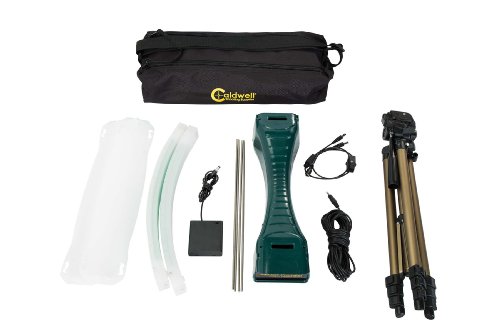
Caldwell Ballistic Precision Chronograph Premium Kit
The Caldwell Premium Kit is one of the most popular entry points for reloaders who want velocity data without a major investment. It includes the chronograph unit, IR LED light kit, adjustable tripod, and a custom carry case. The Bluetooth connectivity lets you log strings on your phone via the Caldwell Ballistic Precision app, which is a genuine convenience — no more squinting at a tiny LCD display from behind a rifle.
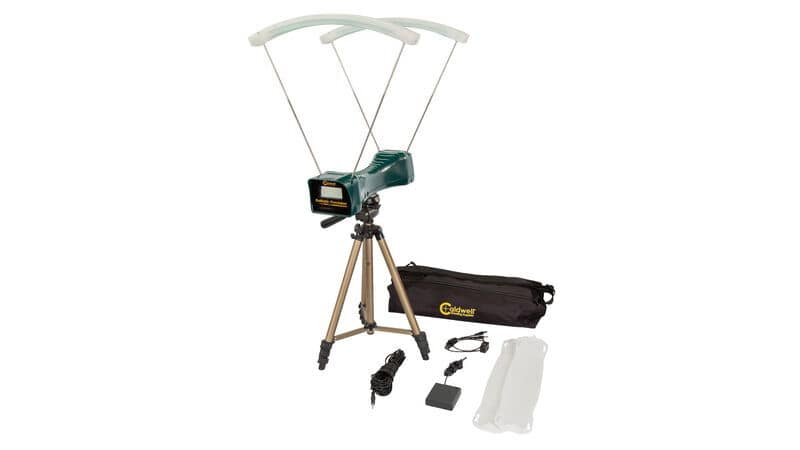
Accuracy is rated at +/- 0.25% (factory calibrated), which is good enough for load development. The unit records individual shot velocities, ES, SD, and average velocity. At a street price typically in the $80-130 range depending on variant, it's hard to argue with the value. Just buy the sunscreens kit too — you'll need them on anything other than an overcast day.
Competition Electronics ProChrono DLX
The ProChrono DLX has been around for years and maintains a loyal following. It's a no-frills optical chronograph that's proven reliable in the field. The DLX version features built-in Bluetooth connectivity for smartphone logging via free iOS, Android, Kindle, and PC apps. Build quality is decent for the price, and the unit handles a wide range of lighting conditions better than some competitors — though it's still an optical unit and still light-dependent.
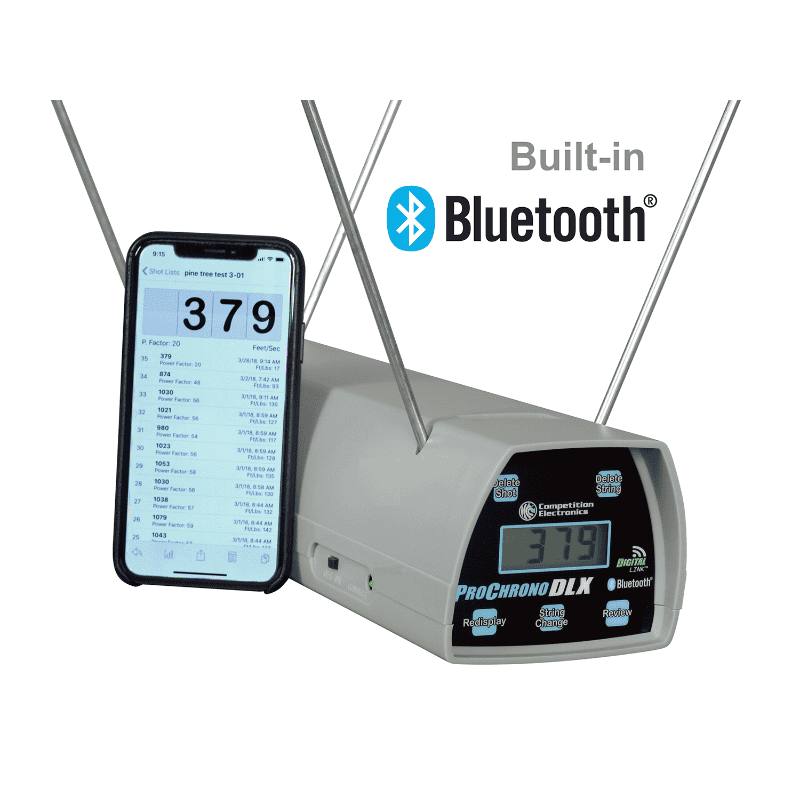
One thing I appreciate about Competition Electronics is their IR (infrared) lighting attachment option, which solves the lighting problem by providing consistent illumination regardless of ambient conditions. This turns the ProChrono into a much more versatile unit, though the Indoor Lighting System (part# CEI-4100) is sold separately and adds to the total cost.

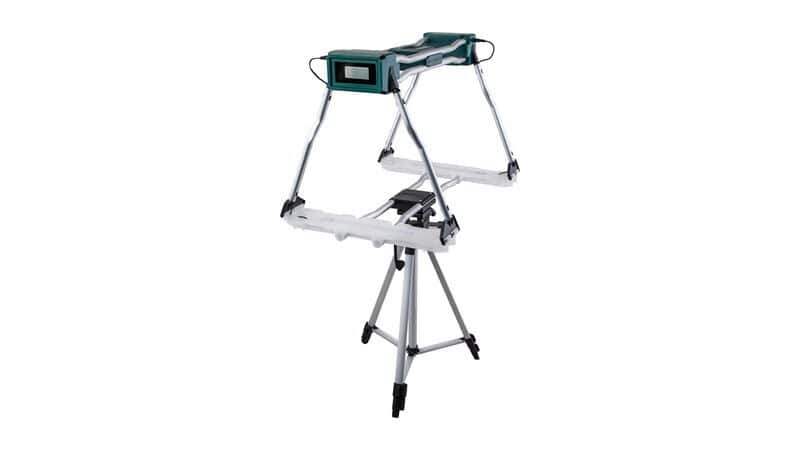
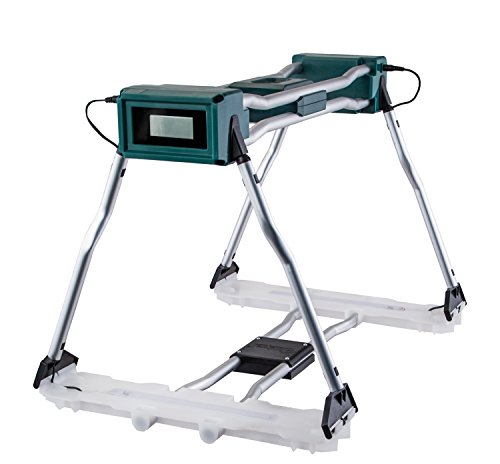
Caldwell G2 Ballistic Precision Chronograph
The G2 is Caldwell's newer optical unit. It features an inverted sensor design that works better in low-light conditions, built-in Bluetooth connectivity, a rechargeable battery, and a compact collapsible frame. The G2 still requires downrange placement, but the inverted LED light panels and updated electronics provide more reliable reads in marginal lighting conditions. Pricing is comparable to the Premium Kit.
Doppler Radar Chronographs
Doppler radar chronographs changed the game. Instead of optical sensors that require downrange placement, radar units sit next to the shooter and track the bullet's velocity using electromagnetic energy — the same basic principle as a police speed radar, just adapted for much smaller, much faster objects. The advantages are significant: no downrange setup, no lighting dependency, no risk of shooting your chronograph, and the ability to track velocity at multiple points along the bullet's flight path (not just at the muzzle).
The downside is cost. Doppler units are substantially more expensive than optical chronographs. But if you're serious about precision reloading, the investment is justified.
LabRadar
The LabRadar was the first Doppler radar chronograph to hit the consumer shooting market and it remains the benchmark. It sits on the bench beside you, triggers automatically when it detects a shot, and tracks the bullet from muzzle to up to approximately 100 yards downrange (tracking distance varies by projectile size — .177 pellets track to about 30 yards, while larger rifle bullets can be tracked to 80-100 yards). The unit records velocity at multiple distances, which is enormously useful for calculating actual ballistic coefficients rather than relying on manufacturer-published numbers.
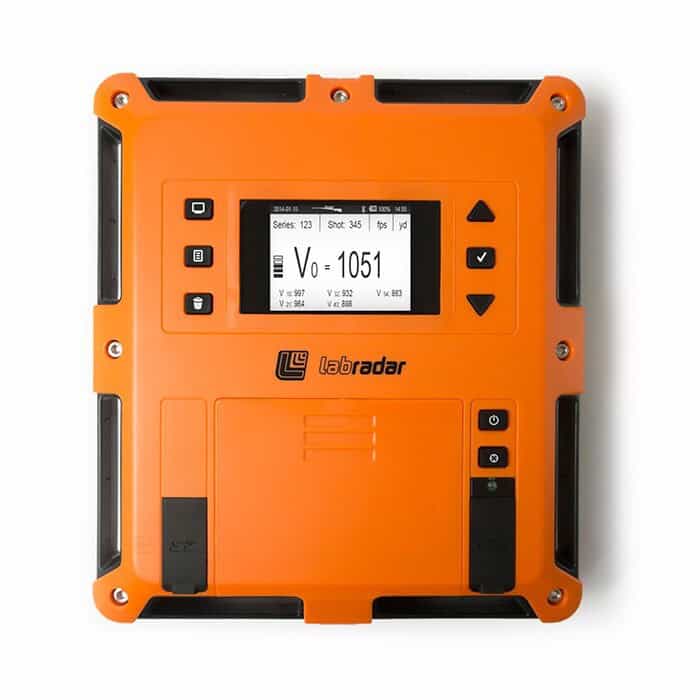
The LabRadar works with everything from .17-caliber rimfire to large-bore magnums, and it handles archery, crossbow, and airgun velocities too (an optional Air Gun Adapter may be needed for low-powered airguns). It's powered by 6 AA batteries or an external USB power pack, and data can be exported to a computer via SD card. The onboard display shows shot data immediately.
The original LabRadar has been a fixture at precision rifle matches for years. The newer LabRadar LX is the updated version — a significantly more compact unit operating at 60GHz with an LCD display, integrated rechargeable battery, and Bluetooth connectivity. The LX has an MSRP of $599.95, while the original LabRadar can sometimes be found at discounted prices as it's being superseded. That's real money, but you'll never shoot it, never fight with lighting, and never get a no-read because a cloud passed over the sun.
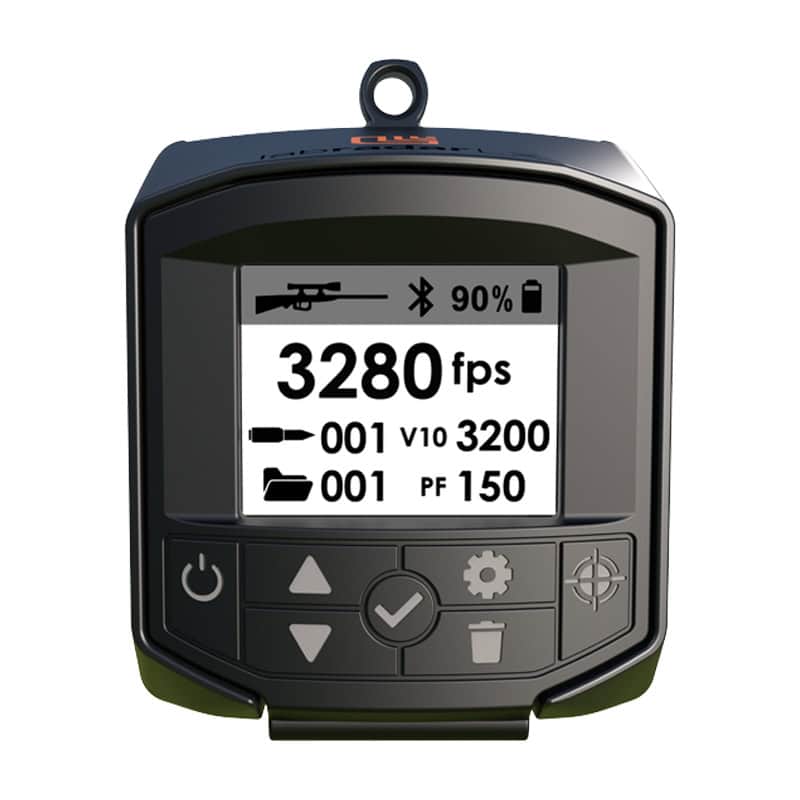


Garmin Xero C1 Pro Chronograph
Garmin entered the chronograph market with the Xero C1 Pro, and it immediately became a serious competitor to LabRadar. This is a compact Doppler radar unit that sits beside the shooter and integrates directly with Garmin's ecosystem of ballistic devices and the ShotView smartphone app. The C1 Pro is smaller and lighter than the LabRadar, which matters if you're packing gear to a range or match.
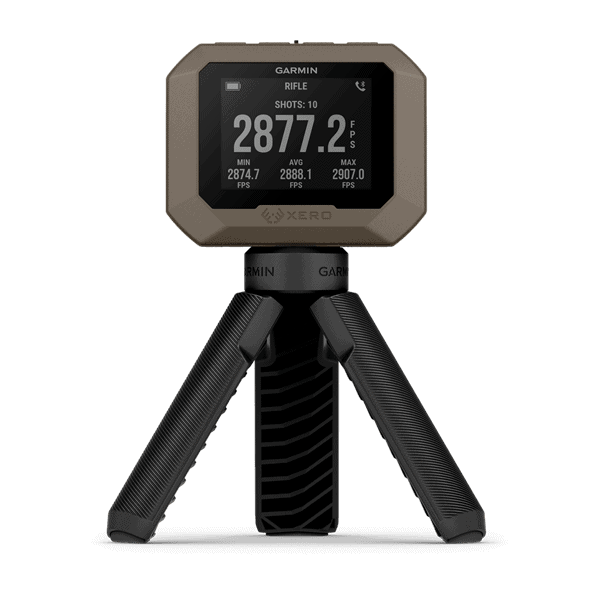
The C1 Pro tracks velocity at the muzzle and calculates ES, SD, and average velocity automatically. It features auto-trigger detection and has a built-in rechargeable battery (USB-C, up to 6 hours / 2,000 shots). One of its strongest features is seamless integration with other Garmin Xero products via the ShotView app, which offers cloud sync and detailed shot analysis — though it works perfectly well as a standalone chronograph even without other Garmin gear.
Street price is approximately $600 (Garmin MSRP is $599.99). The Garmin build quality is excellent, as you'd expect from a company that builds aviation and marine electronics.

Garmin Xero C2 Chronograph
Garmin followed up the C1 Pro with the Xero C2, announced at SHOT Show 2026. Same pocket-sized form factor, same Doppler radar technology, but with upgrades that matter for serious shooters. The headline feature is rapid-fire tracking — the C2 handles up to 10 shots per second, which means it works for semi-auto strings, shotgun patterning sessions, and any scenario where you're sending rounds faster than one per second. The C1 couldn't do that.
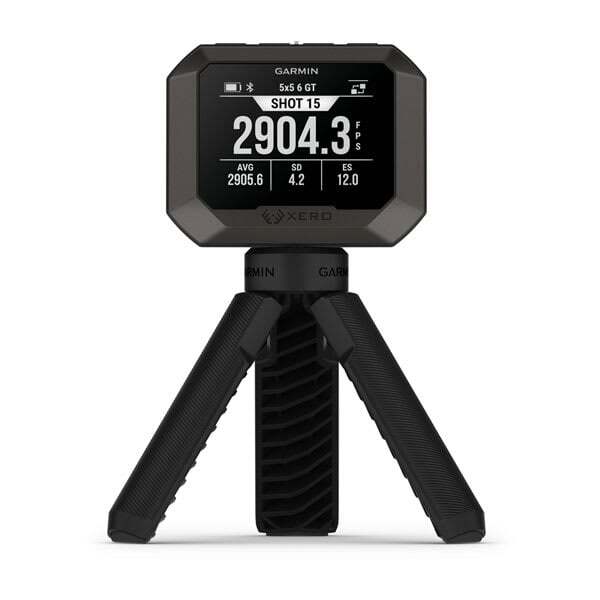
The C2 also adds direct integration with Applied Ballistics solvers — you can push your measured muzzle velocity straight into an AB profile without manual entry. Garmin smartwatch integration lets you read shot data on your wrist (works with the tactix 8 and other compatible Garmin watches). The display is now backlit for low-light conditions, the housing is reinforced for rifle mounting, and you can pause and resume sessions — useful when you're switching between loads or firearms at the bench.
At $699.99 (MSRP), the C2 carries a $200 premium over the C1 Pro. Whether that's worth it depends on your use case. If you shoot semi-auto platforms, need Applied Ballistics integration, or want smartwatch connectivity, the C2 justifies the price. If you're a bolt-gun reloader who just needs muzzle velocity and SD, the C1 Pro at $499.99 does everything you need and saves you $200.

Barrel-Mounted: MagnetoSpeed
The MagnetoSpeed takes a completely different approach. Instead of optical sensors downrange or radar beside you, the MagnetoSpeed mounts directly to your barrel via a bayonet-style clamp. The sensing element extends in front of the muzzle, and the unit measures bullet velocity using patented electromagnetic sensors that detect the disturbance in their magnetic fields as the projectile passes over them.
MagnetoSpeed V3
The V3 is MagnetoSpeed's flagship. It clamps onto nearly any barrel profile and measures velocity at the muzzle with high accuracy. No lighting issues, no downrange equipment, no bench-side radar setup — just attach it to the barrel and shoot. It records full string data including ES, SD, average, and individual shot velocities. Data is stored onboard and can be exported via microSD card (CSV format), or transferred wirelessly to a smartphone using the optional XFR adapter.
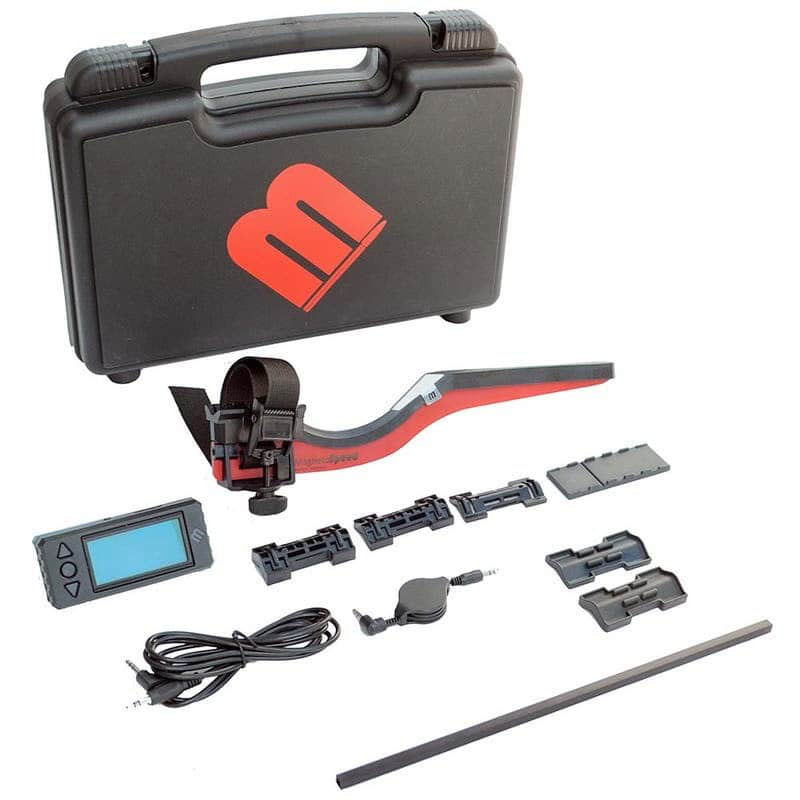
The significant caveat: because the MagnetoSpeed attaches to the barrel, it changes barrel harmonics. Your point of impact will shift while the unit is mounted. This means you cannot simultaneously develop loads for group size AND measure velocity — you're doing one or the other. For load development, many reloaders use the MagnetoSpeed to confirm velocity, then remove it and shoot groups. Others use it to verify velocities on loads they've already developed for accuracy. It's a workflow consideration, not a dealbreaker, but it's important to understand before you buy.
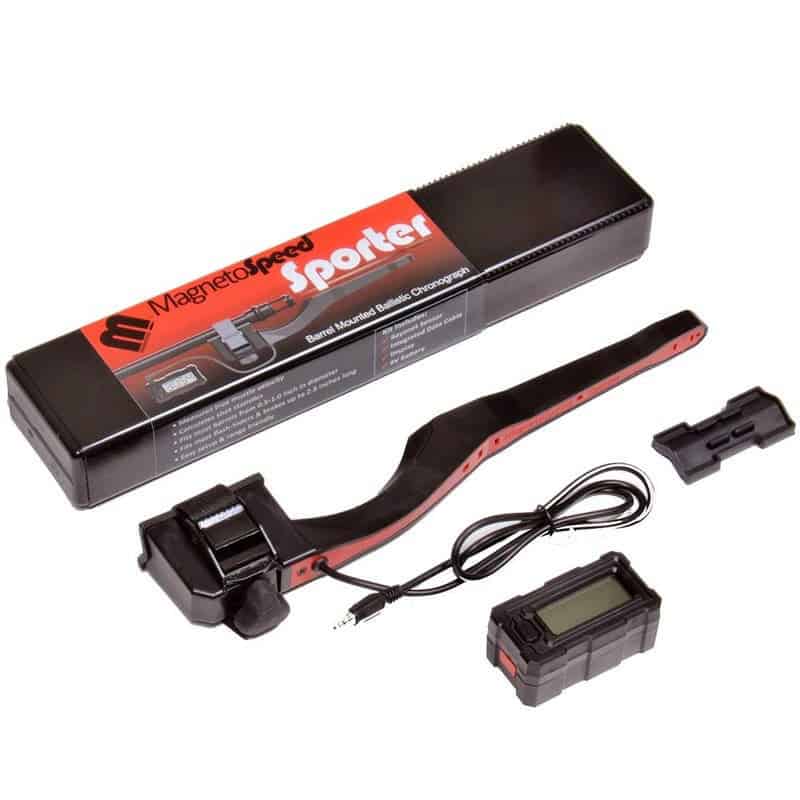
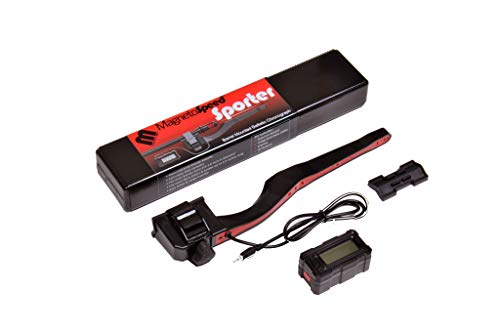
The V3 typically runs approximately $180-300 depending on retailer and current promotions (MSRP is $299). MagnetoSpeed also offers the less expensive Sporter model at roughly $75-199 depending on current sales, which provides the same core velocity-measurement functionality but with fewer features and a simpler mounting system suited to barrel diameters from 0.5" to 1".

How to Choose the Best Shooting Chronograph
Here's how I see the decision tree:
Budget-conscious reloader just starting out: Get the Caldwell Ballistic Precision Premium Kit or the ProChrono DLX. Under $100 gets you real velocity data, and that's infinitely better than no data. Accept the lighting limitations and the eventual bullet hole in your chronograph as part of the experience.
Serious handloader, wants convenience: The MagnetoSpeed V3 or Sporter. Attach it, shoot, read your numbers. No setup fuss, no lighting concerns. Just remember to remove it before you shoot for groups.
Precision rifle shooter or competitor: LabRadar or Garmin Xero C1 Pro. Doppler radar is the gold standard for a reason. No barrel harmonics interference (you can shoot for groups while measuring velocity), no lighting dependency, and downrange velocity data that lets you calculate real-world ballistic coefficients. If you're shooting PRS matches or doing serious long-range load development, this is where you should be spending your money.
If you're choosing between the LabRadar and the Garmin: Both are excellent. The LabRadar LX has a longer track record and wider community support. Garmin offers two options now — the C1 Pro at $499.99 for bolt-gun reloaders who need core velocity data, and the C2 at $699.99 if you need rapid-fire tracking, Applied Ballistics integration, or smartwatch connectivity. If you're already in the Garmin ecosystem, either Xero is a natural fit. If you want the most battle-tested option with the largest user community, go LabRadar. You won't be disappointed with any of them.
Bottom Line on the Best Shooting Chronographs
A chronograph is not a luxury item for reloaders — it's essential equipment. Knowing what your loads actually do at the muzzle separates handloading from hand-guessing. The good news is that even the least expensive option on this list gives you actionable data. Start somewhere, get velocity numbers on your loads, and make better ammunition. That's the whole point.
If you know of any forums or sites that should be referenced on this listing, please let us know here.