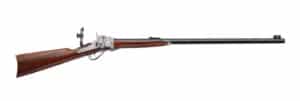
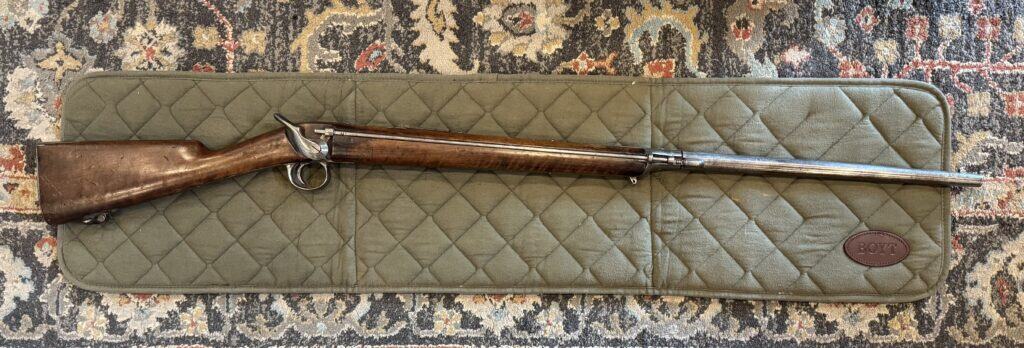
The Minié-Cordier percussion rifle is a rare and distinctive firearm from the mid-19th century, believed to have been designed for training purposes. Attributed to Claude-Étienne Minié and manufactured by Cordier & Cie of Paris, this rifle showcases innovative features aimed at enhancing safety and efficiency in military instruction.
Claude-Étienne Minié: Innovator in Military Firearms
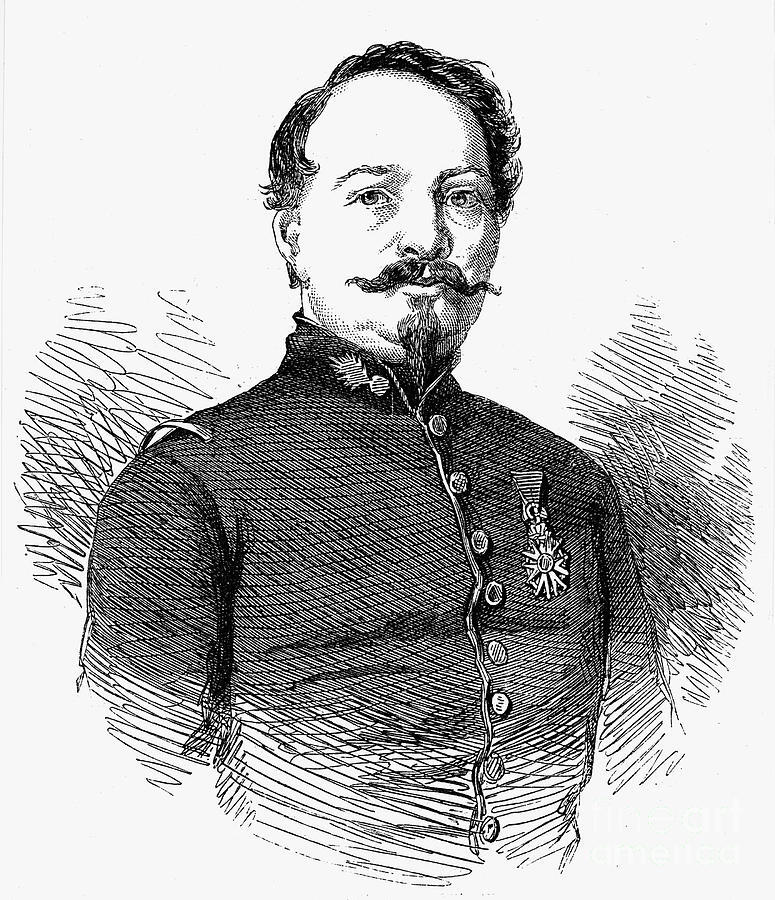
Born on February 13, 1804, in Paris, Claude-Étienne Minié was a French army officer renowned for his contributions to firearm technology. In 1849, he developed the Minié ball, a conical, hollow-based bullet that expanded upon firing to engage the rifling grooves of a musket barrel, significantly improving accuracy and range. This innovation revolutionized infantry warfare and was widely adopted by various military forces, including those of Britain and the United States. (Encyclopedia Britannica)
Minié’s advancements extended beyond ammunition. He also developed the Minié rifle, which, combined with his bullet design, allowed for faster loading and improved battlefield performance. His work built upon the efforts of predecessors like Henri-Gustave Delvigne and Louis-Étienne de Thouvenin, who had explored methods to enhance the effectiveness of rifled firearms. (HISTORY)
Design and Features of the Minié-Cordier Rifle
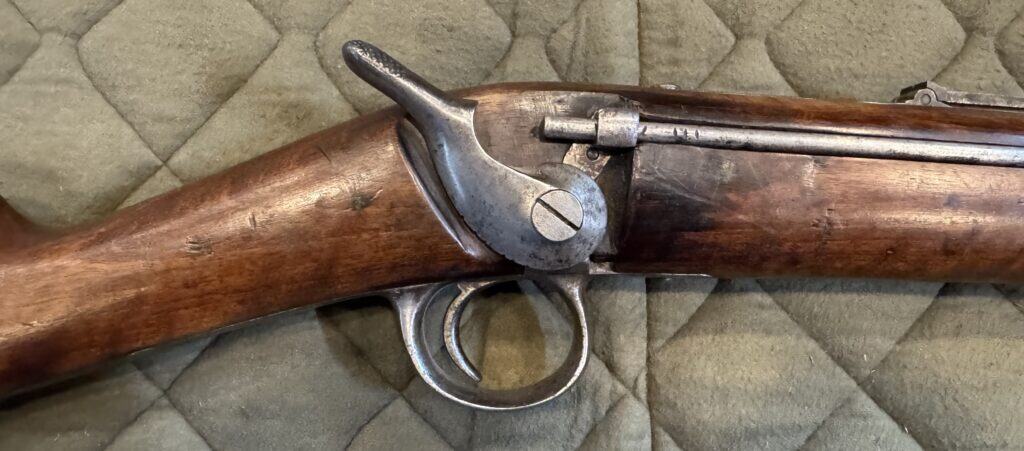
The Minié-Cordier rifle exhibits several unique characteristics that distinguish it from standard military firearms of its time:
- Caliber: approximately 12 mm (about .47–.48 caliber), often described in the trade as roughly .50 caliber, with some examples near .54, compatible with the Minié ball ammunition.
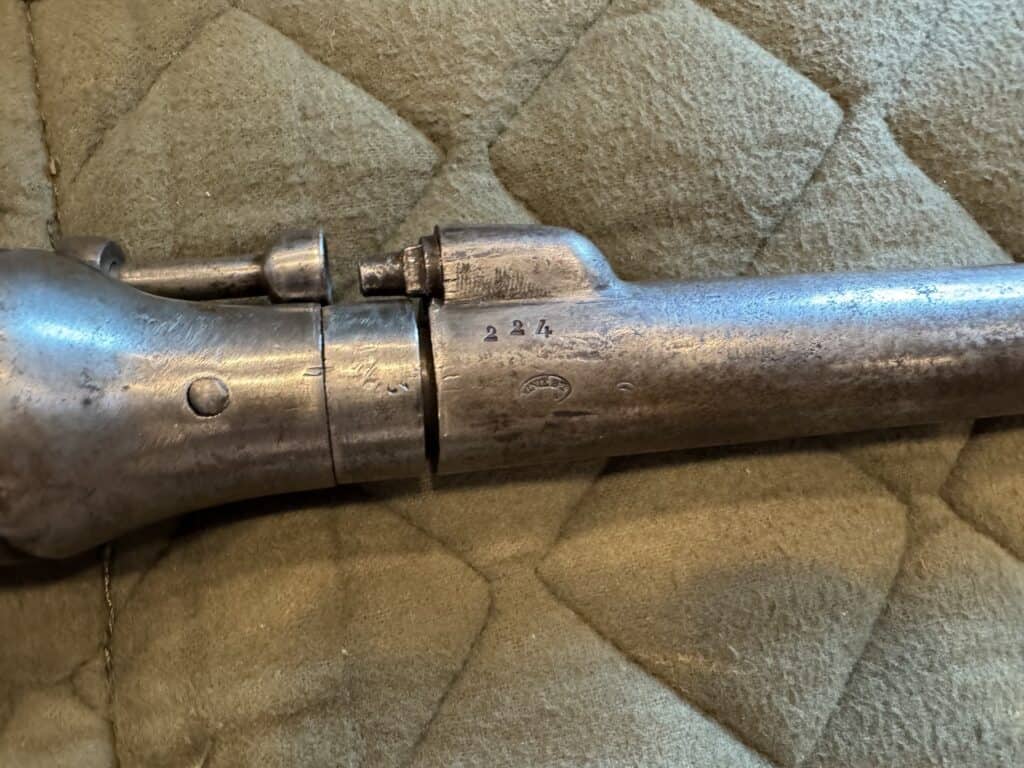
- Barrel: Shortened to about 16 inches, significantly shorter than typical service rifles. Unusually, the barrel begins at the top of the stock.
- Percussion Nipple Placement: Unconventionally mounted forward on the stock, near the barrel’s commencement, to distance the ignition flash from the shooter’s face, a design choice likely intended to reduce flinching during training.
- Hammer Mechanism: Located at the rear, the hammer strikes the percussion cap via an extended rod or linkage system, a configuration differing from traditional side-mounted locks.
- Sighting System: Equipped with a ladder-style rear sight, graduated up to 1100 meters, allowing trainees to practice aiming at various distances.
- Markings: Stamped with “MINIE” and “C.C.”, the latter likely referring to Cordier & Cie, the Parisian manufacturer.
Intended Use and Historical Context
While primary source documentation explicitly detailing the Minié-Cordier rifle’s origin and intended use is limited, several secondary sources suggest that the Minié-Cordier rifle was designed for training purposes:
- Training Aid: The rifle’s design features, such as the forward-mounted percussion nipple and shortened barrel, imply a focus on safety and ease of use, making it suitable for instructing recruits in marksmanship without the risks associated with standard service rifles.
- Manufacture Period: The Minié-Cordier training rifle appears in the early 1860s, following an 1862 patent by Cordier & Cie of Paris, and seems to have been produced through at least the later 1860s.
- Experimental Design: Some sources suggest that the Minié-Cordier rifle may have been a trial or experimental model, reflecting Minié’s belief that a barrel longer than 20 inches offered no significant advantage, while still providing a long sight plane for training purposes.
Conclusion
The Minié-Cordier percussion rifle reflects mid-19th-century innovations in military training and firearm design. Attributed to Claude-Étienne Minié and manufactured by Cordier & Cie, this rifle’s unique features underscore a commitment to improving the safety and effectiveness of military instruction. While definitive historical records are scarce, the available evidence points to its role as a specialized training tool during a transformative period in military history.
Mines and Minie Balls: Weapons of the Civil War by Jean Blashfield (Amazon)
Civil War Minie ball bullets display preserved in lucite (Amazon)
Shoop, Isaac. “Small but Deadly: The Minié Ball.” The Gettysburg Compiler, April 27, 2019. https://gettysburgcompiler.org/2019/04/30/small-but-deadly-the-minie-ball/.
Leonard, Pat. “The Bullet That Changed History.” The New York Times. The New York Times, September 1, 2012. https://opinionator.blogs.nytimes.com/2012/08/31/the-bullet-that-changed-history/
If you know of any forums or sites that should be referenced on this listing, please let us know here.