Deringer: A Historic Journey Through American Firearm Innovation
Henry Deringer Jr., an American gunsmith, is best known for his iconic pocket-sized pistols that are an integral part of American history, embodying the spirit of innovation, practicality, and rugged elegance that defines the era. This article explores the founding of his workshop, the arms he manufactured, his storied history, his major innovations, and the competitive landscape he navigated in the arms industry.
Founding and Early History
Born in 1786 in Easton, Pennsylvania, Henry Deringer was the son of a colonial gunsmith who had migrated from Germany. The younger Henry followed his father into the gunsmithing trade, serving as an apprentice in Richmond, Virginia. In 1806, at the age of 20, he moved to Philadelphia and began manufacturing small pocket pistols, similar to those produced in Europe at the time. It was here that the legacy was born.
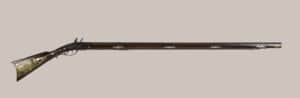
Deringer initially produced flintlock pistols, but soon moved on to percussion cap models, in keeping with technological advancements of the period. His commitment to innovation and quality quickly earned him a reputation for reliable, well-made firearms.
The Iconic Philadelphia Deringer
The name became synonymous with a specific style of pocket pistol, now known as the “derringer.” These small, short-barreled, large caliber, single-shot pistols were designed for personal defense and concealed carry. They became immensely popular in the mid-19th century, notably in the years leading up to and during the American Civil War.
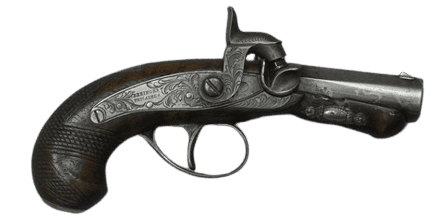
One of the most well-known Deringer pistols is the Philadelphia Deringer, a small percussion firearm produced from 1852 until the end of the American Civil War. It was named after the city where he had his workshop. Deringer’s pistols were crafted with meticulous attention to detail, each one handmade with slight variations in design, generally sharing these characteristics:
- Caliber: primarily .41 caliber (though some were made in .36 and .44)
- Barrel length: typically between 2.5 and 4 inches
- Ignition system: percussion cap
- Rifled barrel to improve accuracy
- Walnut stocks, brass or iron trigger guards, and German silver inlays
- Single-shot with a side-hammer lock
The Philadelphia Deringer gained notoriety as the weapon used by John Wilkes Booth to assassinate President Abraham Lincoln at Ford’s Theatre on April 14, 1865. The single-shot nature of the weapon meant Booth had no opportunity for a follow-up shot, reinforcing its status as a weapon designed for last-resort personal defense.
Innovations and Contributions
Deringer’s major contribution to the firearms industry was the eponymous pocket pistol. His design significantly reduced the pistol’s size, making it easier to conceal than other firearms of the time. This innovation was crucial during a period when carrying a concealed weapon was a practical necessity for personal protection.
Moreover, he pioneered the use of the percussion cap mechanism in his pistols, a step up from the traditional flintlock mechanism. The percussion cap provided a more reliable, quicker, and safer way to ignite the gunpowder. This improved design was less prone to misfires and functioned more reliably in damp conditions, enhancing the practicality of his pocket pistols.
The popularity of his compact pistols inspired future designs like the Remington Model 95 (a two-shot over/under introduced in 1866), Colt’s later pocket revolvers, and Smith & Wesson’s break-action pocket pistols.
Competition and Challenges
Despite their success and popularity, Deringer faced significant competition and challenges. The widespread demand for compact pistols attracted copycats. Competitors began producing similar pistols and even used the Deringer name, exploiting a loophole in the patent law of the time. Because he never secured a registered trademark for his name, competitors were able to capitalize on his reputation by producing pistols labeled “Deringer” — often with an extra “r,” becoming “derringer.”
Many of these competitors, such as Remington, Colt, and Smith & Wesson, were already established names in the arms industry. Remington’s Model 95 over-under double barrel derringer was an extremely popular variation of the original design. Deringer engaged in multiple legal battles to protect his brand, but the limitations of 19th-century trademark law made it impossible for him to stop the flood of imitators.
Place in History
Deringer’s impact on the firearms industry and American history is undeniable. The Deringer pistol became a cultural icon, featuring prominently in tales of the Wild West and popular media. These pistols were frequently associated with riverboat gamblers, gold prospectors, and frontiersmen, adding to their allure and mythos. The small, easily concealed nature of the Philadelphia Deringer made it a favorite among saloonkeepers and travelers navigating the dangers of the Wild West.
The concept of a highly concealable, close-range firearm pioneered by Deringer directly influenced modern subcompact handguns such as the Ruger LCP, the Smith & Wesson Bodyguard, and the Glock 43. These modern firearms carry on the philosophy of compact, easily carried self-defense weapons that began with Henry Deringer’s creations.
In conclusion, Henry Deringer Jr. never founded a large-scale firearms company, nor did he produce thousands of different designs. Instead, he perfected one simple, effective weapon that left an indelible mark on firearm history. Despite fierce competition, legal struggles, and the rise of multi-shot alternatives, the term “derringer” endures as a generic descriptor for small, pocket-sized handguns — a testament to the lasting influence of Henry Deringer’s work.
The editors do not know of any dedicated forums on this topic, but you can pay your respects here.
If you know of any forums or sites that should be referenced on this listing, please let us know here.