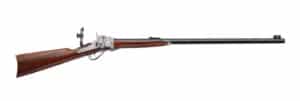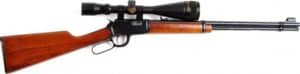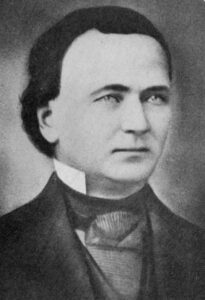
In 1891, the Marlin Firearms Company of New Haven, Connecticut, introduced a small, slim lever-action rifle chambered for the .22 rimfire and designed by L. L. Hepburn. It was the first solid-top, side-ejecting lever-action repeating .22 ever offered to the American public. Marlin called it the Model 1891. Through five major redesigns and four corporate owners, that rifle has remained in catalog production almost continuously for more than 130 years. It is the longest continuously produced shoulder firearm in American firearms history.
The rifle that finished the twentieth century as the Marlin Model 39A is the direct mechanical descendant of Hepburn’s 1891 design. The receiver profile, the takedown joint, the side-ejection port, the cartridge tube under the barrel, and the slim, color-case-hardened hammer are all visible on the 1891 patent drawings and on a JM-marked 39A leaving the New Haven factory in 2007. No other American shoulder arm — not the Winchester 1894, not the Springfield 1903, not the Model 70, not the Remington 870 — has stayed in production over the same span and retained anything close to the same mechanical identity.
This is the story of how a single small-bore lever-action rifle moved through six factory designations, four corporate owners, two World Wars, the rise and fall of American gallery shooting, the Cowboy Action revival, and the long collapse and resurrection of Marlin Firearms — and arrived in the 2020s as a rifle the rimfire-shooting public still asks for by name.

Origin and Lineage: From the Model 1891 to the 39A
The 39A’s family tree starts with Lewis Lobdell Hepburn, Marlin’s chief designer in the 1880s and 1890s. Hepburn had come to Marlin from Remington, where he had designed the Remington-Hepburn falling-block target rifle that bore his name. At Marlin he laid out the company’s defining lever-action architecture: a solid-top receiver milled from a single forging, ejection out the right side of the action rather than straight up through the top, a cartridge lifter that traveled vertically inside the receiver, and a takedown joint that let the barrel and magazine assembly separate from the action with a turn of a thumbscrew.
That architecture became the basis for every Marlin lever-action rifle that followed: the centerfire 1894, the 1893 (which became the 336), the 1881, and the rimfire 1891. The rimfires and centerfires shared a common philosophy and many common parts.
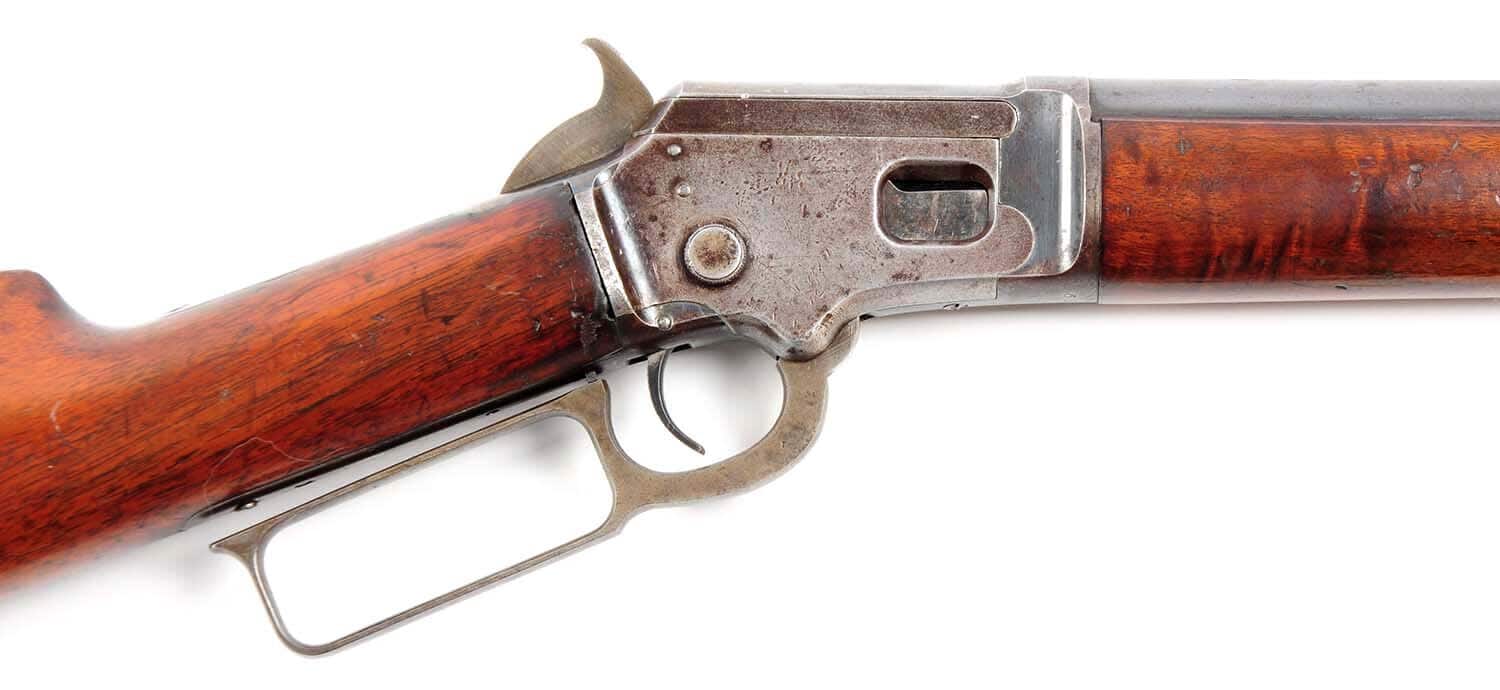
The Model 1891 was introduced in two versions: a tubular-magazine repeater and a solid-frame side-loader. Both fed .22 Short, Long, or Long Rifle interchangeably. Production ran until about 1892, when Marlin replaced the rifle with the Model 1892, an improved version that fixed early production issues and added the option of .32 rimfire chambering. The 1892 stayed in catalog until roughly 1916.
In 1897, Marlin introduced the Model 1897, the first true takedown version of the rifle. The 1897 used the same Hepburn action but added a proper takedown thumbscrew, replacing the solid frame of the earlier rifles. The 1897 ran until about 1916, when wartime production demands shut down the small-bore lever-action lines. The rifle remained out of catalog for the next several years.
In 1922, Marlin reintroduced the rifle as the Model 39, an updated takedown lever-action .22 carrying forward Hepburn’s mechanical identity but built to the manufacturing standards of the 1920s. The Model 39 ran through 1938.
In 1939 — the rifle’s golden anniversary plus seven years — Marlin introduced the Model 39A. The “A” denoted the use of a heavier round barrel (the Model 39 had used a part-octagon barrel), a redesigned forearm, and refinements to the receiver, hammer, and trigger group. The 39A became the rifle’s catalog designation for the next eight decades. Through the 39A run, Marlin introduced incremental refinements (a gold-plated trigger on the Golden 39A in 1957, the Mountie carbine in 1953, the safety-equipped 39AS in 1983, and several limited and centennial editions), but the rifle remained the 39A.
The numerical lineage, in summary:
- 1891–1892: Model 1891 (Hepburn’s original)
- 1892–1916: Model 1892 (improved 1891)
- 1897–1916: Model 1897 (first takedown version)
- 1922–1938: Model 39 (reintroduced, modernized)
- 1939–2007: Model 39A (the “modern” version, with multiple sub-variants)
- 2009–2020: Model 39A under Remington (“Remlin” production)
- 2020–present: Marlin brand owned by Ruger, but the 39A is not in current production
Across that span, the rifle has never fundamentally changed. The receiver geometry, the lifter, the bolt face, the extractor, the breech bolt, the takedown joint — all are recognizable across 130 years of production drawings.
The Rifle Itself
The 39A is a tubular-magazine, lever-actuated, hammer-fired repeating rifle chambered for .22 Short, .22 Long, and .22 Long Rifle. The defining mechanical features are the ones Hepburn drew in 1891.
The solid-top receiver. Marlin’s lever-actions, alone among the major American lever-action families, use a solid-top receiver. Spent cases eject sideways through a port on the right side of the action rather than straight up through the open top of the receiver as Winchester’s 1873, 1892, 1894, and 9422 designs do. The mechanical consequence is that a scope can be mounted directly over the bore on the top of the receiver without interference from the ejection path. For most of the twentieth century this was the 39A’s single greatest selling advantage over the Winchester 9422: a Marlin took a scope cleanly out of the box; a Winchester needed offset scope mounts or a side-mount arrangement. For a rifle that became a default training rifle and small-game gun in the post-war American household, scope-readiness mattered. The Marlin owned that ground.
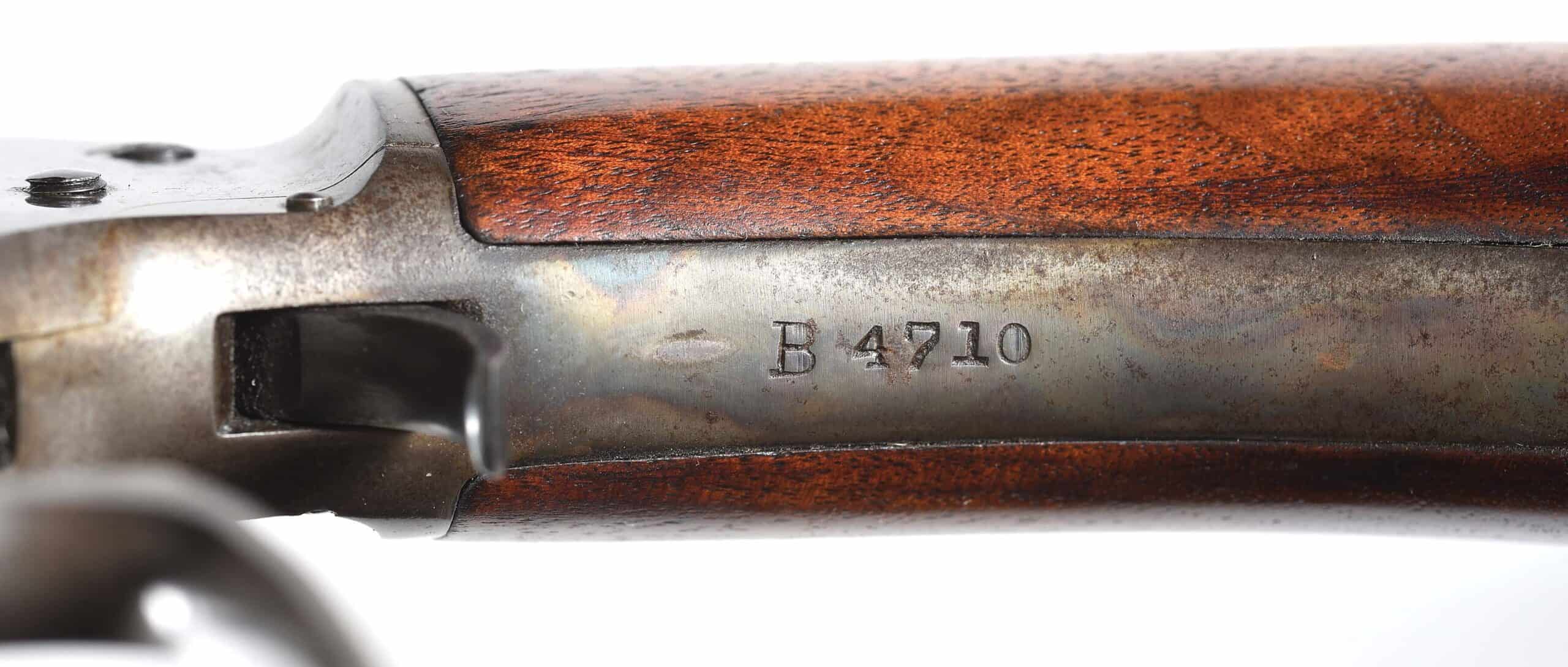
The takedown joint. A large knurled thumbscrew on the right side of the receiver releases the barrel and magazine assembly from the action. With the thumbscrew loose, the barrel rotates a quarter-turn and lifts free. The rifle separates into two assemblies, each about half the overall length, that fit easily into a packed bag or a hard case. The joint registers precisely on a tapered fit, so reassembly returns the rifle to zero. The takedown feature was Hepburn’s solution to the practical problem of carrying a rifle on horseback, in a buggy, or on a train, and it has remained a defining feature of the Marlin .22 ever since the 1897. Hunters, trappers, and packers used the feature heavily through the 1920s and 1930s; modern owners use it for storage and travel.
The action. The lever is a single, smooth-radiused stroke. On opening, the lever pulls the breech bolt rearward, the extractor pulls the empty case from the chamber, the ejector tips the case out the right-side port, and the cartridge lifter rises from the magazine tube with the next round. On closing, the breech bolt chambers the round, the lifter retracts, and the hammer is left at full cock. The hammer has a half-cock notch for safe carry on a loaded chamber, and on the 39AS and later production the rifle adds a cross-bolt safety in the rear of the receiver. The action is, by lever-action standards, exceptionally smooth. A well-broken-in 39A cycles with a glassy lightness that owners describe as a defining tactile feature of the rifle.
The magazine. The cartridge tube runs under the barrel and feeds the lifter through the magazine cap at the muzzle end. Capacity is generous: an early-production tube can hold approximately 26 .22 Short, 21 .22 Long, or 19 .22 Long Rifle cartridges. The tube is loaded through a slot on the right side of the magazine cap and then closed by turning the cap to lock the spring follower against the loaded column. The 39A’s magazine capacity is one of the rifle’s quiet practical advantages — a single load can keep a small-game hunter, a trapper, or a plinker shooting for an afternoon without reloading the tube.
The barrel and sights. Standard 39A barrels were 24 inches, blued, with iron sights consisting of a hooded front blade and an adjustable semi-buckhorn rear. The Mountie carbine used a shorter 20-inch barrel. Various target and presentation variants used longer or heavier barrels. The receiver was drilled and tapped for scope mounts from the early postwar period onward; almost all modern production rifles arrive scope-ready.
Build quality. The 39A was, for most of its production life, the most expensive .22 rimfire in the American catalog. It used forged-and-machined steel parts throughout the lockwork, walnut stocks (American black walnut on standard guns; better grades on Golden and Presentation models), color-case-hardened or blued receivers depending on year, and a level of fitting that exceeded the Winchester 9422 in most direct comparisons. The receiver was milled, not stamped. The lever was forged, not investment-cast. Trigger groups were assembled from individual machined parts. The takedown joint was hand-fitted to register the barrel to the action under tension. This level of construction is what made the rifle expensive, and it is what kept the rifle in catalog when every other American rimfire manufacturer was racing to the bottom.
Chamberings: The .22 Short, Long, and Long Rifle Family
The 39A is chambered for the .22 rimfire family — Short, Long, and Long Rifle — and feeds all three interchangeably from the same tubular magazine. The rifle has never been catalogued in any other chambering.
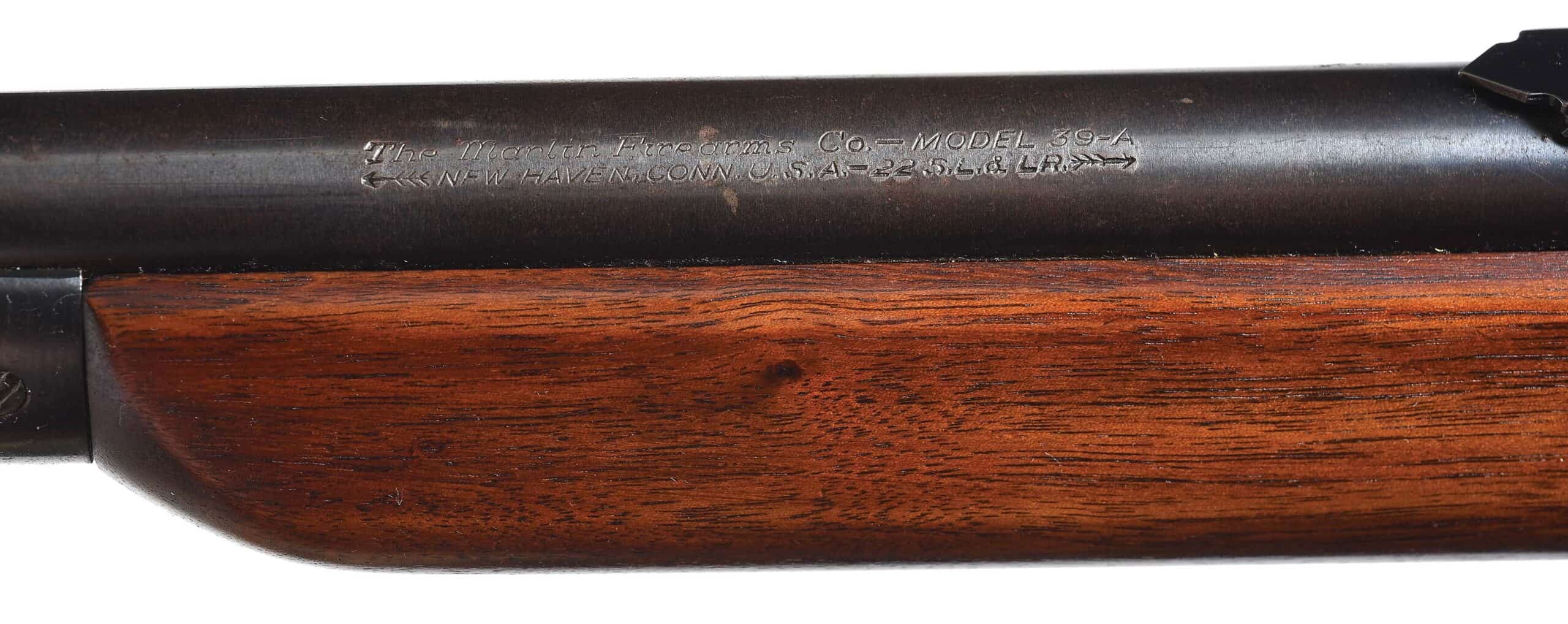
The .22 Short, the oldest of the three (introduced in 1857 in the original Smith & Wesson Model 1 revolver), is the shortest and lightest of the rimfires. It produces minimal report and recoil and was the standard cartridge of American shooting galleries, indoor target ranges, and Olympic rapid-fire pistol competition for most of the twentieth century. A 39A loaded with .22 Shorts in a basement or back-lot range is one of the quieter centerfire-style rifle experiences a shooter can have.
The .22 Long, introduced in 1871, has fallen out of common use but is still available from specialty manufacturers. The 39A chambers it without modification, and a tube of .22 Longs sits between Short and Long Rifle on both report and power.
The .22 Long Rifle, introduced in 1887, is the dominant rimfire cartridge in the world and the default loading for the 39A. The cartridge handles standard-velocity target ammunition, high-velocity hunting loads, hyper-velocity light-bullet loads, and subsonic ammunition without modification to the rifle. The 39A is not chambered for the .22 Magnum (.22 WMR), which is a separate cartridge requiring a dedicated chamber and bolt face; for the .22 Magnum, the equivalent Marlin lever-action was the Model 1894M / 1894CL series, mechanically distinct from the 39A.
The interchangeability of Short, Long, and Long Rifle in a single magazine is a feature that Hepburn designed into the rifle in 1891 and that the 39A has retained ever since. The lifter and bolt face accommodate the rim of all three cartridges; the magazine spring tolerates the different case lengths. For a rifle that has been a training tool, a small-game gun, and a gallery rifle in different decades, this versatility has been one of its enduring practical strengths.
Variants: From the Mountie to the Century Limited
The 39A has appeared in more catalog variants than any other Marlin lever-action. The principal versions:
Model 39 (1922–1938). The pre-39A reintroduction. Part-octagon barrel, slimmer forearm than the 39A, color-case-hardened receiver. These are the most desirable pre-war Marlin lever-action rimfires for collectors.
Model 39A (1939–onward). The standard rifle. 24-inch round barrel, semi-pistol-grip stock, full-length tubular magazine, hooded front sight, semi-buckhorn rear. The baseline against which all other variants are compared.
Model 39A Mountie (1953–1972). A short, slim variant with a 20-inch barrel, straight-grip stock, and shorter magazine tube. Marketed as a “carbine” for trail use and brush hunting. The Mountie has become one of the most desirable post-war 39A variants on the collector market, particularly in early production.
Model 39M (1960s onward). A carbine version with a 20-inch barrel similar to the Mountie but with various stock and forearm configurations across its production run. The 39M designation appeared in multiple sub-variants over the decades.
Model 39A Golden (1957–onward). The “Golden 39A” introduced in 1957 added a gold-plated trigger as a marketing distinction. The Golden became the standard catalog 39A through most of the late twentieth century. The gold trigger remains a visual marker of post-1957 production.
Model 39AS (1983–onward). The “S” denoted the addition of a cross-bolt safety in the receiver, introduced for product-liability reasons in the early 1980s. The 39AS was the standard production rifle from the early 1980s through the end of Marlin original production in 2007.
Model 39A Octagon (limited runs). Several limited runs through the 1970s, 1980s, and 1990s offered the 39A with an octagonal barrel as a deliberate callback to the early Model 39 and Model 1897 production. These are commission and special-order rifles, made in small quantities, and command a premium over standard 39As of equivalent vintage.
Model 39A Century Limited (1970). Marlin’s 100th-anniversary commemorative, marking the founding of the Marlin Firearms Company in 1870. Limited production with engraved receivers and presentation-grade walnut. Highly collectible.
Model 39A Presentation, Article II, and other commemoratives. Marlin produced a steady stream of commemorative and presentation 39As through the 1960s, 70s, and 80s, marking events such as the Bicentennial, the NRA centennial, and various Marlin company anniversaries. Most are valued for their condition and packaging rather than their shooting quality.
Across these variants, the underlying action is unchanged. A 39A Mountie and a 39A Golden disassemble into the same parts; the differences are cosmetic and configurational rather than mechanical.
The 39A in American Shooting Culture
The 39A’s cultural footprint is built on two foundations: the twentieth-century gun-writing literature, and the millions of American households in which the rifle served as the family .22.
Townsend Whelen, Jack O’Connor, and Elmer Keith all wrote about the rifle in their syndicated columns, books, and magazine work. The 39A appeared regularly in Outdoor Life, Field & Stream, American Rifleman, and the Gun Digest annual editions from the 1940s through the 1970s as the rimfire lever-action against which all others were measured. Those writers shaped two generations of American shooters’ rifle preferences, and the 39A — alongside the Winchester Model 70, the Remington 700, and a handful of other consensus choices — sat comfortably inside the working short list they recommended.
The household role is the deeper one. For most of the post-war American century, the Golden 39A was the rifle a father or grandfather kept on a rack in the den, taught a child to shoot with at ten, and handed down at fourteen or eighteen or on a wedding day. That role is part of why the rifle survived its corporate owners. The market for “the 39A specifically” — not just a competent rimfire lever-action, but this rifle — sustained the brand through the Remlin years and is the reason collectors still ask when (or whether) Ruger plans to bring it back. Few American rifles carry that kind of generational pull, and almost none of them do it in the rimfire category.
The 39A has never been a serious competition rifle. Olympic-style smallbore prone, NRA prone, and indoor gallery competition long ago moved to bolt-action target rifles — the Winchester 52, the Remington 40-X, the Anschütz family. The 39A is, and has always been, a working rifle: small-game, training, recreation, household. Its strength has been the ability to do those jobs at a level of build quality the rest of the rimfire market gave up on decades ago.
Production Through Owners: Marlin, Remlin, and Ruger
The Marlin Firearms Company was founded in 1870 by John Mahlon Marlin in New Haven, Connecticut. The original company produced the 1891 and its descendants without interruption (apart from the World War II era, when civilian production was suspended industry-wide) through 2007. Across that span, the rifle was made in three Marlin plants: the original Willow Street factory in New Haven, the Maltby Avenue plant (also New Haven), and finally the North Haven facility that Marlin built in 1968.
Marlin original production (1870–2007). This is the production period collectors and shooters refer to when they say “original Marlin” or “JM-stamped Marlin.” The proof mark on the barrel during this period — a small “JM” inside an oval — designates rifles built at Marlin’s own plants under Marlin ownership. JM-marked 39As across the entire production run are universally regarded as the best-built versions of the rifle. The North Haven plant produced both rimfire and centerfire Marlins from 1969 until the company’s acquisition by Remington in 2007.
Remlin / Remington Outdoor Company (2009–2020). In late 2007, the Marlin Firearms Company was acquired by Remington Arms (then part of Cerberus Capital’s Freedom Group). Remington closed the North Haven plant in 2010 and moved Marlin production to the Remington plant in Ilion, New York, and to Mayfield, Kentucky. The transition was poorly executed. Fitting standards on early Remington-built Marlins — quickly nicknamed “Remlins” by the collector community — were noticeably inferior to JM-marked rifles. Wood-to-metal fit was rough, finish quality varied, takedown joints did not always register cleanly, and quality control on the lever-action lines slipped enough to damage the reputation of the brand. The 39A was less affected than the centerfire 336 and 1895 (which had the bulk of the production volume) but still showed the symptoms of a rushed transition. Production was intermittent through the 2010s, and the 39A was effectively out of catalog by the mid-2010s even as Remington nominally still owned the line. Remington Outdoor Company filed for bankruptcy in 2018 and again in 2020.
Ruger (2020–present). In September 2020, Sturm, Ruger & Co. acquired the Marlin Firearms brand, trademarks, and tooling out of the Remington bankruptcy for $28.3 million. Ruger moved the tooling to its Mayodan, North Carolina, plant and began the slow process of resuming production. The first Ruger-built Marlins to reach the market were Model 1895 lever-actions in 2021, followed by Model 336 and Model 1894 production. The Model 39A has not returned to the Ruger catalog. Ruger CEO Chris Killoy, in a Mayodan plant tour video, stated that the Model 39 design is “not presently in the plan” for reintroduction. For the first time since 1922, the rifle is out of production by its parent company, and there is no published timeline for its return.
The Ruger-built Marlins to date have been well received. Wood-to-metal fit, finish, and action quality are substantially better than the late Remington production and approach or match JM-marked originals on most dimensions. The expectation among collectors and shooters is that if the 39A ever returns under Ruger, it will be the best 39A made in a decade. The brand’s recovery from the Remington years on the centerfire side is one of the more encouraging stories in modern American firearms manufacturing; whether that recovery eventually extends to the rimfire lever-action remains an open question.
The Modern Production Market
For a shooter looking to buy a 39A today, the practical situation looks like this:
Original Marlin (JM-stamped) production. The deep secondary market. JM-marked 39As of any vintage are universally regarded as the gold standard. Prices vary by configuration, condition, and year, but a clean Golden 39A from the 1960s through 1990s sits in the mid hundreds of dollars on the used market, with Mountie carbines, early octagon-barrel production, and pre-war Model 39s commanding meaningful premiums. Pre-1980 production (before the cross-bolt safety) is often preferred by purists.
Remlin-era production (2009–2020). The Remington-built 39As are the cheapest to acquire on the used market and the riskiest. A clean late-production rifle can be a perfectly serviceable shooter; a poorly built one can have lifting, ejection, and takedown-fit issues that no amount of bench work fully resolves. Buyers familiar with the rifle can usually evaluate a Remlin in person; mail-order acquisition of Remington-era production carries real risk.
Ruger-built production (2021–present). The current Marlin catalog under Ruger ownership has focused on the centerfire 1895, 336, and 1894 lines. The 39A is not currently in production, and Ruger has publicly stated it is not in the near-term plan. JM-marked and Remlin-era 39As are, for now, the only versions available on the market. If and when a Ruger-built 39A appears on dealer shelves, it will likely sit at a premium price point reflecting both Ruger’s manufacturing cost structure and the strength of demand for the model.
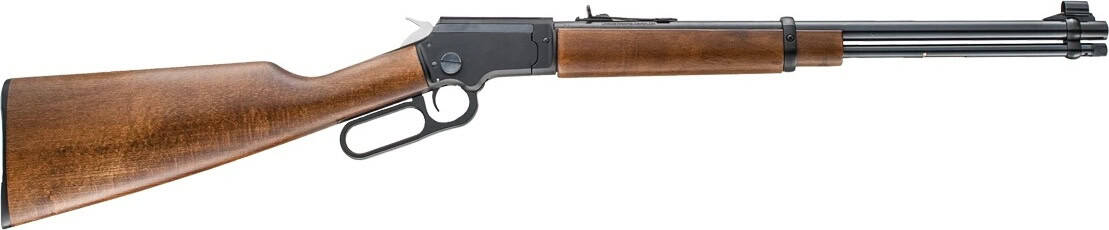
Chiappa LA322 (Italian-made faithful replica). Chiappa Firearms of Brescia, Italy, manufactures a faithful 39A replica designated the LA322 and imports it into the U.S. market in several variants: the Standard Rifle, the T.D. Standard Rifle, the T.D. Deluxe Rifle, the T.D. Kodiak Cub Rifle, and the compact T.D. Bandit. Externally the LA322 mirrors the Marlin 39A almost faithfully — solid-top receiver, side-ejection, tubular magazine under the barrel, exposed hammer, and the takedown thumbscrew on the right side of the receiver that lets the barrel and magazine separate from the action. Internally it differs from a JM-marked 39A: the receiver is cast from a non-ferrous alloy rather than milled from steel, the lockwork detailing is its own, and the finish standard is set to a substantially lower price point. The LA322 sits in roughly the mid-hundreds depending on variant. For a buyer who wants a working 39A-pattern rifle at an accessible price and is not chasing JM-marked Marlin provenance, the LA322 is the most direct path to the 39A shooting experience available in current new production.
The longer market view. No other American rimfire lever-action — and arguably no other American rimfire rifle of any action type — has carried the cultural weight and the collector demand of the 39A. The rifle has held its used-market value across the Remlin disruption, across the broader contraction in handgun-and-rifle prices in some categories, and across the general decline in interest in the .22 Short. That price stability is one of the practical reasons the rifle remains a defensible purchase even at the premium end of the rimfire market.
Use Cases
The 39A has filled five distinct roles across its production life, and the rifle does each well enough that owners often acquire it for one purpose and use it for several.
Small-game hunting. Squirrel, rabbit, and similar small game are the rifle’s traditional quarry. The .22 Long Rifle from a 24-inch barrel produces enough velocity and energy for clean head shots on squirrel at 40 yards and on rabbit at 50, and the rifle’s iron sights and trigger are well-suited to that style of deliberate, ranged shooting. Hunters who use the 39A regularly typically scope it; the solid-top receiver and the factory drilling-and-tapping make this easy. The 39A’s takedown feature makes it a convenient pack rifle for trappers, fly-in hunters, and anyone moving in and out of vehicles or aircraft.
Plinking and general recreational shooting. The 39A is one of the most enjoyable American rifles to shoot for the simple sake of shooting. The lever action is smooth, the recoil is negligible, the ammunition is cheap, and the magazine capacity is generous. A box of fifty .22 Long Rifle and a 39A is the foundation of more father-and-son and grandfather-and-grandchild range trips than almost any other rifle in American shooting culture.
Youth training. The 39A’s traditional role as a youth and beginner rifle is well established. The light recoil, the manageable weight (about 6.5 pounds for a standard rifle), the smooth lever stroke, and the simplicity of the action all make the rifle approachable for a first-time shooter while still teaching the fundamentals of operating a lever-action repeater. The 39AS’s cross-bolt safety made the rifle more attractive to safety-conscious parents from 1983 onward.
Training tool for adult shooters. The 39A serves a more sophisticated training role for adult shooters who own centerfire lever-actions. Practice with a 39A reinforces lever-action shooting mechanics — the cycle, the trigger reset, the front-sight focus, the steady follow-through — without the ammunition cost, recoil, or noise of a centerfire .30-30 or .45-70. Shooters who own Winchester 1894s, Marlin 336s, or 1895s often keep a 39A on the rack specifically for low-cost mechanical practice.
Gallery and indoor shooting. From the late nineteenth century through the mid-twentieth century, American shooting galleries — both commercial gallery operations at fairs and amusement parks and indoor club ranges — were a significant market for .22 rimfires. The 39A in .22 Short, with its low report, modest velocity, and tubular magazine, was a natural gallery rifle. The category has largely disappeared from American shooting culture (the great commercial galleries closed in the 1960s and 1970s), but the rifle remains well-suited to indoor club ranges and low-noise backyard shooting where local conditions permit.
A practical note from ownership. I own both an original JM-marked Marlin 39A and a Chiappa LA322 T.D. Kodiak Cub in matte chrome. Sweet little guns, both of them, but they do jam more than I’d like them to. Rimfire lever-actions, with their tube-loaded magazines and their case-rim feeding geometry, are simply more sensitive to ammunition type, ammunition quality, and the condition of the lifter and extractor than a tube-fed bolt-action like a Marlin 60 or a CZ 457. Standard-velocity .22 Long Rifle feeds best in my rifles; the cheap bulk-pack high-velocity stuff produces enough variation in case length and rim thickness to cause occasional failures to feed and failures to eject. This is not a Marlin problem specifically — it is a rimfire lever-action problem generally, and it shows up on the LA322 as readily as on the 39A. Buyers should set expectations accordingly: a 39A is a deliberate, satisfying, beautifully made rifle that will occasionally hiccup with marginal ammunition. The right answer is to feed it the ammunition it likes and accept the trade-off as part of the design.
Adjacent Rifles: Do Not Confuse
The 39A sits at the center of a small but consequential family of premium rimfire lever-action rifles. A few clarifications and direct comparisons:
Winchester Model 9422. The 9422 is the principal competitor to the 39A in the premium rimfire lever-action category, and the comparison defines the segment. Winchester introduced the 9422 in 1972 as a rimfire scaling of the Model 94 centerfire lever-action. The 9422 is a top-eject, open-top receiver design: spent cases come up through the open top of the receiver, which means a scope mounted directly over the bore obstructs the ejection path. Winchester addressed this with side-mount and offset-mount scope arrangements, but the workaround never fully matched the 39A’s clean, solid-top scope-mounting geometry. The 9422 was, by most accounts, every bit the equal of the 39A on fit and finish — both rifles were made to a higher standard than any other production rimfire of their era — but the design choices were different. The 9422 used a Winchester 94-style action; the 39A used the Marlin Hepburn architecture. Winchester discontinued the 9422 in 2005, two years before Marlin sold to Remington. For most of the period from 1972 to 2005, a buyer choosing a premium American rimfire lever-action was choosing between the 39A and the 9422.
Marlin Model 336. The 336 is the centerfire lever-action Marlin that shares the most visual and mechanical resemblance to the 39A — solid-top receiver, side ejection, tubular magazine, takedown variant — but is chambered for centerfire cartridges including the .30-30 Winchester, .35 Remington, and (in the Model 1895 derivative) the .45-70 Government. The 336 and the 39A are mechanically related but not interchangeable. Parts do not swap. The 336 is a larger, heavier, stronger rifle for centerfire deer cartridges; the 39A is a small-bore rimfire. Casual buyers occasionally confuse the two on shelf appearance; collectors and shooters do not.
Marlin Model 1894 (centerfire). The Marlin 1894 is a pistol-caliber lever-action chambered for .357 Magnum, .44 Magnum, .45 Colt, and similar handgun cartridges. The 1894 is a centerfire rifle and bears no direct mechanical relationship to the rimfire 39A or to its 1891 ancestor, despite the model-number proximity. The Marlin 1894M and 1894CL were rimfire variants chambered for the .22 WMR (.22 Magnum), but these are distinct rifles from the 39A and do not share parts with it. Buyers searching for a “Marlin 1894 .22” or “Marlin 39A in .22 Magnum” are looking for two different rifles. The 39A is .22 Short / Long / Long Rifle only; the .22 Magnum Marlin is the 1894M / 1894CL family.
Winchester Model 250. Winchester’s earlier rimfire lever-action, produced from 1963 to 1973, was the Model 250 (along with the 255 in .22 Magnum). The Model 250 was a lower-priced rimfire lever-action built to a budget standard rather than as a competitor to the premium 39A. It was a stamped-receiver, lower-finish rifle aimed at the youth and entry-level market. The 250 is not a direct competitor to the 39A; it is a budget rifle in a market segment Marlin did not seriously contest. When Winchester introduced the 9422 in 1972, it was specifically to compete with the 39A at the premium level — the 250 was Winchester’s acknowledgment that they had been outclassed on the high end for forty years.
Winchester Model 9417. The 9417 was a 9422 variant chambered for the .17 HMR. It is a 9422 derivative, not a 39A competitor, and is mentioned here only because the model numbers can confuse a casual reader scanning the catalog.
Winchester Model 1885. The Winchester 1885 is a single-shot falling-block rifle, not a lever-action and not a rimfire-focused design. It appears here only because it is sometimes confused with rimfire Marlins in casual conversation; the 1885 is a different rifle entirely, designed by John Browning and produced by Winchester for centerfire target and hunting cartridges. See Winchester Model 1885 for the full lineage.
Ruger 10/22. The 10/22 is the dominant American semi-automatic rimfire rifle and the volume leader in the .22 Long Rifle category. It is not a lever-action and is not directly comparable to the 39A on either mechanism or shooting experience. Buyers cross-shopping the 10/22 and the 39A are typically choosing between a high-volume autoloader and a deliberate lever-action — different rifles for different shooting styles.
References and Resources
For serious students of the 39A and its lineage, the standard works are William S. Brophy’s Marlin Firearms: A History of the Guns and the Company That Made Them (Stackpole Books, 1989), the definitive single-volume history with extensive coverage of the Hepburn designs, the Model 1891 / 1892 / 1897 lineage, and the Model 39 / 39A production through the late 1980s; Brophy’s company-supported companion The Marlin Story (multiple Marlin-published editions); the Gun Digest annual editions from 1944 onward, which carried the 39A in essentially every volume through the post-war period with feature articles by Jack O’Connor, Townsend Whelen, John T. Amber, and other principal writers; Frank Sellers, American Gunsmiths (Andrew Mowbray Publishers, 1983, revised editions later); and John Browning and Curt Gentry’s John M. Browning: American Gunmaker (Doubleday, 1964), useful for the Browning context and as a contrast — Browning designed Winchester’s lever-actions of the same era, while Hepburn designed Marlin’s, and the two design lineages diverged from common roots in the 1880s.
Online resources of value include the Marlin Firearms Collectors Association (marlin-collectors.com), the Marlin Owners forum (one of the most active firearms-specific communities online), and the Cody Firearms Museum at the Buffalo Bill Center of the West, which holds Marlin company records and offers research letters on serial-numbered rifles. Ruger’s current Marlin Firearms site (marlinfirearms.com) carries the official position on current production status.
The Morphy Auctions (morphyauctions.com) catalog archive handles a steady volume of original Marlin lever-action rimfires, including pre-war Model 39, Model 1897, and Model 1892 / 1891 production rifles. For collectors of original Hepburn-design Marlins, Morphy’s catalogs are among the best sources for documented original-condition examples reaching the market — and their photography is among the highest-quality reference imagery available for original Marlin lever-actions.
The Texas Gun Collectors Association (tgca.org) brings together collectors of historical American firearms across the state, and pre-1980 Marlin lever-actions are a regular fixture at their shows. The Hepburn-designed Marlin rimfires — Model 1891, 1892, 1897, the early Model 39, and the JM-marked pre-cross-bolt-safety 39As — sit comfortably in the historical-original window that defines TGCA collecting interest. Worth attending whether you collect, shoot, or study original Marlins.
The Marlin Model 39A is the rifle L. L. Hepburn drew in 1891, modernized through five major redesigns and produced through four corporate owners. It has outlasted every American shoulder firearm with which it ever shared a year of catalog presence. It has outlasted its principal competitor, the Winchester 9422, by more than two decades. And for the first time since 1922, as of 2026, it is not being made — a pause its parent company has not explained and has not put a date on.
If you know of any forums or sites that should be referenced on this listing, please let us know here.
Further Reading
-
Sale!

Marlin Firearms (History of the Guns and the Company That Made Them)
Original price was: $99.95.$60.96Current price is: $60.96. Purchase on Amazon -

John M. Browning American Gunmaker; An Illustrated Biography of the World's Greatest Inventor of Firearms, with Full Data on the Browning Guns
Purchase on Amazon -

Shooting Lever Guns of the Old West
Purchase on Amazon