IntroductionThe Colt Lightning was Colt‘s attempt to take a share of the repeating rifle market away from Winchester. Introduced in 1884 by Colt’s Patent Fire Arms Manufacturing Company, it was a slide-action repeater from a firm known for revolvers, and Colt sold it on the speed of its action. It never displaced the Winchester lever…
The Dance Brothers Revolver: Texas Confederate Arms
IntroductionIn American firearms history, few weapons embody the resilience and ingenuity of Southern gunsmithing during the Civil War as profoundly as the Dance Brothers revolver. Manufactured in Texas by the Dance family, these rare and distinctive six-shooters served as a crucial alternative to Colt revolvers at a time when the Confederacy was desperate for domestically…
The M25 Sniper Weapon System: History and Performance
The M25 Sniper Weapon System: Its Development, Manufacture, and UseThe M25 Sniper Weapon System is a testament to the blend of technological advancement and precise craftsmanship. Created for precision shooting in challenging battlefield conditions, the M25 has seen use in several conflicts, solidifying its position as a formidable asset in the arsenal of the United…
What is bullet seating and how do I do it?
Bullet Seating Bullet seating is the process of pressing the bullet into the case of a cartridge during the reloading process. The depth at which the bullet is seated can have significant effects on the accuracy and safety of the cartridge. Here are the basic steps for bullet seating: Materials Required: Procedure: Remember, safety should…
The Winchester Model 1885 High-Wall Rifle
The High-Wall Rifle: An Icon of American CraftsmanshipThe Winchester Model 1885 High-Wall is a single-shot falling block rifle designed by John Moses Browning and built by Winchester Repeating Arms from September 1885 to June 1920. Winchester made close to 140,000 of them and chambered them for 91 different cartridges, from .22 rimfire up to the…
The Springfield Model 1861: A Pivotal Civil War Arm
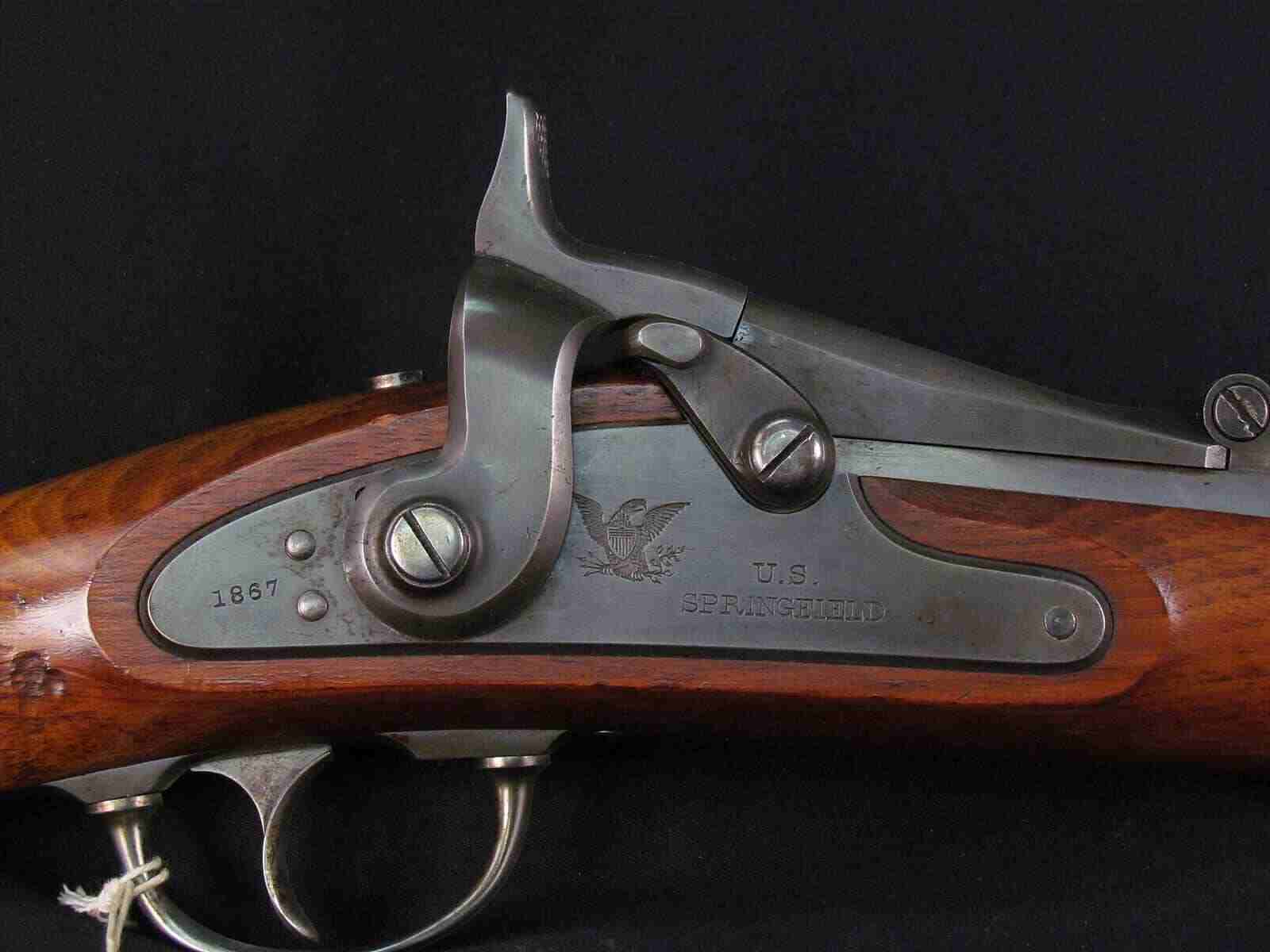
The Springfield Model 1861 rifle-musket was the standard infantry arm of the Union Army during the American Civil War. It was a .58 caliber muzzle-loader, built at the Springfield Armory in Massachusetts and by a long list of private contractors, and it was the most widely used shoulder weapon in Union service. More than a…
Mossberg & Sons: A History of American Firearms
Introduction to MossbergFounded in 1919, O.F. Mossberg & Sons, Inc. stands as the oldest family-owned firearms manufacturer in the United States, with a reputation built on affordability, reliability, and innovative firearm design. From its beginnings in New Haven, Connecticut, to its rise as a dominant force in the firearms industry, Mossberg has consistently delivered firearms…
The Henry Rifle: A Revolution in Firearms History
The Henry rifle gave one man sixteen shots at a time when almost everyone he faced could fire once and then reload. That is the whole of its advantage, and it was enough to carry the design out of a New Haven workshop in 1860, through the Civil War, onto the frontier, and into every…
Next-Gen Military Arms: The XM7 and XM250
IntroductionMilitary weaponry has always played a decisive role in shaping battlefield outcomes. Throughout history, the United States has remained at the forefront of small arms development, continuously refining its arsenal to meet the demands of modern combat. The latest breakthrough in this evolution is the U.S. Army’s Next Generation Squad Weapon (NGSW) Program, which has…
The .50-70 Government Cartridge: Black Powder Big Bad Boy
The Complete History and Performance of the .50-70 Government CartridgeIntroduction to the .50-70 GovernmentThe .50-70 Government cartridge holds a unique place in firearms history, marking the transition from muzzleloading muskets to modern breech-loading rifles. Developed by the U.S. Army Ordnance Department in 1866, this centerfire black powder cartridge replaced the aging .58 caliber rifled muskets…