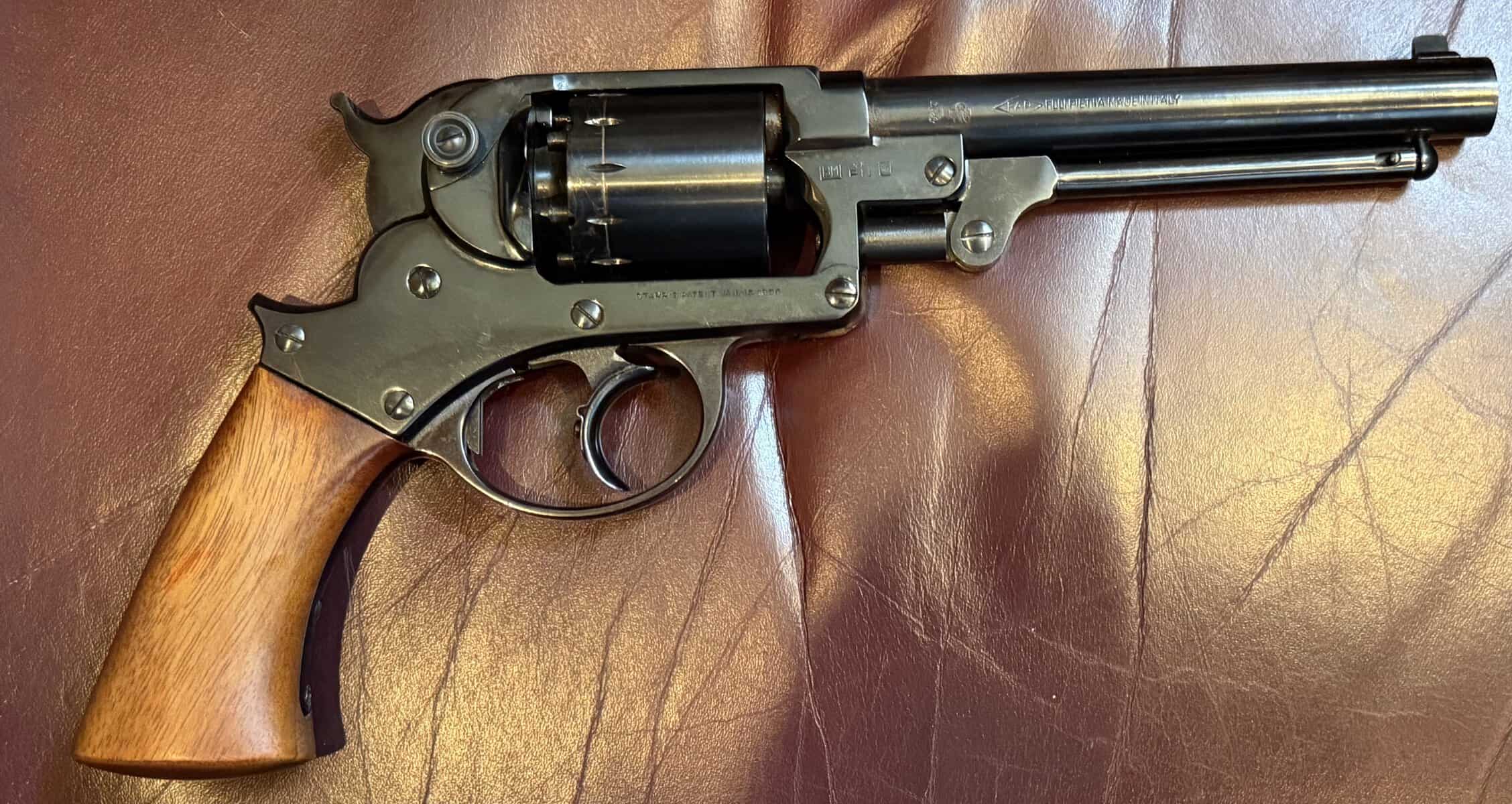
The Pietta 1858 Starr is back. When Pietta announced the return of the Starr 1858 Double-Action in November 2025, it brought one of the American Civil War’s most mechanically distinctive revolvers back into current production. The original Starr (designed by Eben T. Starr and produced in Yonkers, New York) armed a significant portion of Union cavalry through the war. After a long period out of catalog, Pietta’s reissue gives modern shooters and collectors access to the unusual two-trigger system that set the Starr apart from its Colt and Remington contemporaries.
For the full historical context (Eben Starr, the U.S. Ordnance contract, the gun’s wartime service, and its eventual decline), see our companion article on The Starr 1858 Army Revolver: Civil War Powerhouse.
The Pietta 1858 Starr: An Uncommon Reissue
The Pietta Starr 1858 isn’t a new design: it’s a faithful reissue of a black-powder reproduction that had been off the market long enough that most current shooters never had the chance to handle one. The original 1858 Starr was a service-grade Union cavalry sidearm with a mechanism unlike anything else in production at the time, and Pietta’s reproduction preserves the period-correct features rather than simplifying them. That alone makes it worth covering: most “Civil War repro” revolvers in the current market are Colt 1860 or Remington 1858 clones. The Starr fills a different niche.
Specifications
- Caliber: .44
- Barrel: 6″ tapered round
- Rifling: 7 lands and grooves, 1:30 twist
- Capacity: 6 shots
- Cap: #11
- Loads: FFFg by volume with a .454 round ball and .44 revolver wad. 22 grains starting, 24 to 28 grains historical, about 30 grains maximum
- Grips: one-piece European walnut, satin finish
- Frame and barrel: blued steel
- Sights: dovetailed front blade; rear: a small notch ground into the nose of the hammer (visible only when the hammer is fully cocked)
- Pietta SKU: STARRD44 / Dixie Gun Works SKU: RH0460
- Availability: special-order item, produced by Pietta in limited batches rather than continuous production; sits in the premium tier of current black-powder revolver pricing
First Impressions

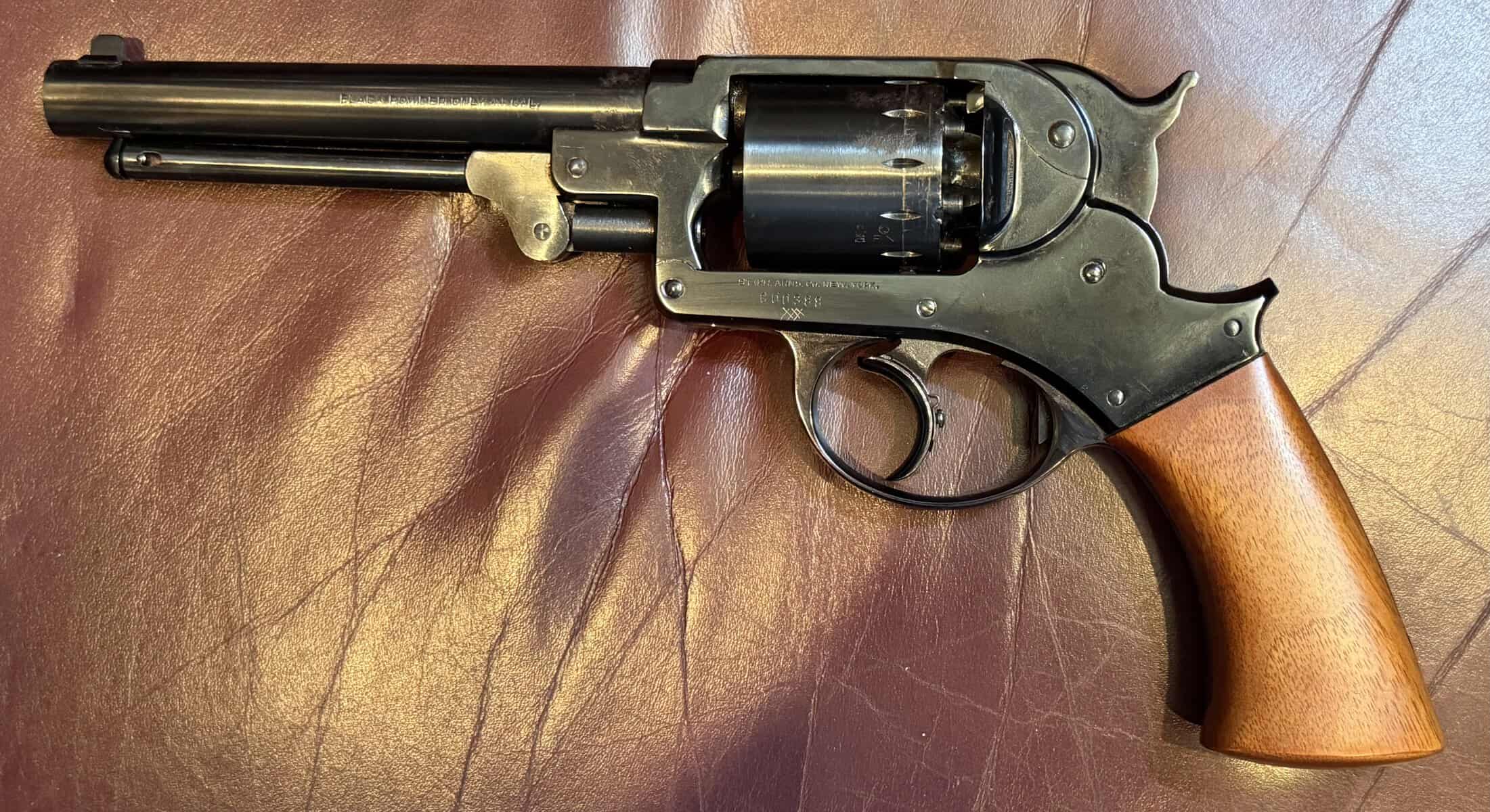
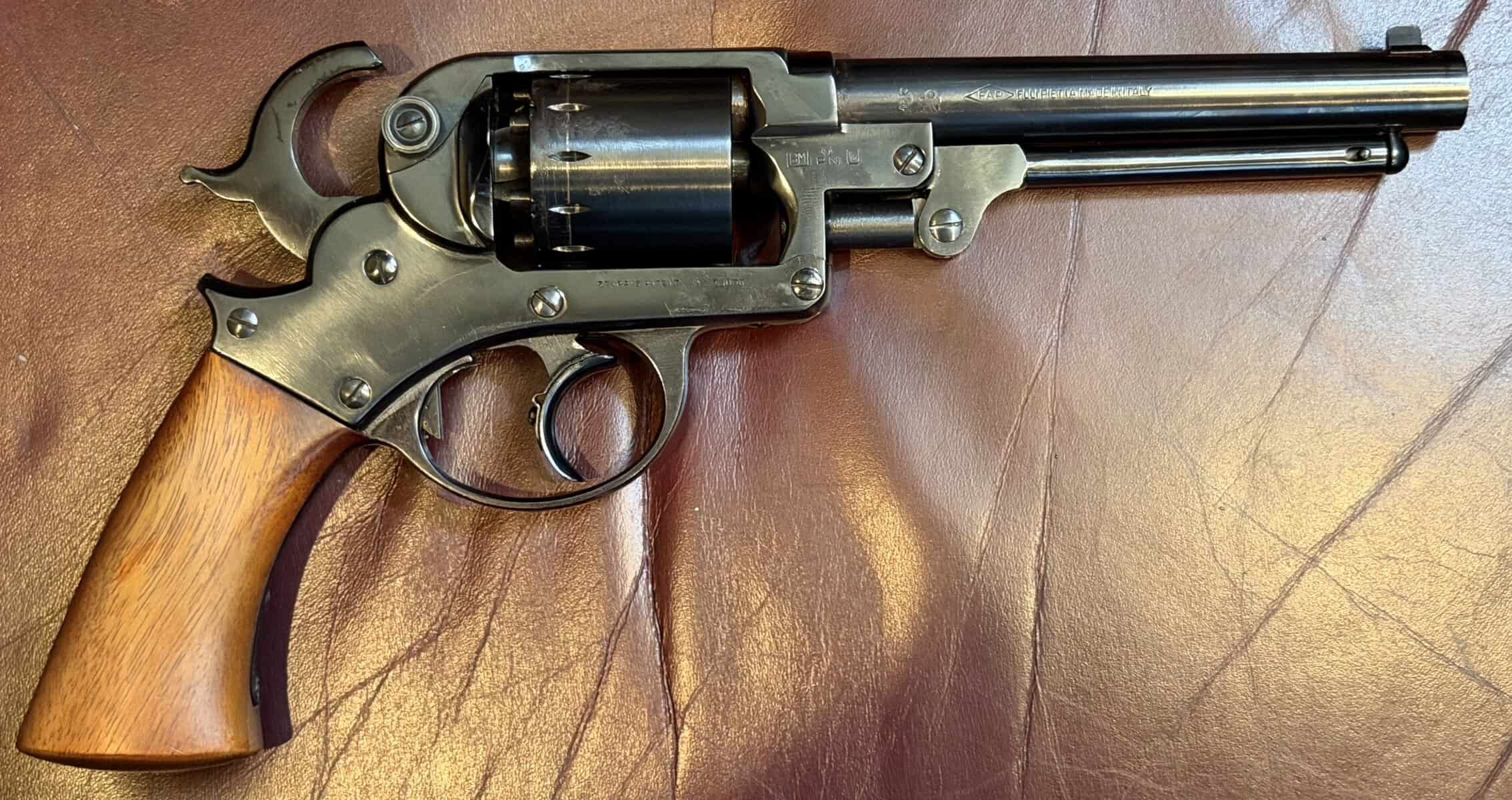
The Pietta 1858 Starr is a beast. The revolver weighs 44.3 ounces, heavy by modern handgun standards and emphatically full-size by black-powder revolver standards, and feels solid in the hand without feeling clumsy. Bluing on the test gun is even and reasonably deep across the metal surfaces, and the one-piece walnut grip shows a clean satin finish with respectable figure for a production reproduction.
The grip angle is well-designed for the gun’s mass. The geometry compensates for the weight enough that the revolver carries naturally rather than dragging the muzzle, and the hand fills the grip without crowding. Action feel out of the box is what the period-correct mechanism dictates, heavy and deliberate, but the components move smoothly without binding or grit.
The Two-Trigger Mechanism: What Makes the Starr Different
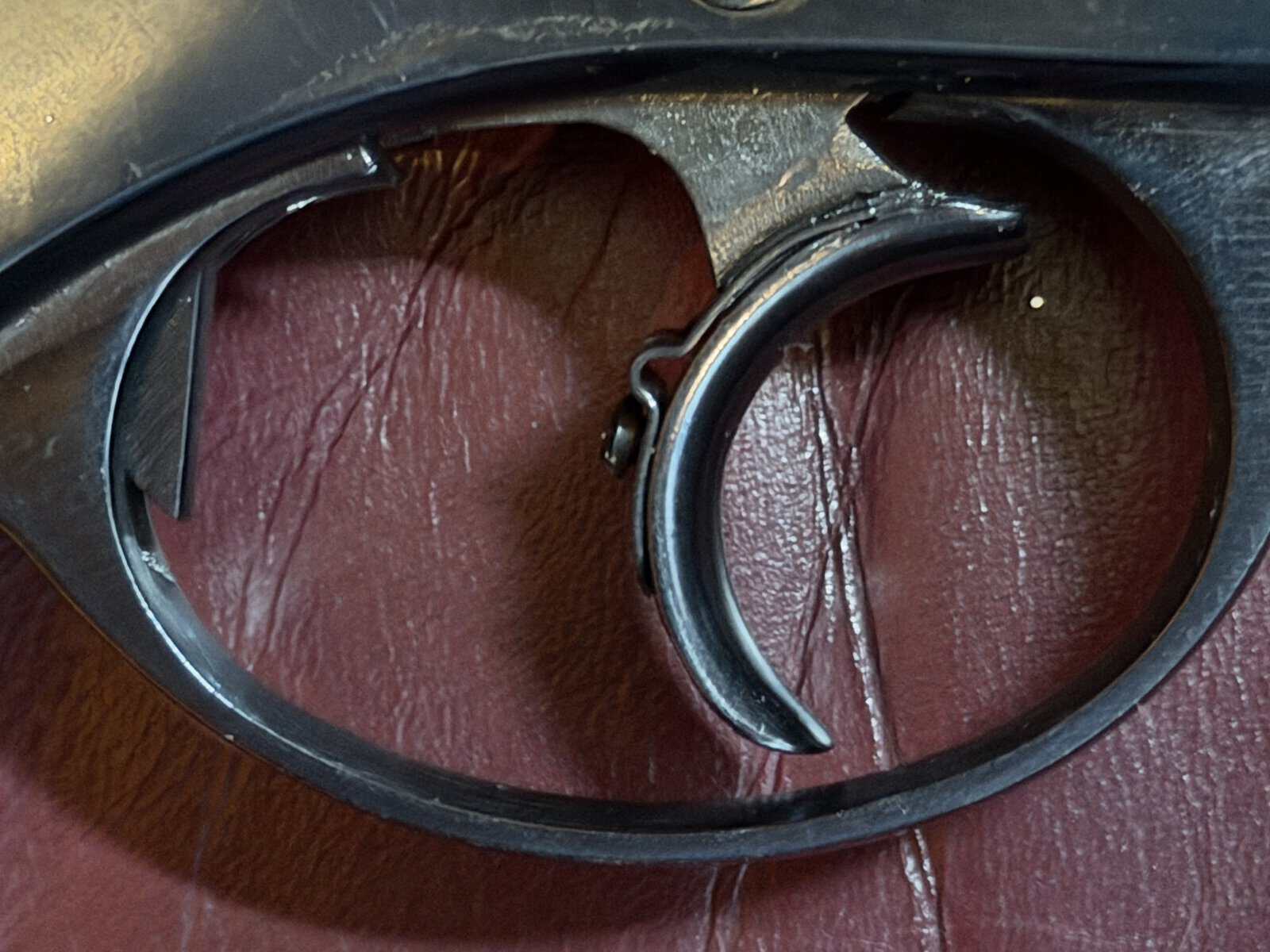
The Starr’s defining feature is its two-control firing system. A long front trigger drives cylinder rotation and hammer cocking. A small rear element behind it, technically a sear release rather than a true trigger, drops the hammer when the gun is staged. The Pietta reproduction preserves both controls, including the small sliding tooth on the rear face of the front trigger that selects between single-action and double-action operation, a feature distinctive to the original 1858 Starr design.
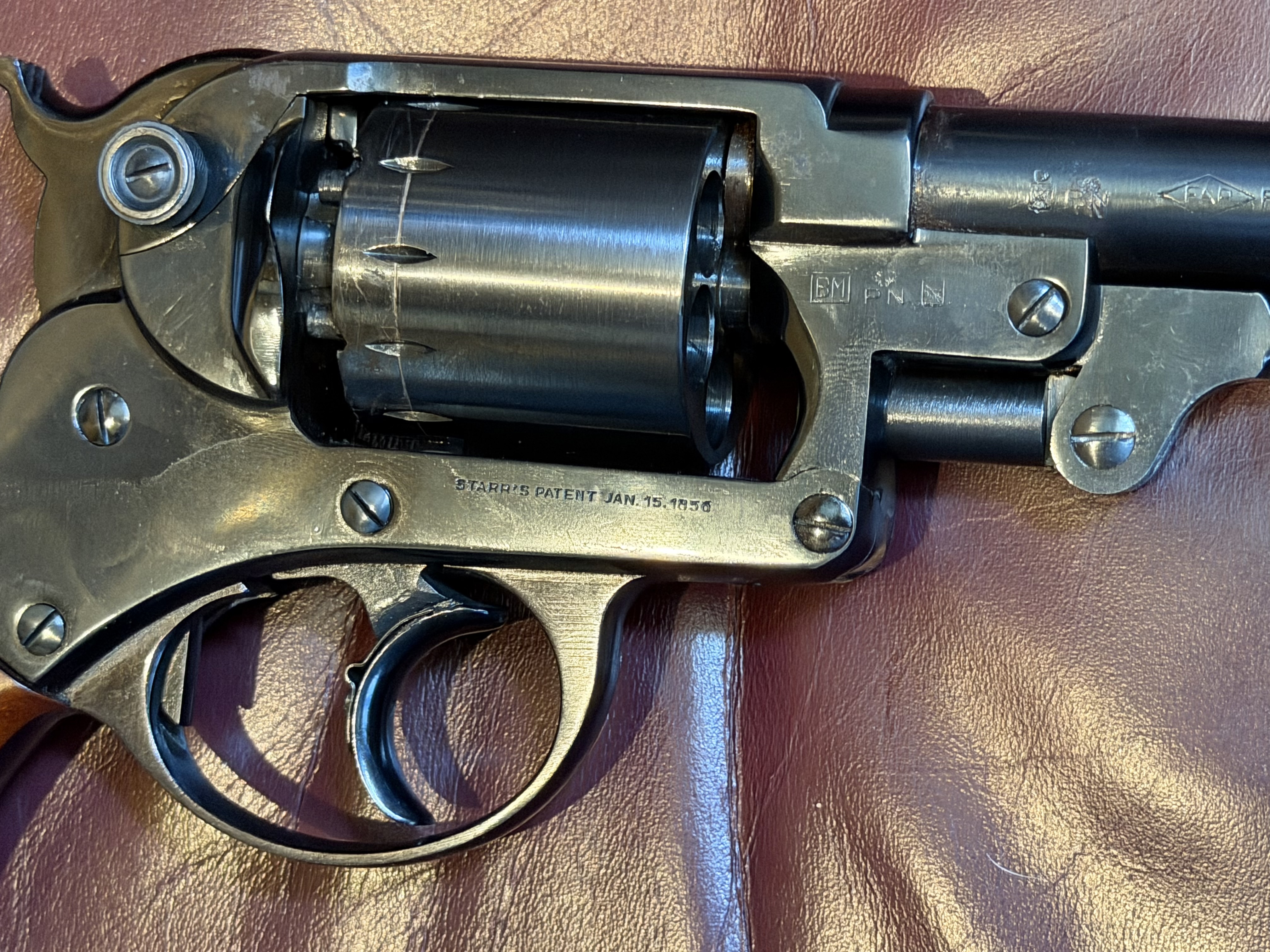
Double-Action Mode: Tooth Up
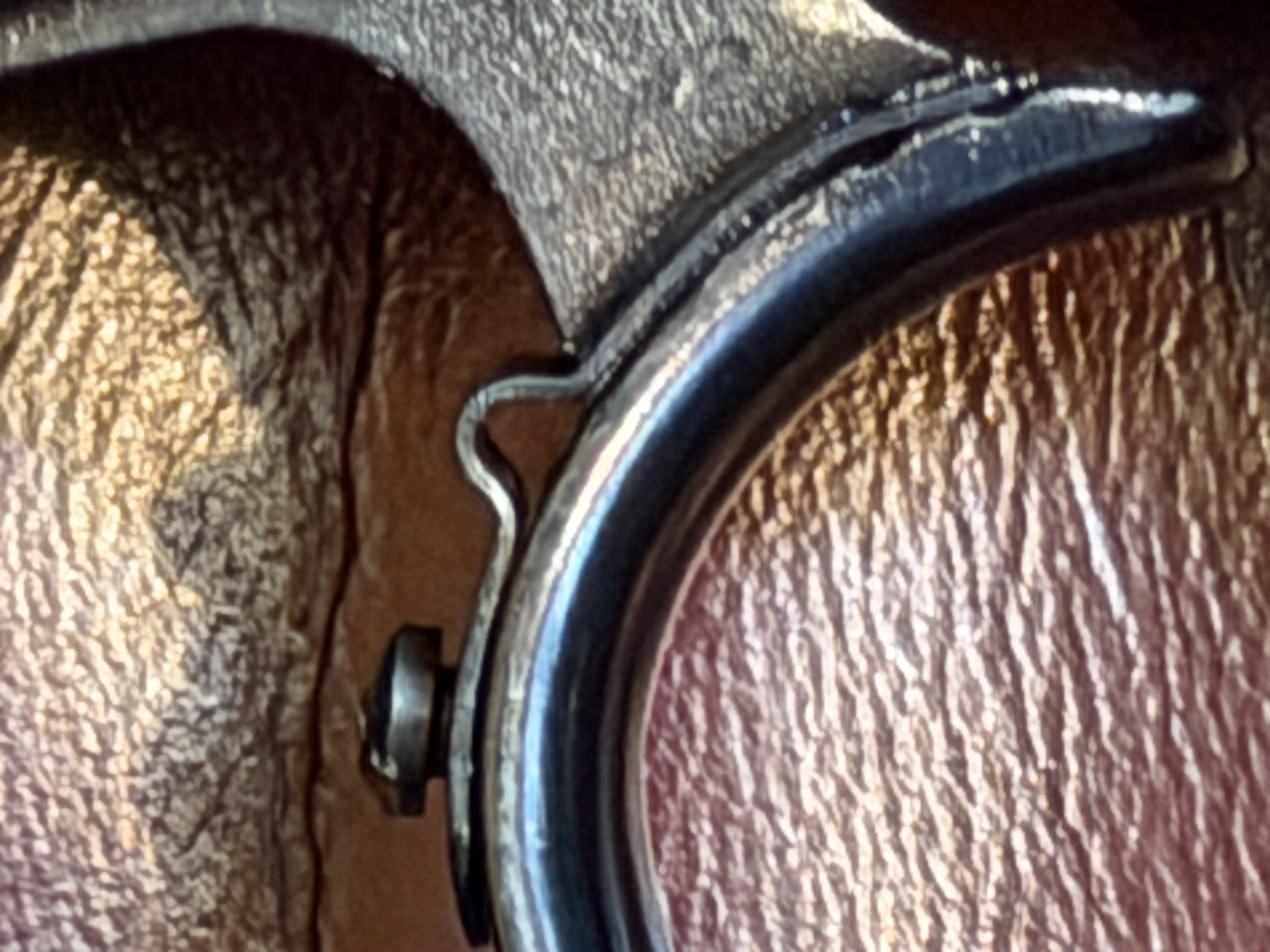
With the tooth in the up position, pulling the front trigger all the way through automatically trips the rear sear at the end of stroke, firing the gun in a single motion. This is the combat configuration: the operating mode that earned the Starr its reputation in Union cavalry use. The pull is long and weighty by modern double-action standards, as one would expect from a percussion-era mechanism.
Single-Action Mode: Tooth Down
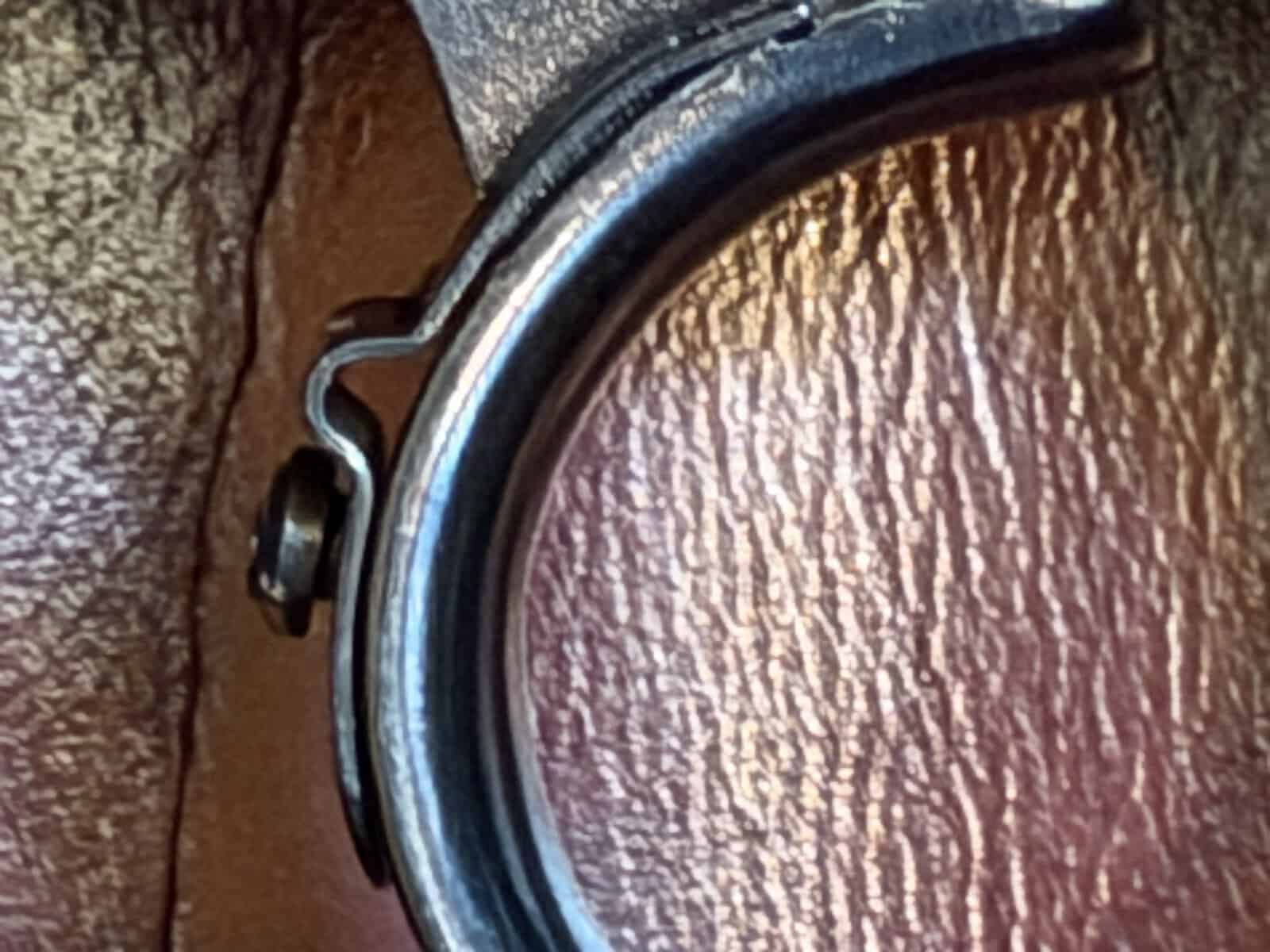
With the tooth in the down position, the front trigger functions as a set trigger. Pulling it back rotates the cylinder and cocks the hammer, but the hammer stays at full cock at the end of travel: it does not drop. To fire, the shooter releases the front trigger and presses the small rear sear release, which drops the hammer. This is the precision mode: a deliberate two-step sequence suited to careful target work or slow-fire shooting where trigger feel matters.
The Hybrid Technique
Even with the tooth in the up (DA) position, the shooter can choose to stop the front trigger pull short, thumb-cock the hammer manually, and then fire with the rear sear release. This gives the operator the option to switch between a fast DA pull and a deliberate single-action shot without flipping the selector, a convenience that suits any shooter who wants both modes available without committing the gun to one or the other. In practical terms, leaving the tooth in the up position and choosing the stroke based on the moment is the most flexible way to run the gun.
At the Range
Trigger Pull Measurements
The Pietta 1858 Starr is a brutal weapon to shoot by modern standards. The data confirms it. Trigger pull measurements were taken with a Wheeler Professional Digital Trigger Gauge in both modes:
| Pull | Mode | Weight |
|---|---|---|
| Front trigger, full pull through | DA (tooth UP) | 9 lb 8 oz average (8 lb 0 oz – 10 lb 7 oz across 4 pulls) |
| Front trigger, partial pull to staging | DA staging point (tooth UP) | 10 lb 3 oz |
| Front trigger, full set | SA (tooth DOWN) | 22 lb 13 oz |
| Rear sear release | SA (tooth DOWN, after staging) | 5 lb 13 oz |
Three things stand out. The DA pull averages 9.5 pounds, which is heavy by modern revolver standards but a marked improvement over the original 1858 Starr: period accounts of the Civil War-era gun describe DA pulls in the 14-20 pound range, heavy enough to draw complaints from Union cavalrymen. The Pietta has demonstrably lightened the action without softening it.
The SA front-trigger weight, by contrast, is severe. At 22 pounds 13 ounces, the front trigger in SA mode requires more than twice the force of the DA stroke, because in SA mode the tooth blocks the through-stroke, and the trigger must overcome the additional internal resistance to fully cock the hammer against the staging mechanism. This is the most physically demanding pull on the gun, and it is not subtle.
The rear sear release at 5 pounds 13 ounces is comparatively the lightest pull in the system. Period sources called this a “hair trigger” relative to the front trigger, and that characterisation holds up here: while not literally light by modern set-trigger standards (modern set triggers run under 2 pounds), the rear sear release is dramatically lighter than every other pull on the gun. After staging, the gun fires with a comparatively crisp release.
One mechanical implication worth naming: the hybrid technique described above (staging the front trigger in DA mode, thumb-cocking, and firing with the rear sear) is not just a convenience, it is mechanically advantageous. Hybrid total: roughly 10 pounds (front-trigger staging) plus 5 pounds 13 ounces (rear sear) equals about 16 pounds of pull work. Pure SA-mode total: 22 pounds 13 ounces (front-trigger set) plus 5 pounds 13 ounces (rear sear) equals about 28.6 pounds. Anyone who wants set-trigger shooting accuracy without enduring the SA front-trigger pull should leave the selector in the DA position and use the hybrid stroke.
None of these weights make the Pietta 1858 Starr a casual plinker. They make it a period-correct reproduction of a period-correct mechanism. Buyers should expect a workout.
The Verdict
The Pietta 1858 Starr is not a gun for everyone. It is a heavy, deliberate, mechanically demanding revolver that reproduces a Civil War design most shooters have only read about. What it offers is something no Colt or Remington clone can: the chance to handle and shoot the two-trigger Starr system as Union cavalry knew it, built to modern Pietta fit and finish. The bluing is clean, the walnut is better than the price tier suggests, and the action, heavy as it is, runs smoothly out of the box.
For the black-powder shooter who already owns the usual suspects, or the Civil War collector who wants a shootable example of one of the war’s most unusual sidearms, the Starr earns its place. It is a specialist’s gun, and within that niche it has no real competition in current production. Just go in expecting the workout the trigger numbers promise.
Where to Buy and What You’ll Need
Because Pietta produces the Starr in limited batches rather than continuously, availability comes and goes: when you find one in stock, that is the window. The Starr Double-Action is carried through specialist black-powder retailers such as Muzzle-Loaders.com (STARRD44), Dixie Gun Works (RH0460), and EMF Company, which distributes Pietta’s black-powder line in the United States. As a percussion firearm, the revolver itself is not subject to FFL transfer in most states, but check your local and state law before ordering.
To shoot it, you will need the consumables the load calls for: .454 lead round balls, FFFg black powder (start at the 22-grain load given above, measured by volume), .44-caliber revolver wads, and #11 percussion caps. MidwayUSA stocks the balls, caps, and wads; FFFg powder ships HAZMAT and is often easiest to source locally. A Wheeler Professional Digital Trigger Gauge is worth having if you want to measure your own gun’s pulls against the numbers above.
References and Resources
For the history and mechanics behind the Starr, the standard references include the NRA National Firearms Museum’s entry on the U.S. Starr Arms Co. 1858 Double Action, the American Rifleman “This Old Gun” feature on the Model 1858 Starr Army revolver, and the relevant arms-history surveys covering Eben T. Starr’s December 4, 1860 patent (No. 30,843) and the Starr Arms Company’s wartime production at Yonkers, Binghamton, and Morrisania, New York. Pietta’s own product documentation and the U.S. distributor materials confirm the reissue specifications cited above.
If you know of any forums or sites that should be referenced on this listing, please let us know here.
Further Reading