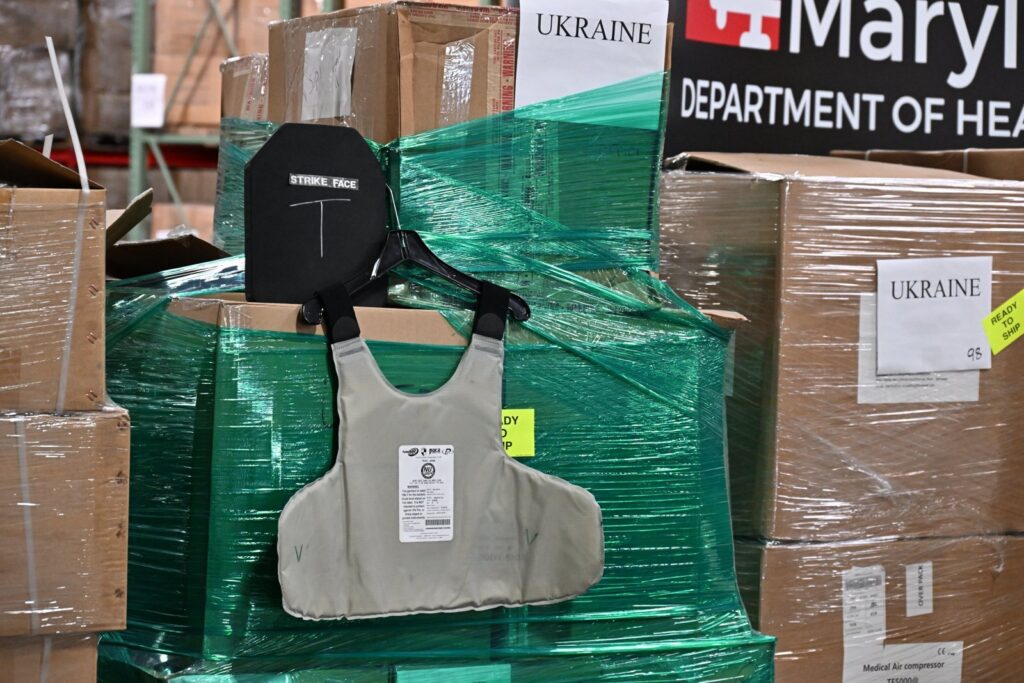
Body armor levels are lists of bullets. Each level names the rounds a vest or plate had to stop in a laboratory, at a set speed, without letting a bullet through and without pushing too deep a dent into the clay behind it. The National Institute of Justice (NIJ), the research arm of the U.S. Department of Justice, writes those lists. Its 2008 standard, NIJ 0101.06, gave us the familiar Levels IIA, II, IIIA, III and IV. The newer pair, NIJ 0101.07 and a companion document, NIJ 0123.00, swap them for HG1, HG2, RF1, RF2 and RF3. Level IIA has no successor, RF2 is new, and the rifle levels add rounds that the old Level III never faced.
Everything below comes from the NIJ documents and the federal and state statutes, quoted and linked. For specific vests and plates, see our guide to the best body armor for civilians. This page explains what the numbers and letters on those products mean.
Body Armor Levels at a Glance: The Old and New NIJ Charts
The chart sets the two systems side by side. The speeds are the reference velocities for new armor in each standard, and the bullet weights are NIJ’s own figures. Under 0101.06 the handgun levels were also shot at lower speeds after the armor had been conditioned; those figures are in the standard.
| NIJ 0101.06 level | Test rounds (0101.06) | New level (NIJ 0123.00) | Test rounds (0123.00) |
|---|---|---|---|
| IIA | 9mm 124 gr FMJ RN at 1,225 ft/s; .40 S&W 180 gr FMJ at 1,155 ft/s | No match | The new system has no level for IIA |
| II | 9mm 124 gr FMJ RN at 1,305 ft/s; .357 Magnum 158 gr JSP at 1,430 ft/s | HG1 | 9mm 124 gr FMJ RN at 1,305 ft/s; .357 Magnum 158 gr JSP at 1,430 ft/s |
| IIIA | .357 SIG 125 gr FMJ FN at 1,470 ft/s; .44 Magnum 240 gr SJHP at 1,430 ft/s | HG2 | 9mm 124 gr FMJ RN at 1,470 ft/s; .44 Magnum 240 gr JHP at 1,430 ft/s |
| III | 7.62x51mm M80 ball, 147 gr, at 2,780 ft/s | RF1 | 7.62x51mm M80 ball, 149 gr, at 2,780 ft/s; 7.62x39mm mild steel core (MSC) Type 56, 123 gr, at 2,400 ft/s; 5.56mm M193, 56 gr, at 3,250 ft/s |
| No match | No standard level | RF2 | All three RF1 rounds, plus 5.56mm M855, 61.8 gr, at 3,115 ft/s |
| IV | .30-06 M2 armor piercing (AP), 166 gr, at 2,880 ft/s | RF3 | .30-06 M2 AP, 165.7 gr, at 2,880 ft/s |
Three details in the new column are easy to miss. HG2 drops the .357 SIG and fires a 9mm instead, at the same 1,470 ft/s. The M80 bullet weight was raised from 147 to 149 grains by Addendum 1 to NIJ 0123.00, released in November 2024. Addendum 2, from July 2025, requires the RF3 test rounds to come from “U.S. military supply.”
The rifle rounds themselves are covered in our pages on the .308 and 7.62x51mm, the .223 Remington, the AK-47 and its 7.62x39mm round and the .30-06 Springfield. On the handgun side, see the .44 Magnum and the 9mm Parabellum.
Where the NIJ Body Armor Levels Come From
NIJ published its first body armor standard in 1972. In her message at the front of NIJ Standard 0101.07, NIJ Director Nancy La Vigne wrote that the agency “has issued six revisions since the initial standard came out in 1972,” and called 0101.07 “the first revision since 2008.”
The standards are written for police. The 0101.07 scope, as amended in July 2025, covers “some types of body armor used by U.S. law enforcement intended to protect the human torso against handgun and rifle ammunition.” They are also voluntary. In NIJ’s words: “All NIJ standards are voluntary standards. There is no requirement or obligation for manufacturers, law enforcement or corrections agencies, or others to follow or adopt these voluntary law enforcement technology equipment standards.” Nothing makes a maker of civilian armor test to them.
The new pair of documents carries an October 2023 cover date, and NIJ announced them in November 2023. 0101.07 keeps the test methods, and NIJ 0123.00 holds the levels and test rounds. NIJ says the split lets it update the threats without rewriting each equipment standard. The new names, it says, are meant “to be more descriptive of ballistic threats and to reduce confusion among law enforcement who wear body armor and use ballistic-resistant equipment.” HG stands for handgun and RF for rifle.
The switch has been gradual. The testing center that runs the program for NIJ, CJTTEC, says that “as of October 2024, the NIJ CTP evaluates ballistic-resistant body armor in accordance with NIJ Standard 0101.07,” and that on June 23, 2026, “NIJ published the first Compliant Product List (CPL) for NIJ Standard 0101.07.” No new armor is being certified to 0101.06; CJTTEC says that program “has ended.” Armor already certified to the old standard stays listed. NIJ’s 0101.07 page tells officers to “keep wearing the armor you have now” and says NIJ “anticipates maintaining the 0101.06 Compliant Products List through at least the end of calendar year 2029.” Expect to see both naming systems on the market for years.
Soft Armor Levels: IIA, II, IIIA, HG1 and HG2
Soft armor is the flexible vest panel. NIJ’s Selection and Application Guide for the 0101.06 standard describes how it works: “A soft armor panel works much like a baseball catcher’s mitt. When a handgun bullet strikes the panel, it is caught in a ‘web’ of strong fibers.” The panels are “typically constructed of multiple layers of ballistic-resistant materials,” and “additional energy is absorbed by each successive layer of material.”
Under 0101.06, the first three levels, IIA, II and IIIA, “are typically soft armors,” according to the guide. In practice Level IIIA is the top of the soft armor ladder, and it is tested with handgun rounds only. 0101.06 did allow flexible Level III and IV armor, but it is rare. Under 0101.07, soft armor is HG1 or HG2 only. The guide says plainly what happens with rifle bullets: “Rifle caliber bullets with pointed tips tend to punch through soft armor panels. Hard armor plates are required to defeat them.”
0101.07 made the soft armor test harder in two places. Another federal agency tested vests in carriers on a model female torso made of ballistic gelatin. Shots that hit the top edge of the front panel at more than about 40 degrees “have been demonstrated in some exploratory tests to not fully engage all layers of the armor panel and deflect off a middle layer into the neck region of the gelatin torso.” The new standard adds a shot at the top center of every soft panel at a 45-degree angle. It also changes how panels shaped for women are tested, adding built-up clay behind the curved panel “to ensure better contact of nonplanar panels with the clay backing material.”
Two limits apply to every level. First, the edges are not fully tested. The CJTTEC body armor FAQ, drawing on the 0101.06 guide, says that “the area within two inches or less of the edge is exempt from the testing process.” Under 0101.07 the minimum shot-to-edge distance is 2 inches for HG1 and 3 inches for HG2, and a plate maker can ask for edge shots to go closer. Second, knives. “An armor designed to protect the wearer against firearms is not designed or tested to protect against edged or stabbing weapons,” the guide says. NIJ tests stab armor under a separate standard, NIJ 0115.00. A certified ballistic vest label must carry a warning in large type when the armor is “not intended to protect the wearer from sharp-edged or pointed instruments.”
Hard Armor Levels: III, IV, RF1, RF2 and RF3
Hard armor means the rigid rifle plate. NIJ’s guide says plates “may be constructed from ceramics, compressed laminate sheets, metallic plates or composites that incorporate more than one material,” and that “they can capture and deform the bullet, or they can break up the bullet. In both instances, the armor then absorbs and distributes the force of the impact.” The plates tested in both standards are no larger than 10 by 12 inches.
Level III and RF1
Under NIJ 0101.06, a Type III plate was shot with one round: “7.62 mm FMJ, steel jacketed bullets (U.S. Military designation M80) with a specified mass of 9.6 g (147 gr) and a velocity of 847 m/s.” That is 2,780 ft/s. The standard named no 5.56mm or 7.62x39mm round for Level III, and a plate could pass without being shot with either.
NIJ 0123.00 fixes that. Its introduction says the test rounds were updated “to reflect the evolving threats faced by U.S. law enforcement, including a wider range of rifle threats in addition to the 7.62x51mm M80. These include 5.56mm M193, 5.56mm M855, and 7.62x39mm mild steel core (MSC).” RF1 replaces Level III and adds M193 and the 7.62x39mm MSC round to the M80.
The 7.62x39mm round got special handling. NIJ 0123.00 specifies “123-grain 7.62x39mm MSC ball Type 56 from Factory 31” and makes the lab audit the ammunition before testing. The lab takes five rounds from set places in a factory-sealed can, pulls the bullets and measures them. Then it cuts away the jacket and lead and checks each steel core for weight, size and a Rockwell hardness between 78.0 and 92.0 on the B scale. NIJ explains why: “Variability in the MSC round has driven the development of surrogate test round designs to ensure consistency in testing.” Until a surrogate round is ready, factory ammunition that passes the audit is used.
RF2: The New Middle Level
RF2 is new. NIJ calls it “a new intermediate rifle protection level introduced in this specification that includes all the threats at the NIJ RF1 protection level plus an additional threat.” The added threat is 5.56mm M855, the 61.8-grain military round, at 3,115 ft/s. A plate certified to RF2 has been shot with M80, M193, M855 and the 7.62x39mm MSC round.
Level IV and RF3
Level IV, now RF3, is the armor-piercing level. Under 0101.06 the test round is “.30 caliber armor piercing (AP) bullets (U.S. Military designation M2 AP) with a specified mass of 10.8 g (166 gr) and a velocity of 878 m/s,” or 2,880 ft/s. RF3 keeps the same round and speed, and it lists only the M2 AP. Under 0101.07, an RF3 plate is not shot with the M80, M193, M855 or 7.62x39mm MSC rounds that RF1 and RF2 require. Under 0101.06, Level IV was tested with the M2 AP alone as well.
Level III+ and Special Threat Plates
There is no Level III+ in either standard. NIJ 0101.06 classified armor into “five types (IIA, II, IIIA, III, IV),” plus a “special test class” that let a buyer name other rounds: a purchaser with a special requirement “should specify the exact test round(s) and reference measurement velocities to be used.” NIJ 0123.00 identifies five levels, HG1, HG2, RF1, RF2 and RF3, and nothing else.
“Level III+” and “special threat” are maker’s terms. MidwayUSA’s listing for a Spartan Armor Systems AR550 steel plate and Achilles carrier package says so directly: the plates “are labeled as level III on the back of the plate as the National Institute of Justice (NIJ) does not currently have a level III+ rating. Level III+ indicates special threat testing and was created by the body armor industry to fill the void between NIJ 0101.06 level III and NIJ level IV, specifically to account for high velocity penetrator rounds such as M855.”
When a plate is sold as III+ or special threat, ask the seller three things: which rounds it was shot with, at what velocity, and which lab did the testing. Then ask to see the lab report. RF2 now gives a certified answer to the M855 question, with a fixed list of rounds and speeds that NIJ checks.
Backface Deformation: The Second Pass or Fail Test
Stopping the bullet is half the test. The armor is mounted on a block of clay, and for the shots the standard specifies, the lab measures how deep the back of the armor pushed into it. The CJTTEC FAQ explains the point: “The depth of the indentation is used as a reasonable analog of the potential for the wearer to sustain significant, potentially lethal, blunt force injury.”
The limit is old. NIJ’s guide says NIJ Standard 0101.01, published in 1978, “was the first version of the standard to incorporate a 44 mm (1.73 inch) BFS limit as the minimum performance threshold for blunt force injury. It was derived from NIJ-funded research conducted by U.S. Army researchers in the 1970s.” 0101.07 keeps 44.0 mm as the target and adds a statistical rule: a dent between 44.0 and 50.0 mm can pass only if the average of all the dents for that model, size, conditioning and test round, plus a margin based on how widely they vary, stays at or under 44.0 mm. Any dent “greater than 50.0 mm shall be considered a failure.”
A trauma pad behind the plate spreads the blow, and it adds no ballistic rating. The CJTTEC FAQ asks whether trauma packs or plates provide additional ballistic protection and answers: “No, they are intended to reduce blunt force trauma injury to the torso resulting from a bullet’s striking an armor.” It adds that the program does not test trauma packs or plates. The Armored Republic trauma pad sold at MidwayUSA says the same thing on its listing: “This is a Trauma Pad only! Made of NON-Ballistic materials.”
Multi-Hit: How Many Shots a Plate Has to Take
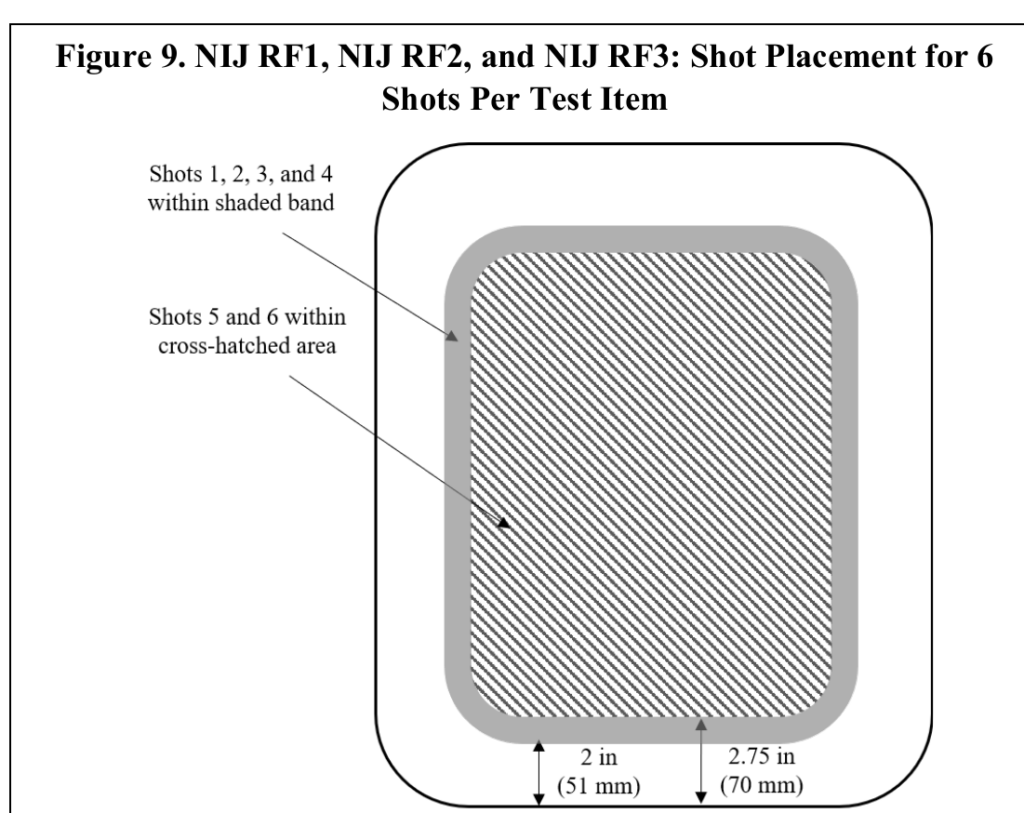
A level does not tell you how many hits a plate survives. Under 0101.06, Type III plates had to be large enough “to allow for a minimum of six shots per panel.” Type IV was different. For a plate “capable of withstanding only a single ballistic impact, the compliance test group shall consist of 37 armor panels.” For plates rated for more hits, “the manufacture shall specify the number of shots to be fired at each panel,” with a maximum of six. NIJ’s guide explains why: “Armors designed to stop an AP bullet tend to incorporate very hard materials that can be brittle and shatter after the first hit.”
0101.07 lets the maker choose for every rifle level. RF1 and RF2 plates are tested at three or six shots each. RF3 plates are tested at one, two, three or six. The standard notes that this lets a maker use fewer plates, “however, the supplier assumes the risk associated with a higher number of shots.” Shots go in at 0 or 30 degrees, and on a curved plate tested at three or six shots, one shot must hit the crown, the highest point of the curve. For RF3 plates tested at one or two shots, at least a quarter of all the shots go on the crown. NIJ added that shot because the crown “may be more vulnerable to penetration due to characteristics of the materials or construction methods,” and it brings the test in line with Army testing.
The number of shots is part of the maker’s application to NIJ. Ask the maker for it before you buy, especially for an RF3 or Level IV plate.
Steel, Ceramic and Polyethylene Plates
The level says what a plate stopped. The material tells you how it will age and how it should be handled. NIJ’s guide warns about ceramics: “Ceramic materials are extremely brittle and such armor should not be dropped on hard surfaces, as this can cause breaks or cracks that can have an adverse effect on performance.” It also says to “visually inspect hard armor plates before each use to ensure that no surface cracks or other signs of damage are present.”
Polyethylene plates are made from ultra-high molecular weight polyethylene (UHMWPE) fiber, one kind of the “compressed laminate sheets” in NIJ’s list. Researchers at the National Institute of Standards and Technology studied how that fiber ages. Their 2015 paper notes that “even an ideal molecular structure will be subjected to a potentially oxidative environment during use, which can reduce the high strength of these fibers, and impact their ability to protect the wearer.”
Steel plates can be certified too. Spartan Armor Systems has a single-curve Level III model named AR550 on the 0101.06 Compliant Products List, although it was marked Inactive when we checked on November 24, 2026. Check the exact model on the list rather than the seller’s description. Steel has drawbacks of its own, and our body armor buyer’s guide covers them in its steel versus ceramic section.
Shelf Life, Warranties and the Date on the Label
No NIJ standard sets an expiration date. NIJ’s guide opens its care chapter with the question it hears most: “How long does body armor last?” Its answer: “This question has no easy or definitive answer. All body armor models on the NIJ CPL are warranted for their ballistic performance.” The maker picks the warranty period. The 0101.07 program rules require it, and add: “there are no tests or inspections to validate the warranty period.” On the 0101.06 list, warranties run from 3 to 25 years, and about four in five are 5 years.
The best argument for watching the date comes from 2005. Justice Department testing of used vests made with Zylon fiber found that of 103 vests, “60 (58 percent) were penetrated by at least one round during a six-shot test series. Of those that passed penetration testing, 91 percent showed excessive ‘backface deformation.’” Only four met every requirement for new armor, and “age and appearance of used Zylon-based vests were ineffective predictors of potential ballistic performance.” NIJ found that ballistic materials “can degrade as a result of exposure to environmental conditions, such as moisture and light.” The 2008 standard added a second round of tests on armor that had first been put through heat, moisture and wear.
NIJ’s guide and the CJTTEC care page give the basic rules:
- Never machine-wash, machine-dry or dry-clean the ballistic panels. Wipe the cover with a damp cloth and cold water.
- Never dry soft panels outdoors. The guide says “exposure to ultraviolet light is known to cause degradation of certain types of ballistic materials.”
- Store armor flat at room temperature in a dry, shaded place, and never “in a potentially extreme hot/cold environment, such as the trunk of a vehicle.”
- Never open a panel cover, and never repair a panel.
- Replace a vest or plate that has been shot. CJTTEC says a vest struck by a bullet or edged weapon “should be replaced immediately.”
- Keep the label legible. It carries the model, serial number, date of manufacture and warranty period you need for a warranty claim or a recall.
What NIJ Certified Means on a Label
“NIJ certified” means the model went through the NIJ Compliance Testing Program (CTP). A maker applies, sends samples to an NIJ-approved independent lab, and pays for the testing. CTP staff then review the lab report and the shot samples. If NIJ approves, the maker gets a Notice of Compliance, the model goes on the Compliant Products List, and the maker may put the NIJ mark on the label. The program then inspects production. Under the 0101.07 program rules, models “will typically be inspected at least once every 10 months,” and samples from production are tested.
Certification is hard to get. The 0101.07 Director’s Message notes that “approximately 37% of armor models submitted for certification testing have failed and never make it onto NIJ’s list.”
Under the same rules, the label on a certified panel or plate has to show:
- the listed company and the model designation as it appears on the Notice of Compliance
- the NIJ mark, with the standard (0101.07) under it, and the protection level
- the size, a serial number and the date of manufacture
- the maker’s “Declared Ballistic Performance Warranty Period”
- which side faces the threat
- this warning in larger type: “This garment is rated only for the NIJ Ballistic Protection Level stated above.”
“Tested to NIJ Standards”
Some sellers say their armor is “tested to NIJ standards.” That usually means a lab shot samples using an NIJ method. It does not mean NIJ reviewed the results, listed the model or inspects the factory. The CJTTEC FAQ makes the same point about accessory panels, which the program does not certify: makers “may have them tested at NIJ-approved laboratories, but the results stand on their own and are not certified by NIJ.” NIJ 0101.06 itself says that armor “independently tested to this standard by manufacturers, purchasers, or other parties will not be considered as NIJ compliant unless the body armor is submitted and tested through the NIJ CTP and found in compliance with this standard.” CJTTEC also warns that “the NIJ CTP has never tested nor certified other types of ballistic items, such as backpacks, blankets, or briefcases,” and that claims of NIJ certification for those items are false.
To check a claim, look up the company and the model designation on the label in the CJTTEC Compliant Products List. The 0101.06 list showed 4,516 armor records when we checked it on November 24, 2026. Each entry gives the level, the model, whether it is single or multi-curve, the warranty and whether the model is active.
Is Body Armor Legal? Federal Law and State Rules
Federal law bars one group from owning body armor. 18 U.S.C. § 931 makes it “unlawful for a person to purchase, own, or possess body armor, if that person has been convicted of a felony that is” a crime of violence, as defined in 18 U.S.C. § 16, or a state offense that would be one. There is an affirmative defense for a person whose employer certified in writing beforehand that the armor “was necessary for the safe performance of lawful business activity,” and whose use and possession stayed within that work. A knowing violation carries up to three years in prison under § 924(a)(7). The federal definition of body armor, in § 921(a)(35), is “any product sold or offered for sale, in interstate or foreign commerce, as personal protective body covering intended to protect against gunfire,” whether it is worn alone or sold as a complement to another product or garment.
States add their own rules, and they vary. Two examples:
- Connecticut (Conn. Gen. Stat. § 53-341b): no one may sell or deliver body armor unless the buyer “meets in person with the transferor” and holds a Connecticut pistol permit or one of the state’s firearm or ammunition certificates. Police, the National Guard, federal firearms licensees and some others are exempt. A violation is a class B misdemeanor.
- New York (Penal Law § 270.21): a person “not being engaged or employed in an eligible profession” who knowingly buys or takes possession of body armor commits unlawful purchase of body armor, a class A misdemeanor for a first offense and a class E felony after that. Police, peace officers, the military and professions named by the Department of State are eligible.
Other states and cities have their own rules, and they change. Read your state’s current statute before you buy, and before you carry armor across a state line. This is general information and not legal advice.
Which Body Armor Level Do You Need?
The CJTTEC FAQ’s advice to police departments is a good place to start: “Agencies should purchase armor that will stop the threats their officers are likely to face; at a minimum, they should purchase armor that will protect against the weapons carried by their own officers.” For a civilian, the same logic applies to the guns you own and the guns you are likely to face. Our own reading of the levels:
- Handguns only: soft armor at IIIA or HG2. It conceals under a shirt and can be worn all day. It is not rated for rifle bullets.
- Common rifles: RF2 is the level tested against M193 and M855 5.56mm, 7.62x39mm mild steel core and 7.62x51mm M80. Under the old system, a Level III plate was tested only with M80. A “III+” plate is only as good as the test report behind it.
- Armor-piercing rifle rounds: RF3 or Level IV. Check how many hits the plate is rated for, and remember that RF3 certification itself covers only the M2 AP round.
Our guide to the best body armor for civilians turns these levels into specific picks.
Where to Shop for Rated Armor
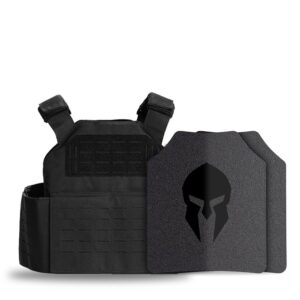
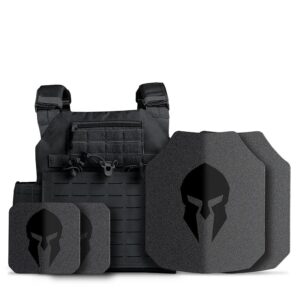
The armor below is sold by merchants we work with. Before you buy any of them, match the company and model on the label to the Compliant Products List. For soft armor, MidwayUSA describes the Premier Body Armor Concealable Armor Vest as NIJ certified Level IIIA. Its listing also calls the vest “stab and slash-resistant,” which is the seller’s claim; it gives no NIJ stab rating. The vest showed as backordered when we checked on November 24, 2026. Links to MidwayUSA and Safariland may earn Powder & Lead a commission.
Body Armor Levels: Common Questions
What level body armor stops 5.56 and .223?
RF1 and RF2 are tested with 5.56mm M193 at 3,250 ft/s, and RF2 adds 5.56mm M855 at 3,115 ft/s. The old Level III was tested only with 7.62x51mm M80. Soft armor rated IIA, II, IIIA, HG1 or HG2 is tested only with handgun rounds.
What level stops 7.62×39 and 7.62×51?
RF1 and RF2 include 7.62x39mm mild steel core at 2,400 ft/s and 7.62x51mm M80 at 2,780 ft/s. Level III under 0101.06 was tested with M80 only.
What does Level IV stop?
Level IV, now RF3, is tested with the .30-06 M2 armor-piercing bullet, 166 grains at 2,880 ft/s. Ask the maker how many hits the plate is rated for.
Is Level IIIA body armor stab proof?
No. NIJ says armor designed against firearms “is not designed or tested to protect against edged or stabbing weapons.” Stab-resistant armor has its own NIJ standard, 0115.00, and its own list.
What level of body armor can a civilian own?
Federal law sets no level limit. It bars people convicted of a felony crime of violence from owning any body armor. Some states, including Connecticut and New York, restrict who may buy it and how it is sold.
Sources
- National Institute of Justice, Ballistic Resistance of Body Armor, NIJ Standard-0101.06 (July 2008): section 2 (armor types and test rounds), section 4.1.2 (hard armor test samples), Appendix B (special type threats).
- National Institute of Justice, Ballistic Resistance of Body Armor, NIJ Standard 0101.07 (October 2023) and its Addenda 1 to 3 (2024 and 2025): Director’s Message, introduction, sections 1, 6, 10 and 12, Figure 9.
- National Institute of Justice, Specification for NIJ Ballistic Protection Levels and Associated Test Threats, NIJ Standard 0123.00 (October 2023), Tables 1 and 2 and Appendix A; Addenda 1 and 2 (November 2024 and July 2025).
- National Institute of Justice, NIJ Standard 0101.07 page (transition and the 0101.06 list through 2029).
- National Institute of Justice, Selection & Application Guide 0101.06 to Ballistic-Resistant Body Armor (December 2014): chapters 2, 3 and 8.
- NIJ Compliance Testing Program, Document 101-07, Rev 1.0 (August 26, 2024): sections 4.2, 8.1 and 11.6, Appendix A (production labels); and Document 100-1, Rev 1.0, the general program rules.
- CJTTEC, NIJ Standard 0101.07 Information, Ballistic-Resistant Body Armor, Body Armor FAQs, Body Armor Care and Replacement and the Compliant Product Lists (all read November 24, 2026).
- U.S. Department of Justice, “Department of Justice Announces Findings on Body Armor Safety Initiative Testing” (August 24, 2005).
- A. Forster and others, “Long-Term Stability of UHMWPE Fibers”, Polymer Degradation and Stability 114 (2015), NIST.
- 18 U.S.C. § 931, § 921(a)(35), § 16 and § 924(a)(7); Conn. Gen. Stat. § 53-341b; N.Y. Penal Law § 270.21.
If you know of any forums or sites that should be referenced on this listing, please let us know here.