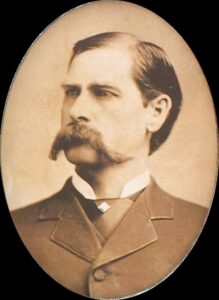
The gunfight at the O.K. Corral was fought in Tombstone, Arizona Territory, on the afternoon of October 26, 1881. City Marshal Virgil Earp, his brothers Wyatt and Morgan, and John H. “Doc” Holliday went to disarm Ike and Billy Clanton and Frank and Tom McLaury. Within about half a minute Billy Clanton and both McLaurys were dying, and Virgil, Morgan and Holliday were wounded. The fight did not take place inside the O.K. Corral. It began in a narrow vacant lot on Fremont Street, near the back of the corral.
Much of the rest is disputed, including who drew first, whether Tom McLaury was armed, and which guns the men carried. The fullest record is the sworn testimony taken between October 31 and late November 1881, when Justice of the Peace Wells Spicer held a preliminary hearing on murder charges against Wyatt Earp and Holliday. That testimony, the Tombstone Epitaph of October 27, 1881, and the coroner’s verdict are the main sources below, and each disputed point names the witness who made it.
The hearing transcripts quoted here are the ones published in Alford E. Turner’s The O.K. Corral Inquest and reproduced online by Professor Douglas O. Linder’s Famous Trials project.
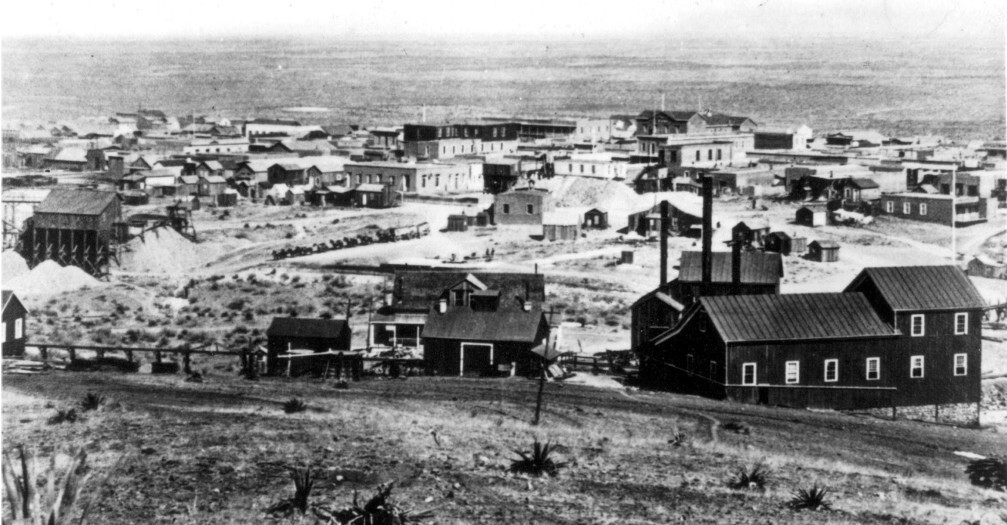
Tombstone in 1881
Tombstone grew up around silver strikes in the San Pedro Valley in 1877. Prospector Ed Schieffelin gave the place its name (Famous Trials chronology). Wyatt and Virgil Earp arrived on December 1, 1879. Wyatt later testified that he came “directly from Dodge City, Kansas,” where, he said, he had been city marshal since 1876, and that before that he served on the Wichita police force (Wyatt Earp’s statement).
By 1881 the Earps held a mix of jobs. Virgil was a deputy U.S. marshal. After Marshal White was shot in October 1880, the town council made Virgil acting marshal, and by October 1881 he was chief of police. Wyatt served as a deputy sheriff for Pima County for part of 1880 and had a share in the faro game at the Oriental Saloon (Linder’s account).
When the new Cochise County was organized, the governor appointed Johnny Behan as its sheriff on February 10, 1881, a post Wyatt had wanted. In his sworn statement Wyatt said he still hoped to win the office at the next election.
The town’s two newspapers took sides. The Epitaph backed the Earps. The Nugget later called Spicer’s decision in the Earps’ favor contemptible (Linder). The Earps’ opponents were known around Tombstone as the “cowboys,” a loose set of ranchers and rustlers that included the Clantons and the McLaurys.
The Feud Before the Fight
Wyatt traced the bad blood to the summer of 1880. In his statement he said he, Virgil and Morgan, with Army men, followed six mules stolen from Camp Rucker to the McLaury ranch, and that the McLaurys later threatened to kill him if he followed them that closely again.
On March 15, 1881, robbers tried to stop the Benson stage and killed the driver, Bud Philpot, and a passenger. Wyatt testified that, working as a detective for Wells, Fargo & Co., he identified three suspects, Billy Leonard, Harry Head and James Crane. He said he offered Ike Clanton, Frank McLaury and Joe Hill the reward money, which he put at about $3,600 in all, if they would lead him to the three men. Linder’s chronology puts the Wells Fargo reward at $6,000.
The plan collapsed when Leonard and Head were killed before Hill reached them. Wyatt said that Ike and Frank McLaury then accused him of telling Marshall Williams and Holliday about the deal, and the threats began.
In September 1881 the Bisbee stage was robbed, and Wyatt and Morgan went with the sheriff’s posse that arrested Frank Stilwell and Pete Spence. The Epitaph of October 27 dated the threats against the Earps from those arrests (Epitaph, October 27, 1881).
The Men on Fremont Street
Four men walked down to Fremont Street on the lawmen’s side:
- Virgil Earp, chief of police of Tombstone. Spicer’s decision describes him as charged by city ordinance with keeping the peace and with disarming anyone carrying a deadly weapon in town without a permit (Spicer decision).
- Wyatt Earp. Virgil testified that he had appointed Wyatt a “special” policeman with power to arrest, and called on him that day to help (Virgil Earp’s testimony).
- Morgan Earp, who Virgil said had been sworn as a special policeman about a month earlier and wore a badge.
- Doc Holliday, who had trained as a dentist. Virgil said only that he called on Holliday “for assistance to help disarm the Clantons and McLaurys.” Wyatt said Holliday had saved his life in Dodge City.
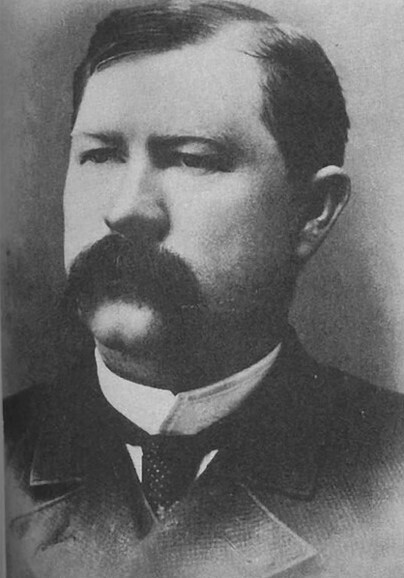
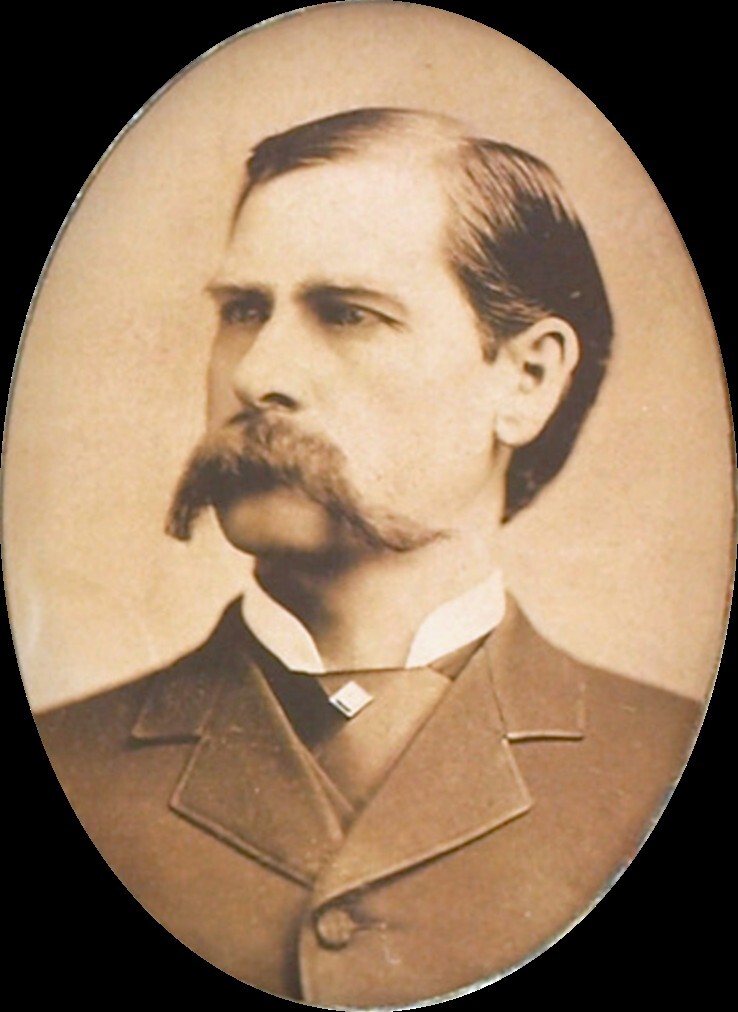
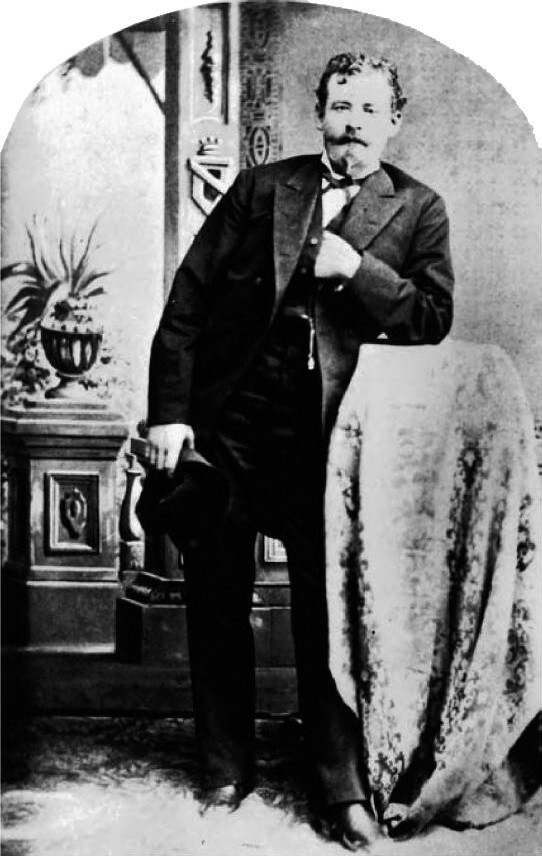
Five men were in the lot on the other side, by the accounts of Sheriff Behan and of Addie Bourland, who watched from across the street:
- Ike Clanton, whose threats that morning started the confrontation.
- Billy Clanton, his brother.
- Frank McLaury and Tom McLaury, brothers whose ranch Wyatt placed near Soldier’s Holes, about 30 miles from Tombstone.
- Billy Claiborne. Wyatt said Claiborne ran as soon as Virgil gave the order. Claiborne testified that he stayed until Behan pushed him into Fly’s gallery. He was not hurt.
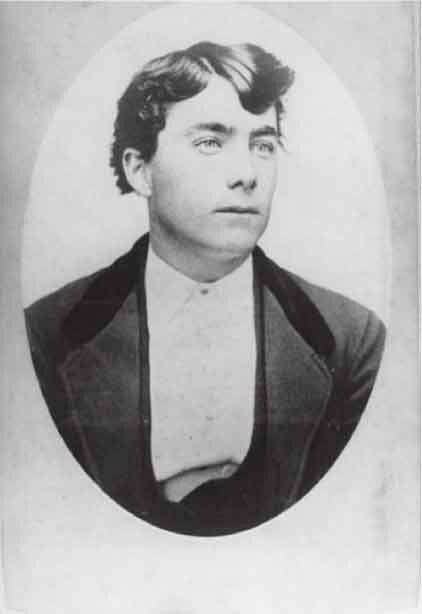
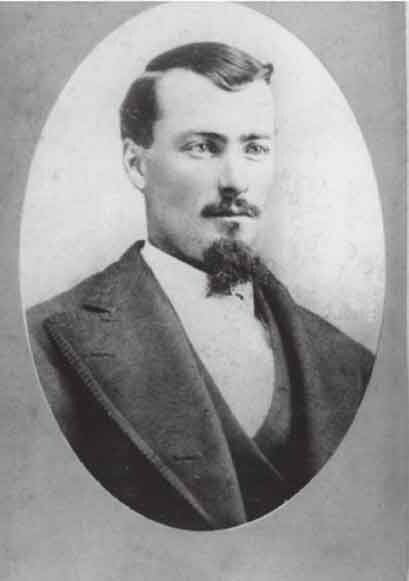
October 25 and 26: The Hours Before the Fight
Late on October 25, Holliday and Ike Clanton quarreled at the lunch counter of the Alhambra Saloon. Wyatt said he had Morgan lead Holliday away, and that Virgil came up and told both men he would arrest them if they did not stop. Wyatt testified that Ike followed him afterward and told him, “I will be ready for you in the morning.”
Virgil testified that at six or seven the next morning Ike stopped him in the street and said Holliday “has got to fight.” By late morning several people told the Earps that Ike was walking the streets with a Winchester rifle and a revolver, looking for them.
Virgil found Ike on Fourth Street between Fremont and Allen. In his testimony he said he grabbed the rifle with his left hand, struck Ike over the head with his six-shooter, and took his revolver. Ike was taken before Judge Wallace for carrying arms in town. The Epitaph reported a fine of $25 and costs, $27.50 in all. Virgil said he left Ike’s guns at the Grand Hotel bar.
Outside the courtroom Wyatt met Tom McLaury. By Wyatt’s own account he slapped Tom, drew his pistol and told him to use his gun, then hit him on the head with the six-shooter and walked away. Wyatt said Tom had a pistol “in plain sight on his right hip” at that moment and made no move to draw it.
Frank McLaury and Billy Clanton then rode into town. Wyatt and Virgil both testified that they watched the Clantons and McLaurys in a gunsmith’s shop on Fourth Street loading cartridges into their belts.
A witness named R. F. Coleman told the Epitaph that at about 2:30 p.m., while he was in the O.K. Corral, he saw the Clantons and McLaurys talking in Dunbar’s corral across the street, and that he warned both Behan and Virgil they meant trouble. Wyatt testified that Coleman told Virgil, “They have just gone from Dunbar’s Corral into the O.K. Corral, all armed.”
Sheriff Behan went first. He testified that he told the group they had to give up their arms, that Frank McLaury refused unless the Earps were disarmed too, and that he satisfied himself Ike Clanton and Tom McLaury had no weapons on them (Behan’s testimony).
Virgil, meanwhile, had a shotgun. He testified he got it himself from the Wells Fargo express office on Allen Street, where it “had been at my service for six months.” Before they set out he told Holliday, who was wearing a large overcoat, to take the shotgun and give him his cane, because he “did not want to create any excitement going down the street with a shotgun” in his hand.
Witness H. F. Sills described the same exchange: the marshal handed Doc a shotgun, Doc put it under his coat, and the marshal took his cane (Sills testimony).
Where the Gunfight at the O.K. Corral Was Actually Fought
The O.K. Corral was a livery yard that fronted on Allen Street and ran back toward Fremont Street. Coleman’s statement shows this: to get from the corral to Fremont Street he “walked through the O.K. Corral.”
The Earp party went down Fourth Street to Fremont. Wyatt testified that they saw the cowboys “standing near or about the vacant space between Fly’s photograph gallery and the next building west.” Witness Addie Bourland, who lived across the street, described five men leaning against a small house west of Fly’s gallery (Bourland testimony). Turner’s edition identifies that house as the Harwood house. The fight began in that lot and spread into Fremont Street.
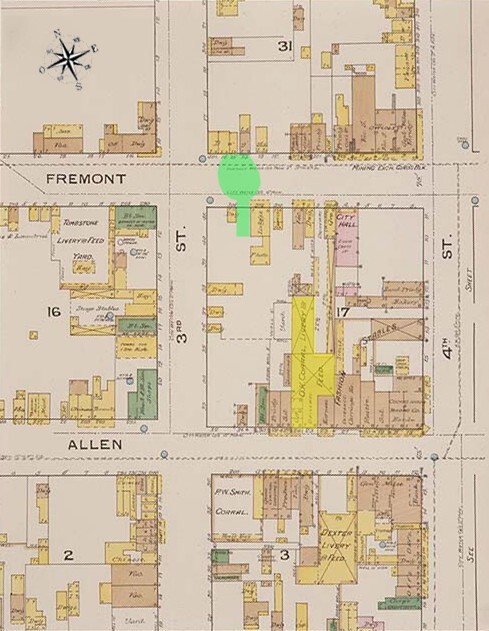
The two groups were very close. Behan, asked how far apart they stood when the first shot was fired, answered “about five and a half or six feet; very close together.” Ike Clanton testified that Wyatt pushed a pistol against his belly.
The Fight: What the Witnesses Said
The witnesses who heard Virgil agreed that he called on the men to raise their hands. They disagreed about the words, about what the cowboys did next, and about who fired first.
The Earp version
Wyatt testified that Virgil said, “Throw up your hands; I have come to disarm you!” and that Billy Clanton and Frank McLaury put their hands on their six-shooters. Virgil called out, “Hold, I don’t mean that!” Wyatt said Billy and Frank then began to draw, and Tom McLaury reached toward his right hip and jumped behind a horse.
Wyatt said he drew when he saw them draw, and that he aimed at Frank McLaury because Frank had the reputation of being a good shot. “The first two shots were fired by Billy Clanton and myself, he shooting at me, and I shooting at Frank McLaury. I don’t know which was fired first.” He said his first shot hit Frank in the belly.
Virgil gave the same order of events. He said he heard Billy and Frank cock their pistols, “click-click,” that two shots went off together, that Billy Clanton fired one of them, and that he was “inclined to think” Wyatt fired the other. He said Tom McLaury tried to pull a Winchester from a horse, failed when the horse jumped, and fired once or twice over the horse’s back.
The Clanton version
The prosecution witnesses told a different story. Behan testified that Billy Clanton said, “Don’t shoot me. I don’t want to fight!” and that Tom McLaury threw open his coat and said he was not armed. He said the first shot came from a nickel-plated pistol. His impression was that Holliday held it, though he would “not say for certain.”
William Allen said he thought Holliday fired first, a pistol shot, and that the second was a double-barreled shotgun. Both shots, he said, came from the Earp side before any others (Allen testimony). Ike Clanton testified that Holliday and Morgan Earp fired the first two shots and that the cowboys had their hands up (Ike Clanton testimony). Wesley Fuller also said the Earp party fired first (Fuller testimony).
How it ended
Wyatt said that after about four shots Ike Clanton grabbed his arm. Seeing no weapon, he told Ike, “The fight had commenced. Go to fighting or get away,” and Ike ran off between the lodging house and the photograph gallery. The Epitaph said he took refuge in a dance hall on Allen Street. Ike’s version is that he held Wyatt’s gun hand and pushed him around the corner before running.
Tom McLaury was hit by the shotgun. Wyatt said Holliday “had the shotgun” and killed Tom with it. Linder’s account says the coroner, Dr. Henry Matthews, testified that Tom’s wounds came from a shotgun rather than a revolver. Allen said he helped carry Tom into a house, where he died. Thomas Keefe, who was in that room, said Tom died six or seven minutes after he was carried in (Keefe testimony).
Frank McLaury staggered into Fremont Street. Behan said he saw Frank with one hand to his belly and his pistol in the other, shooting at Morgan. Linder’s account says he died in the street with a bullet through his head. Billy Clanton fell near the window of the house beside the lot and kept trying to fire. Coleman told the Epitaph that C. S. Fly, the photographer, took Billy’s revolver from him.
How long it lasted and how many shots
No one timed the fight. The witnesses gave short estimates:
- Behan: “I don’t think the fight lasted over 20 or 30 seconds.”
- Billy Claiborne: “five or six seconds” from the moment the Earps passed Behan to the fifth shot, and “probably eight or ten seconds” from the first shot to the sixteenth (Claiborne testimony).
- Ike Clanton: “five, or six, or ten seconds” from the order to raise hands to the first four shots.
Estimates of the number of shots vary as well. Coleman said “over thirty shots” were fired. Fuller put it at 20 or 30. A news dispatch dated Tombstone, October 26, reported “about thirty shots” (clipping). Behan’s is the only estimate of the whole fight. The figure of about thirty seconds that appears in most accounts, including Linder’s, matches the top of his range.
The dead and the wounded
- Killed: Billy Clanton, Frank McLaury and Tom McLaury. The Epitaph said all three “died within a few minutes after being shot.”
- Virgil Earp: shot through the calf of the right leg, “the ball going clear through” (Epitaph).
- Morgan Earp: shot across the back from one shoulder to the other, chipping a vertebra (Epitaph).
- Doc Holliday: a bullet struck his pistol holster at the hip. The Epitaph said the leather broke its force, and he only limped a little.
- Unhurt: Wyatt Earp, Ike Clanton and Billy Claiborne.
Who Carried Which Guns
Popular accounts of the gunfight at the O.K. Corral give each man a specific gun. The 1881 testimony is much less precise. Witnesses described guns as “six-shooters,” “pistols” or “a shotgun,” and almost never named a maker. The sections below give what the witnesses said and label later claims as such.
Doc Holliday’s shotgun
Holliday carried a shotgun. Virgil described handing it to him, Sills and Behan said Holliday had it under his coat, and Allen heard a double-barreled shotgun fired. Virgil testified it came from the Wells Fargo office. No witness gave its gauge, its maker or its barrel length. It is usually described today as a short “coach gun” of the kind Wells Fargo messengers carried. That description is reasonable for an express-company gun, but it comes from later writers, not from the testimony.
Doc also had a pistol. Behan and Claiborne said Holliday held a nickel-plated pistol. Bourland said the man in the long coat, whom she identified as Holliday, held “a very large pistol” that was “dark bronze” and “not a nickel-plated pistol.” Fuller said he saw Holliday put a six-shooter in his coat pocket before they set out. The claim, repeated in many places, that Holliday’s revolver was a Colt Lightning finds no support in the hearing testimony we read.
Wyatt Earp’s revolver
Wyatt said he carried his pistol in his hand under his coat, then put it in his overcoat pocket when Behan told them the cowboys were disarmed, and drew it from there. He never named its make. Later writers have said he carried a Smith & Wesson top-break or a Colt Single Action Army. Neither claim appears in his testimony.
In April 2014 a Colt .45 revolver said to have been carried by Wyatt at the gunfight sold at auction in Scottsdale from the estate of Earp author Glenn Boyer. The Associated Press reported that some questioned its authenticity (AP report), and American Rifleman noted that the revolver’s serial number was missing (American Rifleman).
For the two revolvers in question, see our histories of the Schofield Smith & Wesson Model 3, the Smith & Wesson and Colt rivalry of the 1870s and the .45 Colt cartridge.
The “Buntline Special” is a myth
The story that Wyatt carried a Colt with a 12-inch barrel, a “Buntline Special” given to him by the dime novelist Ned Buntline, first appeared in Stuart Lake’s writing about Wyatt, published first as a preview series in The Saturday Evening Post and then as the 1931 biography Wyatt Earp: Frontier Marshal. In 1976 William B. Shillingberg examined it in the Kansas Historical Quarterly. He found no published account of the presentation earlier than Lake, no evidence that Buntline went to Dodge City in 1876 or 1877, and no 12-inch Peacemaker shipped by Colt before August 30, 1892.
He also reported that Lake admitted inventing Wyatt’s quoted words. Shillingberg called the guns “simply the product of a literary myth” (Kansas Historical Quarterly). None of the 1881 hearing testimony we read mentions a long-barreled revolver.
The Earp brothers’ other guns
Virgil said his six-shooter was in the waistband of his pants and that he held Holliday’s cane until the shooting started, then shifted the cane to his left hand and fired four shots. Fuller said he saw a six-shooter in Morgan’s right-hand pocket. Neither witness named a make.
The cowboys’ guns
- Billy Clanton and Frank McLaury: both wore six-shooters. Wyatt said their guns were “in plain sight,” and Behan said these two were the only men on the cowboy side he saw with arms.
- Tom McLaury: disputed. Behan, Allen, Claiborne and Ike Clanton said he was unarmed and had opened his coat to show it. Allen said he found no weapon and no cartridge belt on Tom. Wyatt said he believed Tom was armed and fired at them, and Virgil said Tom fired over a horse’s back. Albert Billickie testified that before the fight Tom came out of a butcher shop with his right pants pocket bulging “as if there was a revolver therein” (Billickie testimony).
- Ike Clanton: unarmed. Behan checked him, and the Epitaph reported he was not armed. His rifle and revolver were at the Grand Hotel.
- Rifles: Spicer’s decision says the cowboys had “two Winchester rifles on their horses.” Virgil said Tom McLaury reached for one. The Epitaph wrote of cowboys armed with “six-shooters and Henry rifles.” No witness we read said a rifle was fired.
The makes of the cowboys’ revolvers are uncertain. Keefe testified that in the room where Billy Clanton and Tom McLaury were taken, a large, well-worn pistol lay on the carpet near the door with three chambers empty. He called it a Smith & Wesson because of a long slot in the sight, and said he did not know whose it was and that Dr. Matthews took it.
In court he was shown the two pistols the coroner produced. Both were Colts, and he said he did not think either was the pistol he had examined.
For the rifles of the period, see our histories of the Winchester Model 1873 and of the guns of New Mexico’s Lincoln County War. Winchester’s lever-action Model 1887 shotgun came six years after the fight.
The Inquest and the Spicer Hearing
Coroner Henry Matthews opened an inquest on October 28 and heard nine witnesses, including Behan and Ike Clanton. After the gunfight at the O.K. Corral, the coroner’s jury found only that the three men died “from the effects of pistol and gunshot wounds inflicted by Virgil Earp, Morgan Earp, Wyatt Earp,” and Holliday. It assigned no blame (Linder).
On October 29 Ike Clanton filed murder charges against the Earps and Holliday, and Virgil was suspended as chief of police. Spicer’s hearing began on October 31. Wyatt and Holliday were jailed from November 7 for about sixteen days. Wyatt read his statement on November 16, and the court took Virgil’s testimony at his bedside on November 19. Spicer heard about thirty witnesses.
Spicer ruled on November 30, 1881, five weeks after the gunfight at the O.K. Corral. He found that Virgil had committed “an injudicious and censurable act” in calling on Wyatt and Holliday, given their quarrels with the Clantons and McLaurys the day before. But he held that the weight of the evidence supported Wyatt’s account that Billy Clanton and Frank McLaury drew or reached for their pistols, and that the defendants were “fully justified in committing these homicides.” He ordered Wyatt and Holliday released, and noted that the county grand jury, then in session, could still indict them (Spicer decision).
The Vendetta Ride and After
On December 28, 1881, Virgil was ambushed with shotguns at night in Tombstone. He lived, but his arm was left nearly useless. Ike Clanton was charged and the case was dismissed for lack of evidence (Famous Trials chronology).
Less than five months after the gunfight at the O.K. Corral, on the night of March 18, 1882, Morgan Earp was shot while playing billiards in Campbell & Hatch’s billiard parlor. An Epitaph report of March 1882 said that the shot came through the upper glass panes of a door and that Morgan “lived only about one hour,” with his brothers Wyatt, Virgil, James and Warren beside him (transcription).
Wyatt then went after the men he blamed. Linder’s account lists three killings: Frank Stilwell, shot in Tucson; Florentino Cruz, known as “Indian Charlie,” killed at a wood camp in the Dragoon Mountains; and Curly Bill Brocius, killed near Iron Springs. With murder warrants out, Wyatt and Holliday went to Colorado in April 1882. Colorado’s governor, Frederick Pitkin, refused Arizona’s request to send them back.
Holliday died of tuberculosis in Glenwood Springs, Colorado, on November 8, 1887, at 36. Virgil died in 1905. Wyatt died in January 1929, at 80, after years in California, Alaska and elsewhere, including time on the sets of early Hollywood Westerns (Famous Trials chronology).
O.K. Corral Myths and Hollywood Versions
The gunfight at the O.K. Corral has been filmed many times. John Ford’s My Darling Clementine (1946) was based on Lake’s biography, and Tombstone (1993) is among the best known. These are Hollywood versions. The points below set them against the record.
- Myth: the fight happened in the O.K. Corral. It began in the vacant lot beside Fly’s photograph gallery on Fremont Street and spilled into the street. The O.K. Corral’s back lot was nearby, and the cowboys had passed through the corral on their way.
- Myth: a long walk-down and a duel at a distance. Behan put the two groups about six feet apart. Most witnesses said the shooting began within seconds of Virgil’s order.
- Myth: Wyatt used a Buntline Special. The story starts with Stuart Lake in 1930 and 1931. No 1881 witness we read described such a gun.
- Myth: every gun is known. The testimony names a Wells Fargo shotgun, Winchester rifles on the horses, and two Colt pistols produced in court whose owners are not stated. The rest of the popular gun list comes from later writers.
- Myth: a clear case of good men and bad men. Spicer cleared the Earps but called Virgil’s choice of deputies “injudicious and censurable,” and the town’s two newspapers took opposite sides.
- Legend: Holliday’s last words. The often-quoted line that Holliday looked at his bare feet and said “This is funny” has no contemporary source that we could find.
Reproductions of the Guns
Uberti, Cimarron and Taylor’s sell reproductions of the Colt and Smith & Wesson revolvers of the period, and several makers sell exposed-hammer double shotguns of the coach-gun pattern. All of these must ship to a licensed dealer.
- Uberti 1873 Cattleman II New Model in .45 Colt at MidwayUSA, a reproduction of the Colt Single Action Army.
- Cimarron Number 3 Schofield at MidwayUSA, a copy of the Smith & Wesson Schofield top-break, in .45 Colt or .38 Special.
- Taylor’s & Company Second Model Schofield at MidwayUSA, another Schofield reproduction.
- CZ Hammer Coach 12-gauge at MidwayUSA, a current exposed-hammer double with 20-inch barrels, and the easiest of these to find in stock.
- Cimarron 1878 Coach Gun at MidwayUSA, an exposed-hammer 12-gauge built closer to the coach guns of the period.
Stock changes often, and some of these are on backorder at times.
Books on the O.K. Corral
These are the standard book-length accounts of the gunfight at the O.K. Corral. The first is the hearing record quoted above. Book links go to Amazon, and Powder & Lead earns a commission on qualifying purchases.
-

The O.K. Corral Inquest
Purchase on Amazon -

Wyatt Earp: The Life Behind the Legend
Purchase on Amazon -

The Last Gunfight: The Real Story of the Shootout at the O.K. Corral-And How It Changed the American West
Purchase on Amazon -

And Die in the West: The Story of the O.K. Corral Gunfight
Purchase on Amazon
Alford E. Turner, editor, The O.K. Corral Inquest. The transcribed testimony from the Spicer hearing. Copies are scarce.
Casey Tefertiller, Wyatt Earp: The Life Behind the Legend.
Jeff Guinn, The Last Gunfight: The Real Story of the Shootout at the O.K. Corral.
Paula Mitchell Marks, And Die in the West: The Story of the O.K. Corral Gunfight.
Sources
- Testimony and statements in the preliminary hearing before Justice Wells Spicer, November 1881, from Alford E. Turner, ed., The O.K. Corral Inquest, as reproduced by Famous Trials: Wyatt Earp, Virgil Earp, John Behan, William Allen, William Claiborne, Joseph Isaac Clanton, Wesley Fuller, Addie Bourland, H. F. Sills, Thomas Keefe.
- Decision of Justice Wells Spicer, November 30, 1881.
- Tombstone Daily Epitaph, October 27, 1881, including R. F. Coleman’s account.
- Tombstone Ordinance No. 9, on carrying deadly weapons, effective April 19, 1881.
- Douglas O. Linder, “The Earp-Holliday Trial: An Account” and “The Earp Trial: A Chronology”, Famous Trials, for the coroner’s inquest and later events.
- Tombstone Epitaph, March 1882, as transcribed online, on the death of Morgan Earp. The transcription is headed March 20; its own reference points to the March 27 issue.
- William B. Shillingberg, “Wyatt Earp and the Buntline Special Myth,” Kansas Historical Quarterly 42, no. 2 (Summer 1976), via the Kansas Historical Society.
- Sanborn Fire Insurance Map from Tombstone, July 1886, Library of Congress.
- “Wyatt Earp Gun Up For Auction,” American Rifleman, March 2014, and the Associated Press report of the sale, April 2014.
If you know of any forums or sites that should be referenced on this listing, please let us know here.